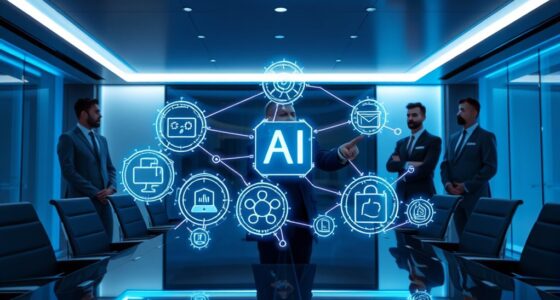

The convergence of 5G and AI transforms networks into smarter, more adaptable systems that meet modern demands. You’ll see faster data processing, real-time responses, and enhanced application performance, especially in autonomous vehicles, IoT, and smart cities. Edge computing enables data analysis close to sources, reducing latency, while network virtualization offers flexible, scalable solutions. If you keep exploring, you’ll discover how these technologies are shaping the future of connected, efficient, and responsive networks.
Key Takeaways
- 5G and AI together enable smarter, more agile networks capable of handling modern data demands and critical applications.
- Edge computing processes data locally, reducing latency and supporting real-time decision-making essential for autonomous systems.
- Network virtualization creates flexible, independent slices that optimize resource allocation for AI-driven services.
- AI enhances virtualized, edge-based networks by enabling dynamic reconfiguration and faster local data analysis.
- The convergence fosters innovative services like AR, IoT, and predictive maintenance, driving digital transformation and network resilience.

The convergence of 5G and AI is transforming how we connect, communicate, and innovate. This powerful combination is reshaping networks into smarter, more agile systems that can handle the increasing demands of modern technology. As you leverage these advances, you’ll find that edge computing becomes a crucial component, pushing data processing closer to where it’s generated. Instead of relying solely on centralized data centers, edge computing enables devices and local nodes to analyze and respond to data in real-time, reducing latency and improving overall efficiency. This is especially important for applications like autonomous vehicles, smart cities, and IoT devices, where split-second decisions are critical.
Alongside edge computing, network virtualization plays a pivotal role in this transformation. Virtualization allows you to create multiple, independent network slices over a shared physical infrastructure, giving you the flexibility to allocate resources dynamically based on specific needs. This means you can prioritize critical AI-driven tasks, optimize bandwidth, and guarantee reliable service for different applications without overhauling the entire network. The combination of 5G’s high speed and low latency with virtualization enables you to deploy customized solutions quickly, making networks more adaptable and scalable.
Network virtualization enables dynamic resource allocation and rapid deployment of customized, scalable solutions over shared physical infrastructure.
AI algorithms embedded within these virtualized, edge-based environments can analyze data locally and make intelligent decisions without constantly communicating with distant servers. This reduces network congestion and speeds up response times, guaranteeing that applications like real-time video analytics or remote robotic control operate smoothly. As you implement these technologies, you’ll notice that network virtualization also simplifies management; you can update or reconfigure virtual network slices on the fly, without disrupting other services. This agility helps your network evolve in tandem with emerging demands and innovations.
Moreover, the integration of 5G, AI, edge computing, and virtualization unlocks new business opportunities. You can develop innovative services that depend on rapid data processing and real-time insights, such as augmented reality experiences or predictive maintenance for equipment. These advancements empower you to stay competitive in a digital landscape where rapid adaptation and efficiency are key. As you continue to adopt these technologies, you’ll find that your networks become more resilient, secure, and capable of supporting the next wave of digital transformation. In essence, the synergy of 5G and AI, bolstered by edge computing and network virtualization, is paving the way for smarter, more responsive networks that meet the evolving needs of businesses and consumers alike.
Adding to this, understanding projector technology can help you better grasp how high-quality visual displays can complement smart network environments in various applications.
5G Edge Computing: Technologies, Applications and Future Visions
As an affiliate, we earn on qualifying purchases.
As an affiliate, we earn on qualifying purchases.
Frequently Asked Questions
How Does AI Improve 5G Network Security?
AI improves 5G network security by enabling real-time AI threat detection and network anomaly detection. You benefit because AI quickly identifies unusual activity or potential threats, allowing you to respond faster and prevent breaches. It continuously monitors the network, learns from new threats, and adapts defenses accordingly. This proactive approach helps keep your 5G network safer, more reliable, and better protected against evolving cyber threats.
What Are the Environmental Impacts of 5G and AI Infrastructure?
Think of the environment as the silent victim of tech growth. Your 5G and AI infrastructure increase energy consumption and electronic waste, straining natural resources. While these advances boost connectivity, they also contribute to climate change and pollution. You can help by supporting sustainable practices and responsible disposal. Ultimately, balancing technological progress with environmental care is essential to guarantee a healthier planet for future generations.
How Will 5G and AI Affect Rural Connectivity?
You’ll notice that 5G and AI improve rural broadband and address connectivity challenges by providing faster, more reliable networks. These technologies enable better coverage in remote areas, making internet access more consistent. As a result, you’ll experience enhanced opportunities for education, healthcare, and business. With smarter networks, rural communities can bridge the digital divide, ensuring everyone benefits from the advancements in connectivity.
What Are the Privacy Concerns With Ai-Driven Networks?
You should be aware that AI-driven networks raise privacy concerns like data privacy and surveillance risks. As these networks collect and analyze vast amounts of personal data, there’s a chance your information could be accessed or misused. You need to stay informed about how your data is protected, advocate for strong privacy policies, and use secure practices to minimize potential risks linked to surveillance and data breaches.
How Can Small Businesses Leverage 5G and AI Convergence?
You can leverage 5G and AI convergence by implementing smart marketing strategies that personalize customer experiences. With faster connectivity and AI’s ability to analyze data, you gain valuable customer insights to target your audience more effectively. Use real-time data to optimize campaigns, improve service delivery, and enhance customer engagement. This technology empowers you to compete with larger companies, making your marketing more efficient and tailored to your customers’ needs.
AI-enabled network virtualization hardware
As an affiliate, we earn on qualifying purchases.
As an affiliate, we earn on qualifying purchases.
Conclusion
By blending the brilliance of 5G and AI, you’re building bold, boundless networks that boost efficiency and empower innovation. As you harness this harmonious harmony, you’ll witness a wave of wondrous possibilities, weaving wider worlds of wonder. Stay savvy, stay swift, and seize this seamless synergy to shape smarter, stronger systems. Together, you’re transforming technology, turning today’s potential into tomorrow’s triumphs—all through the powerful partnership of 5G and AI.

Smart Cities For Dummies
As an affiliate, we earn on qualifying purchases.
As an affiliate, we earn on qualifying purchases.

High Precise Obstacle Detection Sensors Module For Obstacle Avoidance In Autonomous Vehicles And Robots Accessory
reliability obstacle detection with our Infrare Obstacle Avoidance Sensors Module, design to receive infrare signals for accurate obstacle…
As an affiliate, we earn on qualifying purchases.
As an affiliate, we earn on qualifying purchases.