TL;DR

Get everyday essentials delivered free with Prime
- Fast, free delivery on millions of items
- Prime Video, Amazon Music and more included
- Member-only deals all year
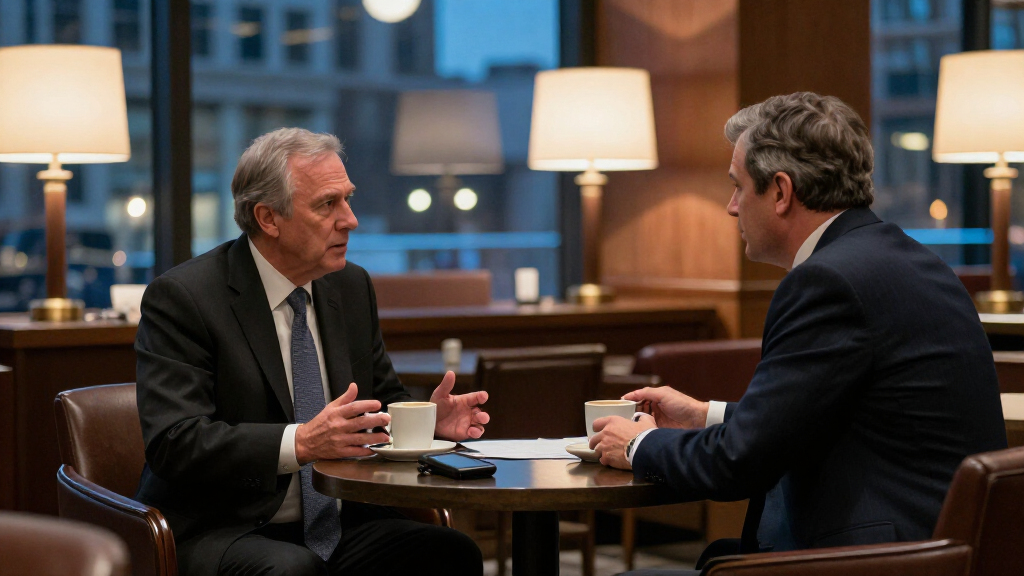
A Financial Times report, summarized by Meduza, says American lawyer Richard Conn helped pass a Biden administration message to Vladimir Putin through intermediaries in 2022 and later helped pursue unofficial peace proposals. The channel faded by early 2023 after official U.S. and Russian negotiators took over; the proposals did not produce a settlement. Some details, including the precise status of reported terms and the attribution of Putin’s response, remain uncertain.
A Financial Times report has detailed how American lawyer Richard Conn helped carry a Biden administration message to Vladimir Putin in 2022 and later took part in an unofficial effort to propose terms for ending the war in Ukraine. The channel, which relied on private intermediaries rather than formal diplomatic talks, had effectively ended by early 2023 and did not produce a peace agreement, according to the report as summarized by Meduza.
Conn, a corporate lawyer and investor who had worked in Russia since 1992, began exploring a backchannel after a Russian businessman contacted him in early March 2022 with fears that Putin could use tactical nuclear weapons. Conn approached Eric Green, then overseeing Russia policy at the U.S. National Security Council. Green agreed to the idea, but Conn did not get a message to Putin until September, after official talks in Istanbul had failed and Russian forces had withdrawn from areas near Kyiv.
Conn worked with American investor Bob Foresman to reach Matthias Warnig, a former business executive with longstanding ties to Putin. At a meeting in October 2022, Conn passed Warnig a message from the White House. The FT quoted the message as saying: “The US is not pursuing regime change. We’re not trying to destroy Russia. There is no existential threat.” Warnig later relayed a written response attributed to Putin, saying he was open to negotiations but would continue fighting if he saw no alternative. The report notes that it is not fully clear whether the wording was Putin’s or Warnig’s account of his position.
Conn and Foresman then tried to move beyond relaying messages and support an unofficial peace initiative. With other intermediaries, they put forward proposals to leaders in Russia and Ukraine. The proposals included Russian withdrawal from most of the regions Putin had recently claimed to annex, while leaving Russian control over Crimea and parts of Donbas occupied before the 2022 invasion in place. The available source material does not provide the full terms or a complete account of each side’s response.
A Private Channel Alongside Diplomacy
The account offers a view of informal contacts operating alongside official diplomacy during a period of heightened concern about nuclear escalation. Conn’s channel was intended to pass a message directly to Putin, partly because he suspected that Russian officials might filter information reaching the president. The report does not establish that the private effort changed Kremlin policy; Conn and Foresman interpreted a later public statement by Putin as evidence that nuclear danger had eased, but the FT also points to confidential official contacts taking place at the same time.
The later peace proposals matter because they show how private business and personal networks attempted to address the war’s central territorial dispute. Their reported terms involved substantial concessions, including acceptance of Russian control over Crimea and parts of Donbas. That makes the initiative relevant to understanding the range of ideas discussed outside formal negotiations, but not evidence that either government accepted those terms or that a deal was close.
books on US Russia relations and diplomacy
As an affiliate, we earn on qualifying purchases.
As an affiliate, we earn on qualifying purchases.
From Nuclear Fears to Peace Proposals
Conn’s effort began soon after Russia launched its full-scale invasion of Ukraine in February 2022. The initial concern described in the report was that battlefield setbacks, including the failure to capture Kyiv, could lead Putin to consider tactical nuclear weapons. Conn used his contacts among investors and Russia-linked business figures to try to establish a direct route to the Russian president.
In October 2022, Putin publicly said that using nuclear weapons would make no political or military sense for Russia while discussing claims about a possible Ukrainian “dirty bomb.” Conn and Foresman viewed his remarks as a sign that the danger had receded. The FT’s account places those remarks alongside separate confidential discussions between U.S. national security adviser Jake Sullivan and Russian official Yuri Ushakov, so the private channel was not the only contact addressing escalation.
According to the report, official negotiators Ushakov and Eric Green had effectively brought Conn’s channel to an end by early 2023. The later U.S. efforts to negotiate an end to the war involved other people and, according to Meduza’s summary of the FT report, have not succeeded.
“Using nuclear weapons made “no political or military sense” for Russia.”
— Vladimir Putin, speaking at the Valdai Discussion Club, as quoted in the report
books about the Ukraine war and peace negotiations
As an affiliate, we earn on qualifying purchases.
As an affiliate, we earn on qualifying purchases.
What the Record Leaves Open
The account is based on a report of private exchanges, and key details remain unconfirmed in the material provided. It is not clear whether the words attributed to Putin were recorded verbatim or summarized by Warnig, nor does the available summary set out the full peace proposal or document each government’s response. It also does not establish that Conn’s intervention caused Putin’s public comments on nuclear weapons to change.
The source does not explain in detail why official negotiators ended the channel, beyond saying that Ushakov and Green had effectively brought it to a close by early 2023. The extent to which the initiative influenced, overlapped with, or differed from formal diplomatic discussions remains uncertain. No agreement resulted, and the account does not indicate that the proposals were adopted by Russia or Ukraine.
international relations and foreign policy books
As an affiliate, we earn on qualifying purchases.
As an affiliate, we earn on qualifying purchases.
Formal Talks Remain the Measure
The immediate development is the publication of the Financial Times account; the material provided does not identify a new negotiating round or a response from the governments involved. Any further assessment of Conn’s channel will depend on additional reporting, documentary evidence, or statements from participants that clarify the proposals and the reasons the effort ended.
For the broader conflict, the key question remains whether official negotiations can produce terms acceptable to Russia and Ukraine. The reported private initiative did not achieve that result. The report says later U.S. attempts have also yet to secure a peaceful end to the war, but gives no specific next meeting or timetable.
Ukraine Russia conflict history books
As an affiliate, we earn on qualifying purchases.
As an affiliate, we earn on qualifying purchases.
Key Questions
Who is Richard Conn?
Richard Conn is an American corporate lawyer and investor who began working in Russia in 1992, when he founded the Russian office of Latham & Watkins. The report describes him using longstanding business contacts to help establish a private route for messages between Washington and Putin.
What message did Conn pass to Putin?
Conn relayed a message from the Biden administration saying the United States was not seeking regime change or Russia’s destruction and wanted peace. The Financial Times quoted the message as having been passed through Matthias Warnig in October 2022.
Did the backchannel produce a peace deal?
No. Conn and his associates later helped circulate unofficial proposals involving Russian troop withdrawals and territorial terms, but the reported effort did not result in an agreement. The available account does not provide a full record of the responses from Moscow or Kyiv.
Why did the channel end?
The report says Russian official Yuri Ushakov and U.S. official Eric Green had effectively brought Conn’s channel to an end by early 2023. It does not provide a detailed explanation of their reasons or specify exactly how the decision was made.
Source: rss
Halloween Picks
halloween
As an affiliate, we earn on qualifying purchases.