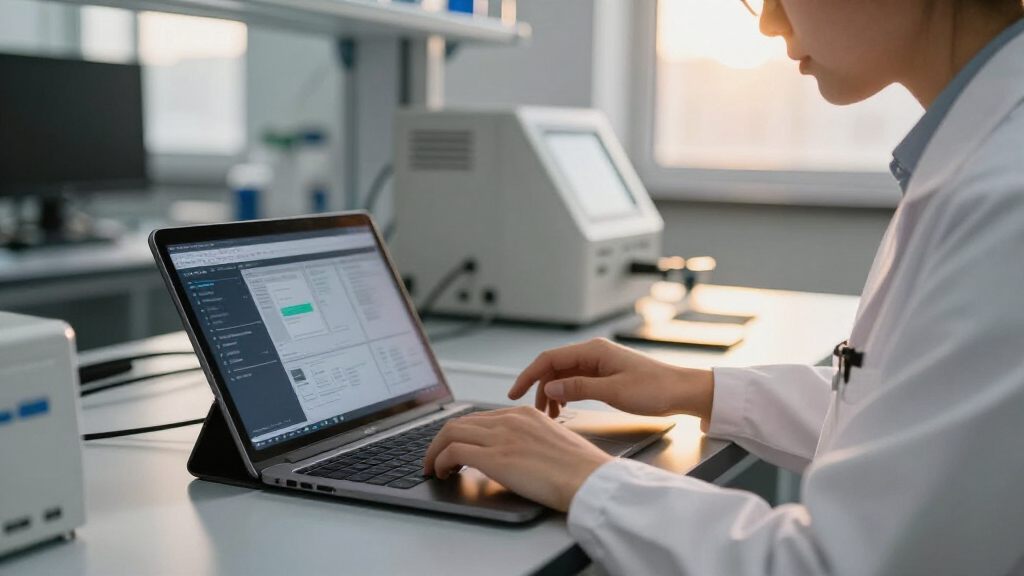

🔍 Read the full analysis: SenseTime Scientist Details Timeline For Next Multimodal AI Breakthrough on ThorstenMeyerAI.com

Get everyday essentials delivered free with Prime
- Fast, free delivery on millions of items
- Prime Video, Amazon Music and more included
- Member-only deals all year
TL;DR
A senior scientist at SenseTime predicts a major breakthrough in multimodal AI within two years, according to KrASIA. This forecast highlights an anticipated leap in systems that understand and combine text, images, and audio, with broad industry implications.
A senior scientist at SenseTime, one of China’s leading AI firms, has predicted that a major breakthrough in multimodal AI could occur within two years. The forecast, reported by KrASIA, indicates that systems capable of understanding and reasoning across text, images, and audio with human-like flexibility may emerge before the end of 2027, as detailed in the original analysis. This projection underscores the rapid pace of AI development and the strategic importance of multimodal capabilities for industry leaders and policymakers alike.
The prediction comes from an unnamed senior researcher at SenseTime, a company renowned for its computer vision expertise and recent focus on foundation models. According to the report, this breakthrough would represent a significant step beyond current systems, which typically process multiple data types separately or through loosely integrated components. Instead, the envisioned models would reason fluently across sight, sound, and language, enabling more advanced robotics, autonomous vehicles, and interactive interfaces.
While no specific technical milestones, benchmarks, or product timelines were provided, the forecast emphasizes an acceleration in AI progress. SenseTime has shifted its focus toward large multimodal models, positioning multimodality as a key differentiator against rivals like OpenAI, Google, and Chinese competitors such as Alibaba and Baidu. The company’s recent development of its SenseNova foundation model series reflects this strategic pivot, aiming to unify perception and language understanding.
Implications of a Potential Two-Year AI Breakthrough
If accurate, this forecast suggests a rapid evolution toward more integrated, human-like AI systems capable of reasoning across multiple sensory inputs. Such systems could revolutionize industries including robotics, autonomous driving, medical imaging, and human-computer interaction. The forecast also signals a shift in the industry’s timeline, prompting companies, regulators, and policymakers to prepare for the deployment of advanced multimodal AI within the next few years. The prediction’s weight is enhanced by its source: a senior researcher from SenseTime, a major Chinese AI company competing globally with US firms, indicating that this pace of progress is recognized internally as well as externally.
As an affiliate, we earn on qualifying purchases.
Industry Race Toward Multimodal AI Advancement
The forecast arrives amid a fierce global race to develop more capable multimodal models. Major players like OpenAI, Google, and Anthropic have released models that accept image, audio, and video inputs, while Chinese firms including Alibaba, Baidu, and ByteDance are actively pursuing similar capabilities. Historically, current multimodal systems are seen as aggregations rather than fully integrated models, and a true breakthrough would entail models that can reason across modalities with human-like flexibility.
Predictions of imminent breakthroughs have become frequent in the AI sector, but they often lack concrete technical details or benchmarks. The current landscape suggests a competitive push for more unified architectures, with research papers and product announcements expected over the next two years to test the validity of this forecast.
“A SenseTime scientist predicts that a significant multimodal AI breakthrough could come within two years.”
— KrASIA report
AI-powered image and audio recognition device
As an affiliate, we earn on qualifying purchases.
As an affiliate, we earn on qualifying purchases.
Unconfirmed Details About the Forecast’s Basis
Several key details remain unclear: the identity and specific role of the SenseTime scientist, the context of the prediction (conference, interview, internal memo), and what precisely constitutes a ‘breakthrough’ in this forecast. It is not known whether the timeline refers to internal research milestones, commercial deployment, or a general industry estimate. No technical benchmarks, experimental results, or product timelines were provided, and the statement appears to be a forecast rather than a confirmed development.
As an affiliate, we earn on qualifying purchases.
Monitoring Developments Over the Next Two Years
The next steps involve tracking SenseTime’s research outputs, including updates to its SenseNova models and performance on multimodal benchmarks. Industry observers will watch for similar predictions or announcements from competitors such as OpenAI, Google, and Chinese rivals. Published research on unified architectures that integrate vision, language, and audio will also serve as indicators of progress. If SenseTime or other firms formally announce breakthroughs—via papers, product launches, or investor calls—it will help validate or challenge this forecast.
advanced robotics with multimodal AI
As an affiliate, we earn on qualifying purchases.
As an affiliate, we earn on qualifying purchases.
Key Questions
What exactly does a ‘multimodal AI breakthrough’ mean?
A ‘multimodal AI breakthrough’ generally refers to the development of models that can understand and reason across multiple types of data—such as text, images, and audio—with human-like flexibility. It implies a shift from systems that process each modality separately to unified models capable of cross-modal reasoning.
How credible is the two-year timeline forecast?
The timeline is a prediction from an unnamed senior researcher at SenseTime, reported by KrASIA. While it indicates industry momentum, such forecasts are speculative and depend on future technical progress. No specific benchmarks or milestones have been disclosed to substantiate this estimate.
What impact could this have on AI applications?
If realized, advanced multimodal models could enable more sophisticated robots, autonomous vehicles, medical imaging tools, and human-computer interfaces, making AI systems more intuitive and capable of reasoning across diverse sensory inputs.
Are other companies making similar predictions?
While several industry players have announced progress in multimodal AI, specific predictions about breakthroughs within two years are less common. Many companies are actively researching but have not publicly set such timelines.
What are the risks of overestimating AI progress?
Overly optimistic forecasts can lead to misaligned expectations, regulatory delays, or unanticipated technical hurdles. The development of truly human-like multimodal AI remains a complex challenge, and timelines are inherently uncertain.
Source: ThorstenMeyerAI.com
Halloween Picks
halloween
As an affiliate, we earn on qualifying purchases.