🔍 Read the full analysis: Altman Criticized PC Memory, Then Met 50 Samsung Executives on ThorstenMeyerAI.com

Get everyday essentials delivered free with Prime
- Fast, free delivery on millions of items
- Prime Video, Amazon Music and more included
- Member-only deals all year
TL;DR
Samsung confirmed that about 50 executives met OpenAI CEO Sam Altman in Yongin on October 31, but described the gathering as an AI leadership program and announced no memory supply agreement. The meeting followed Altman’s October 29 podcast remarks that personal computers hold memory used only about 5% of the time, an estimate he offered while arguing scarce supply could be allocated more efficiently to shared data centers.
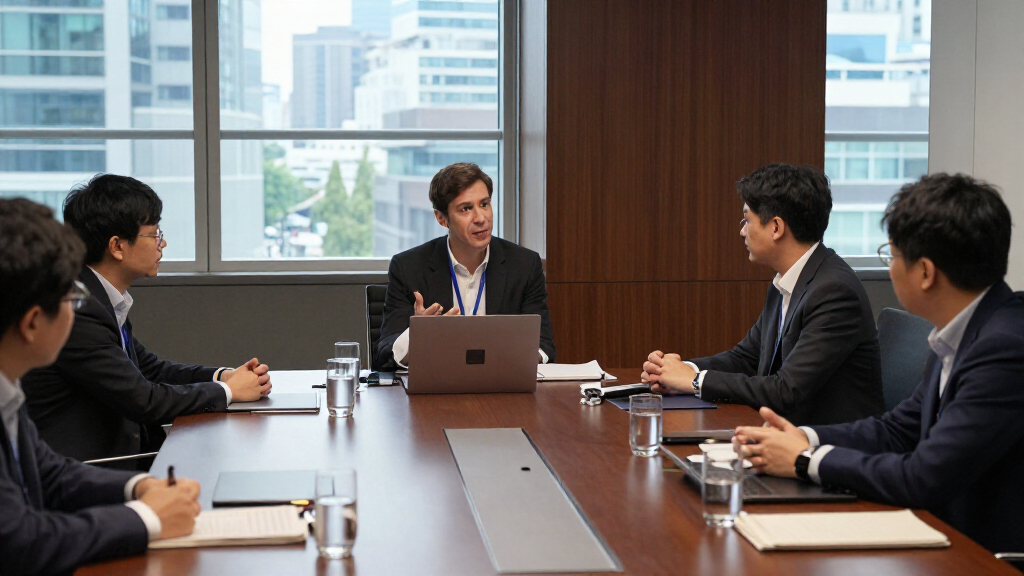
OpenAI CEO Sam Altman met about 50 Samsung executives at the company’s training center in Yongin, South Korea, on October 31, two days after criticizing how much of the world’s limited memory is held in personal computers. Samsung described the gathering as an AI leadership program; neither company announced a new memory supply deal, leaving the meeting’s commercial outcome unclear as demand for chips grows.
Samsung said the attendees were presidents and senior executives from its electronics, finance and biotech affiliates. The meeting’s theme was translated by The Korea Herald as “The Next 10 Years Shaped by AI: The Enterprise’s Choice.” Samsung’s account said participants discussed the direction of AI, its effect on business decisions and management, and new markets it could create. Yonhap, citing Samsung, reported that Altman told the group companies gain an advantage not simply by adopting AI, but by using it to move faster and improve products.
Separate reporting connected the visit to the tight market for memory chips. Bloomberg reported that the meeting aimed to deepen cooperation on memory and AI infrastructure as shortages intensify. The Seoul Economic Daily reported that Richard Ho, OpenAI’s vice president overseeing its in-house AI chip work, accompanied Altman. It also reported, citing industry sources, that OpenAI’s accelerator could use Samsung’s next-generation HBM4 memory. Samsung and OpenAI have not confirmed that reported component plan.
The visit came after Altman spoke with Stripe co-founder John Collison on the Cheeky Pint podcast, published October 29. Asked about high memory prices and supply, Altman said “the invisible hand is failing right now.” He argued that memory in personal computers is often idle and said that, “from a global allocation perspective,” it was “quite terrible” for scarce memory to sit in computers “being used 5% of the time.” The 5% figure was Altman’s estimate, not a reported measurement. His point concerned how limited supply is allocated, rather than a claim that personal computers are inherently poor products.
Infographic 01 · Confirmed, reported, not announced
What we actually know about Altman’s Samsung meeting
Samsung confirmed the meeting and framed it as AI leadership training. The memory angle comes from reporting. No deal was announced.
- Meeting with about 50 presidents and executivesConfirmed by Samsung
Electronics, finance and biotech affiliates; Samsung Human Resources Development Center. Theme: “The Next 10 Years Shaped by AI: The Enterprise’s Choice”.
- Altman: the edge comes from how you use AI, not from adopting itConfirmed by Samsung
As relayed by Samsung via Yonhap; quoted similarly by the Seoul Economic Daily.
- Aim: deeper cooperation on memory chips and AI infrastructureReported
Bloomberg, “as global shortages intensify”.
- OpenAI’s chip-hardware chief traveled along; HBM4 linkOne outlet
Seoul Economic Daily, citing industry sources. Not confirmed by either company.
- SK chairman Chey Tae-won met Altman the same dayOne outlet
Yonhap, citing industry sources. Content not disclosed.
- Volumes, prices, a new contractNot announced
Nothing announced. No statement from OpenAI on the visit.
How Samsung and OpenAI got here
- 1 Oct 2025Letter of intent: memory for Stargate, data centers, floating data centersSamsung and OpenAI announcement
- Jun 2026Samsung rolls out ChatGPT Enterprise and Codex to employeesOpenAI, as reported by the Korea Herald
- Jul 2026Samsung chairman Lee Jae-yong visits OpenAI in San FranciscoKorea Herald
- 29 Oct 2026Samsung’s record quarter; Altman’s “quite terrible” DRAM remarkSamsung results · Cheeky Pint podcast
- 31 Oct 2026Altman meets about 50 Samsung executives in YonginSamsung via Yonhap · Bloomberg
“Confirmed by Samsung” means Samsung’s own account, as relayed by Yonhap and the Korea Herald. A letter of intent is a statement of plans, not a purchase order.
Sources: Samsung via Yonhap, 31 Oct 2026, Korea Herald, 31 Oct 2026, Bloomberg via The Straits Times, 31 Oct 2026, Seoul Economic Daily, 1 Nov 2026, Samsung and OpenAI letter of intent, 1 Oct 2025.
Powered by Thorsten Meyer AI
Memory Supply Shapes AI Costs
The meeting puts a practical supply question behind the recent remarks: how much memory should go to cloud data centers, and how much to consumer and business devices? AI services rely on large quantities of memory, including high-bandwidth memory used alongside advanced processors. If capacity is directed toward data centers, businesses building AI systems may gain access to more infrastructure, while device makers could face higher component costs or less flexible supply.
Those effects are possible consequences of a constrained market, not outcomes established by this meeting. The source material reports that TrendForce expects contract prices for conventional DRAM to rise 10% to 15% in the fourth quarter. It also says TrendForce warned that PC memory supply could decline in 2027 as more capacity shifts toward servers. The figures refer to a forecast for conventional DRAM contract prices and a separate warning about PC supply; they do not establish that a particular product will rise in price or lose memory.
Samsung’s own business makes the issue especially relevant to the company. In its third quarter, Samsung’s chip division generated 106.5 trillion won of 107.4 trillion won in operating profit, according to the supplied source. Its phone and network business recorded a 0.6 trillion won operating loss, partly attributed there to cost pressures. The contrasting results show why memory supply matters to both Samsung’s chip operations and the devices that depend on those components.
Products Worth Considering

Apple MacBook Air 13-inch with M5 chip, 16GB memory, 1TB SSD, and 12MP Center Stage camera (Midnight)

Apple MacBook Air 15-inch (2026) with M5 chip, 16GB memory, 512GB SSD, Silver

Samsung 27-Inch Odyssey QD-OLED G8 4K 240Hz Gaming Monitor
As an affiliate, we earn on qualifying purchases.
From Podcast Remark to Yongin
Altman’s comment came in a discussion about why high memory prices had not yet prompted more supply. He framed the issue as a mismatch between where memory sits and how intensively it is used, contrasting individual computers with shared data centers. That is an argument about allocation. It does not establish a measured global utilization rate for computers, nor does the available material provide a method behind the 5% estimate.
The Samsung meeting also sits within an existing relationship. OpenAI and four Samsung companies signed a letter of intent in October 2025. Samsung said at the time that OpenAI’s memory demand was projected to reach “up to 900,000 DRAM wafers per month.” That was a projection in a letter of intent, not evidence that Samsung has since supplied that quantity under a finalized contract. In June 2026, OpenAI said Samsung Electronics would roll out ChatGPT Enterprise and Codex to employees in Korea and in its global device division. Samsung executive chairman Lee Jae-yong visited OpenAI in San Francisco in July, according to The Korea Herald.
Altman also met SK Group chairman Chey Tae-won in Seoul on October 31, alongside executives from SK hynix, another major Korean memory maker. Yonhap reported the meeting, citing industry sources, but the discussion was not disclosed. The source material says Altman’s Yongin visit was his first to Samsung in about a year, according to The Seoul Economic Daily. Recent executive contacts therefore show engagement with both major Korean memory groups, but do not confirm new supply commitments.
““From a global allocation perspective,” it is “quite terrible” that limited memory sits in personal computers “being used 5% of the time.””
— Sam Altman, on the Cheeky Pint podcast
No Supply Terms Disclosed
No new supply contract, chip volumes or prices were announced after the October 31 meeting. Samsung’s description focused on AI strategy and leadership, and the company did not publish an attendee list. Bloomberg’s account linked the visit to memory and AI infrastructure cooperation, but the public information provided here does not spell out what either side agreed to pursue.
The reported use of Samsung HBM4 in an OpenAI accelerator remains unconfirmed by both companies. The Seoul Economic Daily attributed that possibility to industry sources, so it should not be treated as a confirmed product plan. The material also does not disclose what Altman and SK Group’s Chey discussed, or whether the two meetings led to follow-up negotiations.
More broadly, the available sources do not establish how much memory is actually idle in personal computers, how Altman derived his 5% estimate, or whether shifting capacity toward data centers would reduce overall shortages. The price and supply figures cited are market forecasts, not guarantees; their effects on particular devices, companies and consumers remain uncertain.
Watch for Confirmed Supply Plans
The clearest next signal would be a public announcement from Samsung or OpenAI describing a supply agreement, product collaboration, volumes or timing. Any confirmation about HBM4 in an OpenAI accelerator would also clarify whether the reported hardware connection is real. Until either company provides those details, the Yongin gathering confirms executive contact, not a specific chip deal.
Readers can also watch for updates to memory-market forecasts and company reporting on capacity and prices. TrendForce’s cited forecast points to 10% to 15% growth in conventional DRAM contract prices for the fourth quarter and a possible decline in PC memory supply in 2027. Those projections may be revised, and no product-level price change has been confirmed here. For now, the central development is the meeting itself, against a backdrop of competition for memory between AI infrastructure and other uses.
Key Questions
What happened at Samsung’s meeting with Sam Altman?
Samsung said about 50 executives from its electronics, finance and biotech affiliates met Altman at its Yongin training center on October 31. The company described the session as an AI leadership program focused on AI’s direction and its effects on business.
Did Samsung and OpenAI announce a memory supply deal?
No. The available information says no new supply contract, volume or price was announced. Bloomberg reported that the visit aimed to deepen cooperation, but public details of any resulting agreement have not been disclosed.
What did Altman say about memory in personal computers?
On the Cheeky Pint podcast, Altman argued that scarce memory is often idle in personal computers and said it was “quite terrible” from a global allocation perspective for it to be “used 5% of the time.” That percentage was his estimate, not a verified measurement.
Is OpenAI confirmed to use Samsung HBM4?
No. The Seoul Economic Daily reported, citing industry sources, that an OpenAI accelerator was expected to use Samsung’s next-generation HBM4. Neither OpenAI nor Samsung confirmed that report in the supplied material.
Could the memory shortage affect PC prices or specifications?
It could, but no specific price or device change is confirmed. The source cites a TrendForce forecast for higher fourth-quarter conventional DRAM contract prices and a warning that PC memory supply could decline in 2027 as capacity shifts to servers. These are market forecasts, not confirmed outcomes for individual products.
Source: ThorstenMeyerAI.com