

You’ll find that AI security maturity differs from general cyber maturity because it focuses on protecting models and sensitive data from sophisticated, evolving threats. Unlike traditional cybersecurity, which mainly guards infrastructure, AI security demands a proactive approach to defend against adversarial attacks, data manipulation, and model vulnerabilities. It also requires continuous updates, cross-disciplinary collaboration, and ongoing monitoring. To fully understand the unique challenges and strategies involved, explore what makes AI security a specialized field that keeps adapting.

Get everyday essentials delivered free — and shop member deals
- Fast, free delivery on millions of items
- Access to Prime Big Deal Days deals on October 6–7
- Prime Video, Amazon Music and more included
Key Takeaways
- AI security focuses on safeguarding models and data from manipulation, unlike traditional cybersecurity which emphasizes network and infrastructure protection.
- It requires continuous adaptation to evolving threats like adversarial attacks and data poisoning, whereas general cyber maturity often emphasizes static defenses.
- AI security involves specialized techniques such as differential privacy and adversarial training, which are less common in traditional cybersecurity frameworks.
- Managing AI security demands ongoing model monitoring, interpretability, and lifecycle management, highlighting its dynamic nature.
- Collaboration across disciplines (cybersecurity, data science, AI ethics) is critical for AI security maturity, surpassing typical organizational cybersecurity silos.
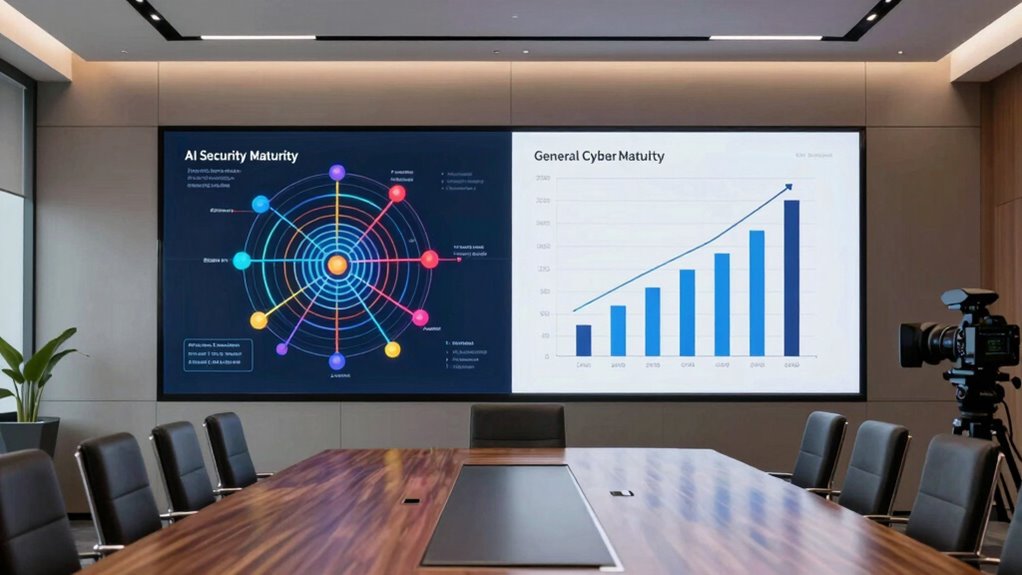
As organizations increasingly adopt artificial intelligence, understanding how AI security maturity compares to traditional cyber maturity becomes essential. AI security involves unique challenges that go beyond conventional cybersecurity measures, requiring a focus on adversarial robustness and data privacy. Unlike traditional cyber defenses, which primarily shield networks and systems from external threats, AI security must contend with sophisticated adversarial attacks designed to manipulate model behavior or extract sensitive information. You need to build defenses that can withstand these targeted manipulations, ensuring your AI models remain reliable even under attack. This is where adversarial robustness becomes critical; it involves designing models that are resistant to inputs intentionally crafted to deceive or compromise them.
AI security demands resilience against targeted attacks and safeguarding sensitive data beyond traditional cybersecurity measures.
Data privacy also plays a crucial role in AI security maturity because AI systems often process vast amounts of sensitive data. Protecting this data isn’t just about complying with regulations; it’s about maintaining trust and safeguarding user information from potential breaches. Traditional cyber maturity emphasizes endpoint security and network defenses, but AI security demands more nuanced approaches, like differential privacy and secure data handling practices, to prevent data leakage through model inversion or membership inference attacks. As your organization advances in AI security maturity, you’ll prioritize techniques to anonymize data and restrict access, ensuring sensitive information stays protected even when models are exposed to malicious actors. Moreover, understanding the importance of color accuracy in visual applications can influence how you approach model robustness and interpretability.
Another key difference is the pace of threat evolution. In traditional cybersecurity, threats tend to follow predictable patterns, allowing you to develop standardized responses. With AI, threats evolve rapidly and often require specialized countermeasures. Attackers may manipulate training data or exploit model vulnerabilities, making it necessary for your security practices to be more dynamic and adaptable. Achieving AI security maturity means continuously updating your defenses, training your models against adversarial examples, and implementing rigorous testing protocols. You must also foster a culture of ongoing learning about emerging threats specific to AI, which is less emphasized in traditional cyber maturity frameworks. Recognizing that AI models can be targeted through side-channel attacks, organizations need to implement specific safeguards to mitigate these subtle vulnerabilities. Additionally, understanding and addressing the data poisoning threat vector is vital to prevent malicious actors from corrupting training data and compromising model integrity.
Finally, integrating AI security into your overall cybersecurity strategy involves a different mindset. It requires understanding that AI systems are not static; they are living entities that learn and adapt, which can introduce new vulnerabilities. As you develop your AI security maturity, you’ll recognize the importance of cross-disciplinary collaboration — combining expertise in cybersecurity, data science, and AI ethics — to build all-encompassing defenses. This collaboration is essential because AI security also involves understanding model interpretability, which helps identify potential weaknesses and biases that could be exploited. As organizations prioritize continuous monitoring of their AI systems, they can detect vulnerabilities early and respond more effectively. In essence, while traditional cyber maturity focuses on protecting infrastructure, AI security maturity centers on safeguarding the models and data that power intelligent systems, demanding a specialized, evolving, and proactive approach.
adversarial training AI security tools
As an affiliate, we earn on qualifying purchases.
As an affiliate, we earn on qualifying purchases.
Frequently Asked Questions
How Do Organizations Measure AI Security Maturity Levels?
You measure AI security maturity levels by conducting thorough AI risk assessments, which identify vulnerabilities unique to AI systems. You focus on data integrity to guarantee training data remains accurate and unaltered. Additionally, you evaluate your use of secure development practices, monitoring processes, and incident response capabilities specific to AI environments. These measures help you gauge how well your organization manages AI-specific threats and progresses toward higher maturity levels.
What Specific Challenges Are Unique to AI Security?
You face unique AI security challenges like managing AI threats, which evolve rapidly and can be hard to detect. Data bias is another critical issue, potentially causing AI models to make flawed decisions. Addressing these challenges requires specialized strategies, such as rigorous data audits and adaptive threat detection systems. Unlike general cyber threats, these AI-specific issues demand a deep understanding of AI behavior and continuous monitoring to guarantee resilience.
How Does AI Security Impact Overall Cyber Risk Management?
AI security markedly impacts your overall cyber risk management by addressing AI-specific threats and safeguarding data privacy. When you strengthen AI security, you reduce the risk of malicious AI attacks and data breaches that could compromise sensitive information. This proactive approach helps you better identify vulnerabilities, allocate resources effectively, and build resilience across your cybersecurity framework, ensuring your organization remains protected against evolving AI threats and privacy concerns.
Are There Industry Standards for AI Security Maturity?
You’ll find industry standards for AI security maturity are emerging, but they’re not yet as thorough as traditional cybersecurity frameworks—it’s like building a spaceship with blueprints still in progress! These standards focus on AI ethics and regulatory compliance to guarantee responsible development and deployment. Organizations are encouraged to adopt best practices, align with evolving guidelines, and stay proactive in managing AI-specific risks, helping you stay ahead in this rapidly evolving landscape.
How Can Organizations Accelerate AI Security Maturity Development?
To accelerate AI security maturity, you should prioritize establishing robust AI governance and implementing ethical frameworks. Regularly assess your AI systems for vulnerabilities, promote transparency, and guarantee compliance with industry standards. Invest in ongoing training for your team, foster a culture of responsibility, and stay updated on emerging threats. Collaborate with industry peers to share best practices, which helps you adapt quickly and build trust in your AI security measures.
As an affiliate, we earn on qualifying purchases.
Conclusion
Think of AI security maturity as tending a delicate garden—each new plant, or AI system, needs your careful nurturing and vigilance. Meanwhile, general cyber maturity is like fortifying a fortress, built to withstand storms. Both require your attention, but AI’s subtle, evolving nature demands a more attentive, adaptive approach. By understanding these differences, you become the gardener and the guardian, ensuring your defenses grow resilient and your digital landscape remains flourishing and secure.
As an affiliate, we earn on qualifying purchases.
secure data handling tools for AI
As an affiliate, we earn on qualifying purchases.
As an affiliate, we earn on qualifying purchases.
Fall Picks
fall essentials
As an affiliate, we earn on qualifying purchases.