📊 Full opportunity report: How To Make Career Education More Hands-On For K-12 Students on IdeaNavigator AI — validation score, market gap, and execution plan.

Get everyday essentials delivered free with Prime
- Fast, free delivery on millions of items
- Prime Video, Amazon Music and more included
- Member-only deals all year
TL;DR
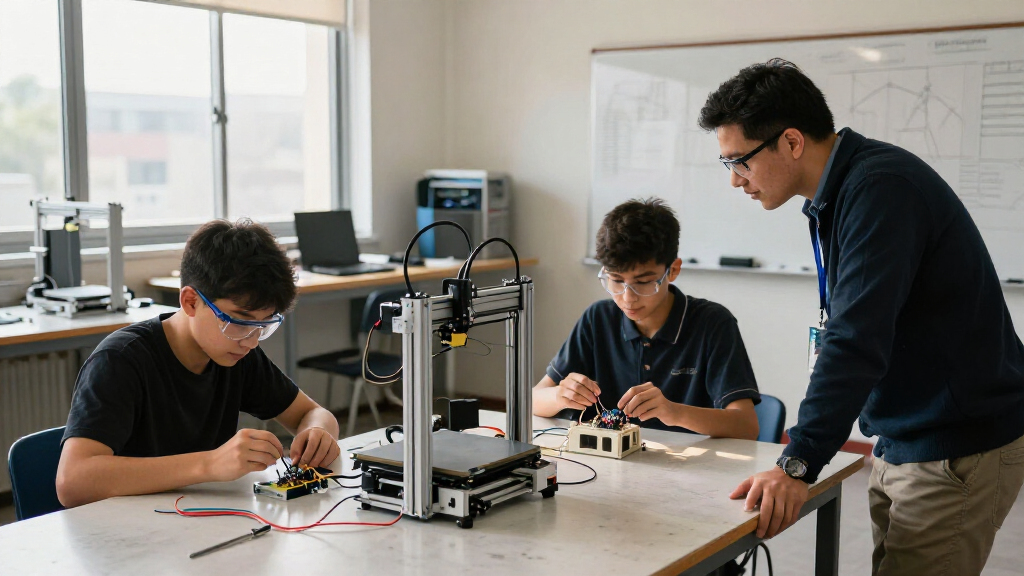
A proposal from IdeaNavigator AI recommends testing five real-job simulations in a one-semester pilot with three Indiana districts. The idea is to give students practical career exposure while helping coordinators document work-based-learning hours; it has not been reported as an adopted or launched program.
IdeaNavigator AI has proposed a one-semester pilot of real-job simulations with three Indiana school districts, aiming to give high school students practical career experience and help districts document work-based-learning hours. The proposal is a suggested test, not a confirmed district program or state initiative.
The plan targets career and technical education (CTE) or work-based-learning coordinators who must arrange qualifying experiences and record student hours. It identifies a recurring obstacle: some districts, particularly those in rural areas and those seeking white-collar placements, may have too few local employers able to host teenagers. Coordinators may also spend time finding placements and maintaining hour records manually.
For an initial product, IdeaNavigator AI recommends offering five simulations during a free, one-semester pilot, then measuring student completion, hours districts accept toward diploma seals and whether participating districts allocate money for the following school year. The broader product concept is a library of 20 role-based activities using task files, with examples including medical assistant, HVAC technician, bookkeeper, logistics coordinator and paralegal.
The proposal calls for a local employer review of students’ work, conducted in a short live or asynchronous check-in. It also suggests coordinator tools for hour logs, rubric scores and training-plan exports matching Indiana’s state template. The proposed business model is an annual district license priced per enrolled high school student, with paid custom simulations as an add-on. No pilot results, district commitments or pricing details are provided.
Make career learning hands-on
IdeaNavigator AI proposes a one-semester test of job simulations in three Indiana districts. The pilot is a proposal, not an adopted or launched program.
Why try simulations?
Some districts have limited local employers able to host students, especially for office-based careers.
Practice real tasks
Role-based activities could offer structured career experience when in-person placements are scarce.
Track the work
Hour logs, rubric scores and training-plan exports are proposed to support documentation.
How the pilot could work
The proposal pairs simulated tasks with local employer feedback.
Invite three early-adopting Indiana districts to a free, one-semester test.
A local employer checks each student’s work live or asynchronously.
Check completion, hours districts accept toward diploma seals and next-year funding decisions.
A broad role library is envisioned
The longer-term concept describes 20 role-based activities; examples include:
Diploma context
The proposal says Indiana’s new diploma applies to the class of 2029, with districts able to opt in from the 2025–26 school year.
| Diploma seal | Work-based learning hours |
|---|---|
| One seal | 75 hours |
| Another seal | 150 hours |
Connecting Simulations to Diploma Hours
The proposal addresses two practical questions for schools: how to offer career exploration when worksite placements are scarce, and how to document experiences that may count toward graduation requirements. If districts accept simulations as qualifying hours, this approach could give more students access to structured practice without requiring each student to secure a traditional placement. That possibility is particularly relevant to rural communities and students interested in office-based careers, where nearby host employers may be limited.
But the distinction between a useful classroom exercise and an approved work-based-learning experience matters. Indiana’s stated definition includes sustained interaction with industry professionals, according to the proposal. A self-guided video or worksheet alone may not meet that standard. Employer feedback and a state-aligned training plan are intended to connect the simulated tasks to workplace expectations, but the proposal does not establish that state officials or districts would count those activities toward required hours.
The suggested pilot therefore treats district acceptance of hours and willingness to fund a later year as central tests, not assumptions. Those measures could show whether simulations solve an administrative and access problem as well as whether students finish the activities.
Products Worth Considering

DJI Mic 3 (2 TX + 1 RX + Charging Case) Wireless Microphone

Amazon Kindle Paperwhite (2024, 12th Generation), 16 GB, 7-Inch Display, Black

Samsung 27-inch Odyssey OLED G6 QD-OLED QHD Gaming Monitor (G61SH)
As an affiliate, we earn on qualifying purchases.
Indiana’s Diploma Timeline
Indiana’s new diploma was approved in December 2024 and applies to the class of 2029. Districts could opt in beginning in the 2025-26 school year, according to the information provided by IdeaNavigator AI. Two diploma seals call for 75 or 150 hours of work-based learning and state that hours may include simulated experiences.
On October 6, 2026, Indiana launched a Digital Resource Hub that includes a training-plan template for students in qualifying work-based learning, according to the proposal. The template creates a concrete administrative reference point for a simulation platform seeking to support schools. It does not, by itself, confirm that any particular commercial simulation or pilot will satisfy the state’s requirements.
The suggested first step is deliberately limited: approach three Indiana districts that opted into the new diploma early and offer five simulations for one semester. The proposal describes this as a way to test local demand and recognition before building a larger library or selling annual licenses.
Hours Approval Remains Unsettled
No districts are identified as having agreed to participate, and the proposal reports no completed pilot, student outcomes or budget commitments. It is also unclear which simulated activities Indiana or individual districts would approve as qualifying work-based learning, how they would verify the amount of time completed, or what standards employer reviewers would use.
The proposal does not provide a product, operating company, final price or evidence that employers in the listed fields are ready to review student work. Its recommended metrics—completion rates, accepted hours and follow-on budget decisions—are plans for validation, not reported results. Until a pilot is run and the relevant authorities clarify eligibility, simulations should not be described as guaranteed substitutes for in-person placements.
A Three-District Pilot Test
The next step proposed by IdeaNavigator AI is to pitch three early-adopting Indiana districts on a free, one-semester test of five simulations, each reviewed by a local employer. The districts would need to determine whether activities fit their work-based-learning plans and how to submit the required documentation.
Results to watch include how many completed hours districts accept toward diploma seals, how many students finish the activities and whether coordinators commit funds for the next school year. Those findings could inform whether to expand the activity library, add local-employer customization or pursue annual district licenses. No timeline for district decisions or a pilot launch has been announced.
Source: IdeaNavigator AI
Key Questions
Is Indiana launching a job-simulation program?
No launch is reported. IdeaNavigator AI proposed testing simulations with three districts; no participating districts or state-backed program are identified.
Could simulations count toward Indiana diploma hours?
The diploma requirements described in the proposal say qualifying work-based-learning hours may include simulated experiences. Whether a specific activity counts would need to be determined by the relevant district or state requirements; acceptance is not confirmed.
What would students do in the proposed simulations?
The concept uses task files based on roles such as medical assistant, HVAC technician, bookkeeper, logistics coordinator and paralegal. A local employer would review each student’s work in a short live or asynchronous check-in.
How would the pilot be evaluated?
The proposed measures are student completion rates, hours accepted by districts toward diploma seals and whether coordinators commit budget for the next school year.
Source: IdeaNavigator AI