AI tutors can provide personalized learning tailored to your pace and style, offering immediate feedback and adapting content to keep you engaged. They help identify your strengths and weaknesses in real time, making learning more efficient and enjoyable. However, they may not fully replace human interaction or emotional understanding and could face issues with accessibility and privacy. To discover how these benefits and limitations impact your learning experience, keep exploring more about AI in education.
Key Takeaways
- AI tutors provide personalized learning experiences by adapting to individual paces and styles.
- They offer immediate feedback, increasing engagement and facilitating faster understanding of concepts.
- Privacy concerns arise due to extensive data collection on learner habits and emotional responses.
- Limited emotional understanding and lack of deep human connection may hinder some learners’ progress.
- Accessibility barriers can widen educational gaps, restricting benefits for learners with technological or financial constraints.
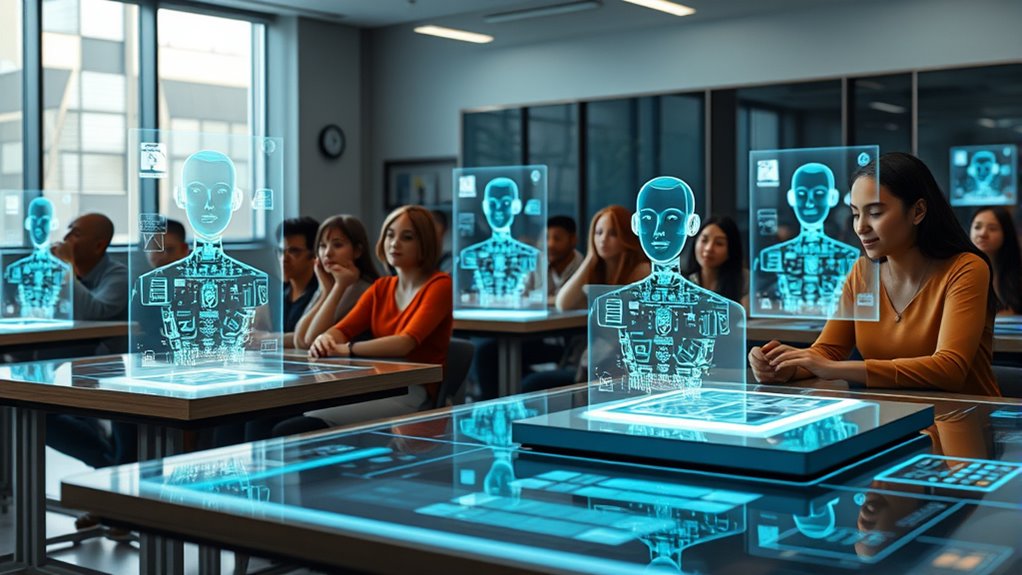
Have you ever wondered how artificial intelligence is transforming education? AI tutors are rapidly changing the way you learn, offering personalized learning experiences that adapt to your unique pace and style. Unlike traditional classrooms, where instruction is often one-size-fits-all, AI tutors analyze your interactions and performance data to tailor lessons specifically for you. This means you’re more likely to stay engaged, grasp concepts faster, and improve your skills more effectively. Personalized learning powered by AI helps identify your strengths and weaknesses in real time, allowing the system to adjust content, difficulty levels, and feedback accordingly. This customization makes learning more efficient and enjoyable, giving you a sense of progress and achievement that’s often hard to find in conventional settings.
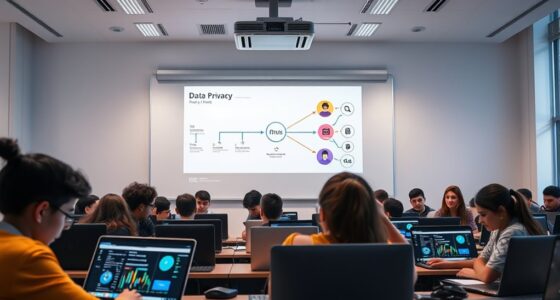
However, with these benefits come important considerations around data privacy. As AI tutors collect vast amounts of data about your learning habits, preferences, and even emotional responses, concerns about how this information is used and protected naturally arise. You need to be aware that your data is being stored and analyzed to improve your learning experience, but it’s equally crucial that your privacy is safeguarded. Reputable AI platforms implement strict data privacy policies and security measures to prevent unauthorized access or misuse of your information. Still, the rapid growth of AI in education means there’s ongoing debate about how best to balance personalized learning benefits with protecting your privacy rights. When choosing an AI tutor, it’s wise to review their data privacy policies and ensure they prioritize your confidentiality.
The integration of AI tutors also introduces questions about equity and access. While these tools can provide highly personalized support, they may not be equally accessible to everyone due to technological limitations or proprietary costs. This can widen existing educational gaps if not addressed properly. Additionally, some learners might prefer human interaction or find that AI doesn’t fully capture the nuance of complex topics or emotional cues. AI tutors excel at delivering standardized content and immediate feedback, but they might fall short in fostering the deeper understanding and emotional connection often found in face-to-face teaching. Furthermore, as AI becomes more integrated into education, the importance of AI in Education and understanding its broader implications continues to grow.
Frequently Asked Questions
How Do AI Tutors Personalize Learning Experiences?
You get personalized learning experiences from AI tutors through adaptive feedback and learner analytics. The AI monitors your progress, identifies strengths and weaknesses, and adjusts lessons accordingly. It provides targeted hints and hints, making learning more efficient. By analyzing your interactions, the AI can tailor content to fit your pace and style, ensuring you stay engaged and motivated while mastering new skills.
What Industries Benefit Most From AI Tutoring?
Did you know that the education sector saw a 40% increase in personalized learning tools last year? You’ll find AI tutoring benefits most in education, corporate training, and healthcare. These industries leverage AI to provide personalized feedback and adaptive assessments, enhancing learning efficiency. As a result, learners get tailored support that accelerates progress, making AI tutors invaluable for improving skills and knowledge in diverse professional and academic fields.
How Secure Is Student Data With AI Tutors?
You should feel reassured about student data security with AI tutors. They typically use data encryption to protect your information, making it difficult for unauthorized access. Additionally, reputable AI tutoring platforms follow strict privacy policies that specify how your data is collected, stored, and used. However, it’s always wise to review these policies yourself and choose providers committed to maintaining your privacy and ensuring your data remains safe.
Can AI Tutors Replace Human Teachers Entirely?
You might imagine a classroom filled with glowing screens, but AI tutors can’t fully replace human teachers. While they excel at delivering personalized lessons, they lack the emotional support and ethical judgment only humans provide. AI raises ethical questions, and emotional connection remains essential in education. So, AI tutors are great tools, but human teachers are irreplaceable for nurturing understanding, empathy, and ethical guidance in students.
What Are Future Innovations in AI Tutoring Technology?
Future innovations in AI tutoring will likely focus on enhancing adaptive feedback and emotional intelligence, making learning more personalized and engaging. You’ll see smarter systems that adapt to your unique learning style and emotional state, providing encouragement and tailored guidance. These advancements will help you stay motivated and improve understanding, creating a more human-like and responsive educational experience. Expect AI tutors to become more intuitive, supporting your learning journey more effectively than ever before.
Conclusion
While AI tutors offer personalized learning at your fingertips, they can’t replace the warmth of human connection or the spark of spontaneous insight. As you navigate this digital landscape, remember that technology can guide your path but won’t fill every emotional gap. Embrace the efficiency and innovation, yet stay grounded in the human touch that sparks true understanding. In this balance, you’ll find the key to a richer, more meaningful learning journey.