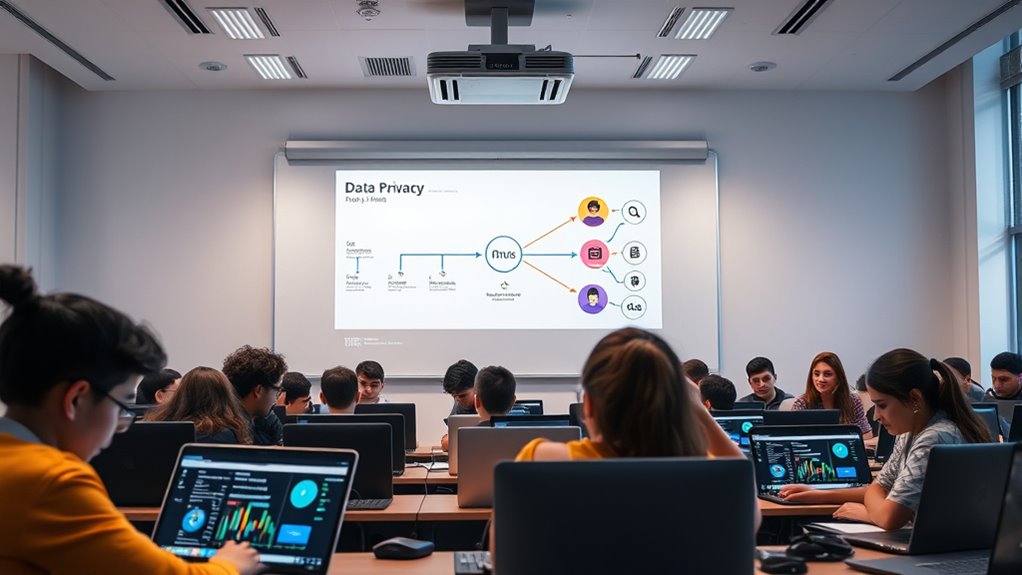

When using AI platforms for learning, it’s essential to understand how your student data is collected, stored, and shared. These platforms gather information like assignments, quiz results, and interactions to personalize your experience. They should have clear privacy policies explaining what data is used and who has access. Encryption and security measures protect your info, but stay aware of privacy settings and updates. To learn more and keep your data safe, explore the platform’s policies carefully.
Key Takeaways
- Understand what student data is collected, including personal info, learning habits, and platform interactions.
- Review privacy policies to see how data is used, stored, shared, and retained.
- Be aware of security measures like encryption and access controls protecting student information.
- Manage privacy settings to control data collection, sharing, and tracking preferences on AI platforms.
- Stay informed about policy updates and regulations to make informed decisions and protect student privacy.

Have you ever wondered how your personal data is protected when using AI-powered educational tools? As you navigate these platforms, it’s important to understand what happens behind the scenes with your student data. AI tools often collect information like your assignments, quiz results, learning habits, and even your interactions within the platform. While this data helps personalize your learning experience, it also raises questions about privacy and security. That’s why knowing about privacy policies is essential. These policies serve as the official rules that explain how your student data is collected, used, stored, and shared. They outline what types of information are gathered, who has access to it, and the measures in place to keep it safe. When you start using an AI educational platform, take the time to read the privacy policy carefully. It should clearly state whether your data is shared with third parties, how long it is retained, and what rights you have regarding its use. If a privacy policy seems vague or overly complicated, consider asking questions or seeking platforms that offer more transparency.
Most reputable AI providers prioritize protecting your student data by implementing strict security measures. These can include encryption, secure servers, and access controls that limit who can view or modify your information. However, even with these protections, breaches can happen, so it’s wise to be cautious about the amount of sensitive data you share. Avoid inputting personally identifiable information unless it’s absolutely necessary and you’re comfortable with the platform’s privacy practices. Additionally, some platforms allow you to manage your privacy settings, giving you control over what data is collected and how it’s used. Regularly reviewing these settings helps ensure your preferences are respected. It’s also beneficial to understand the different cookie categories that might be used to track your interactions and preferences.
Your role doesn’t end with reading privacy policies; staying informed about updates is equally important. Privacy policies can change, especially as new technologies emerge or regulations evolve, so keeping track of any changes helps you understand your rights and the platform’s obligations. If you’re ever unsure about how your student data is being handled, don’t hesitate to contact the platform’s support team. Being proactive about your privacy means you’re better equipped to protect your personal information while benefiting from the advantages AI educational tools offer. Ultimately, your awareness and understanding of privacy policies empower you to make informed decisions, ensuring your student data remains secure as you learn and grow with AI-powered platforms.
Frequently Asked Questions
How Can Students Verify the Privacy Policies of AI Platforms?
You can verify the privacy policies of AI platforms by carefully reading their privacy policy documents, focusing on how they handle data validation and user privacy. Look for clear explanations about data collection, storage, and sharing. Don’t hesitate to contact support if anything is unclear. Comparing policies across platforms also helps you make informed decisions about your data privacy. Being proactive ensures you understand how your information is protected before using any AI tool.
Are There Age Restrictions for Students Accessing AI Educational Tools?
You should know that many AI educational tools have age restrictions, with some requiring users to be at least 13 years old. To access these platforms, you often need age verification, and parental consent may be necessary for younger students. Imagine a digital classroom where over 60% of platforms implement these safeguards, ensuring minors’ safety and privacy. Always check the platform’s policies to stay compliant and protect your information.
What Rights Do Students Have Over Their Data Collected by AI Platforms?
You have rights over your data collected by AI platforms, including data ownership and control. You can manage your consent, deciding what information is shared and how it’s used. Platforms should provide clear options for consent management, allowing you to revoke or modify permissions anytime. Stay informed about your rights, review privacy policies, and actively control your data to guarantee your privacy is protected and your preferences are respected.
How Is Student Data Protected During AI Platform Updates or Breaches?
Imagine your student data as a vault, securely locked during updates or breaches. During these times, data encryption keeps your information unreadable to outsiders, while access controls ensure only authorized personnel can peek inside. This duo safeguards your data from theft or misuse, acting like an unbreakable shield. You can trust that your details stay safe, even when AI platforms undergo changes or face security threats.
Can Students Opt Out of Data Collection Without Losing Access to AI Tools?
You can often opt out of data collection, but it depends on the platform’s policies. Many AI tools use data anonymization to protect your identity, so opting out might not mean complete exclusion from the service. For minors, parental consent is usually required for data collection, and opting out might limit access to certain features. Always review the platform’s privacy settings and policies to understand your options.
Conclusion
You might think AI platforms are just tools for learning, but they hold your personal data too. Some believe that AI can truly understand and protect your privacy, but the reality is more complex. By staying informed and cautious, you can help guarantee your data stays safe. Remember, the truth is that safeguarding your privacy requires active effort—don’t assume AI will always prioritize your security. Stay vigilant to truly benefit from these powerful tools.