
AI access in education means having the hardware and software to use digital tools, but access alone doesn’t guarantee better learning outcomes. AI readiness involves understanding how to effectively use these tools, applying them strategically, and adapting teaching strategies based on AI insights. Being ready means you’re prepared to maximize benefits while recognizing limitations and ensuring ethical use. To learn how to bridge the gap and optimize AI in your education approach, keep exploring these important concepts.

Get everyday essentials delivered free with Prime
- Fast, free delivery on millions of items
- Prime Video, Amazon Music and more included
- Member-only deals all year
Key Takeaways
- AI access provides the necessary hardware and software, while AI readiness involves effective understanding and strategic application of those tools.
- Access alone does not improve learning outcomes without proper training and purposeful integration.
- AI readiness requires teacher training to interpret data, adapt strategies, and design personalized learning pathways.
- Understanding AI functionalities and limitations is essential for maximizing benefits and avoiding over-reliance.
- Developing AI literacy and ethical awareness ensures balanced, responsible, and inclusive use of AI in education.
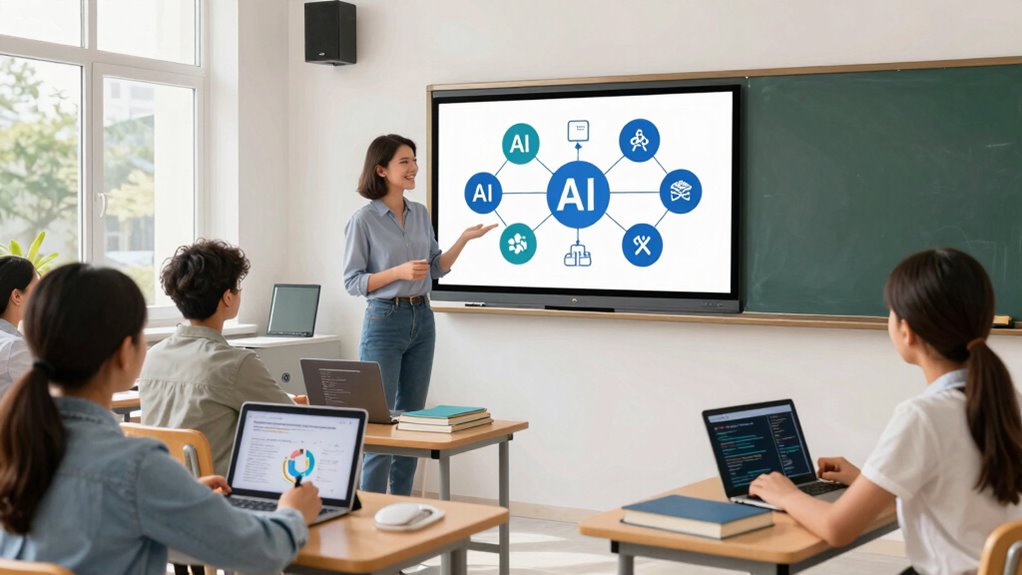
As artificial intelligence becomes more integrated into educational settings, the distinction between having access to AI tools and being genuinely prepared to use them effectively becomes vital. Simply providing students and teachers with AI technology doesn’t automatically lead to better learning outcomes. Instead, it’s about how well you understand and utilize these tools to enhance education. When you have access to AI, you’re fundamentally equipped with the hardware and software needed for digital learning. But true AI readiness means you’re prepared to leverage these resources intentionally and effectively, guiding personalized learning experiences and addressing individual needs.
AI access alone doesn’t improve learning; effective use and understanding are essential for meaningful educational transformation.
Personalized learning is one of the main advantages AI can offer. With proper AI integration, you can tailor lessons to fit each student’s pace, strengths, and areas for improvement. However, to truly benefit from this, teachers need more than just access—they need training to interpret data generated by AI systems and to adapt their teaching strategies accordingly. Teacher training becomes essential here, as it equips educators with the skills to design personalized learning pathways that are responsive to each student’s unique profile. Without this training, AI remains just a fancy tool rather than a transformative force that can truly customize education.
You might have the latest AI-powered platforms at your disposal, but if you’re unfamiliar with their functionalities or how to interpret their insights, you won’t maximize their potential. AI readiness involves understanding the ethical considerations, knowing how to troubleshoot issues, and being confident in integrating AI-driven insights into your lesson plans. It’s about shifting from passive users to active facilitators of personalized learning journeys. This requires ongoing professional development and a mindset open to continuous learning and adaptation. Additionally, understanding the limitations of AI is crucial to prevent over-reliance on technology alone and to foster a balanced approach that integrates human judgment with technological support. Recognizing these limitations also helps in developing a critical thinking approach that enhances decision-making in educational contexts. Moreover, integrating AI effectively also requires an understanding of how data-driven insights can inform instructional strategies and improve student engagement. Developing a clear understanding of AI literacy among educators is fundamental to effectively navigate these technological tools and their implications.
Furthermore, AI readiness also encompasses understanding the limitations of these tools. Not every AI system is perfect or unbiased, and recognizing this helps you prevent over-reliance on technology alone. It’s about striking a balance—using AI to support, not replace, human interaction and judgment. Achieving this balance depends heavily on thorough teacher training that emphasizes critical thinking and ethical use of AI. When you’re truly prepared, you can foster a learning environment that’s more engaging, inclusive, and responsive to individual student needs.
As an affiliate, we earn on qualifying purchases.
Frequently Asked Questions
How Does AI Access Impact Student Learning Outcomes?
AI access can considerably enhance your students’ learning outcomes by enabling personalized learning experiences tailored to their individual needs. When students have access to AI tools, you can better identify their strengths and challenges, fostering engagement and understanding. However, you must also prioritize data privacy to protect student information. Proper AI access not only boosts academic performance but also builds trust, ensuring responsible and effective integration into your educational environment.
What Are Common Barriers to Achieving AI Readiness?
You face barriers like technology disparities and infrastructure challenges that hinder AI readiness in education. Limited access to reliable internet and up-to-date devices makes it hard to implement AI tools effectively. Schools may lack the necessary technical infrastructure or funding, slowing adoption. Overcoming these barriers requires targeted investment, equitable resource distribution, and infrastructure improvements to guarantee all students and teachers can leverage AI’s full potential.
How Can Teachers Prepare for Increased AI Integration?
Think of preparing for AI integration like tuning a musical instrument—you need to stay in harmony. You can start by engaging in teacher training to master new tools and techniques. Adapt your curriculum to incorporate AI-driven activities, making lessons more interactive and personalized. Embrace change with an open mind, and you’ll turn the symphony of AI into a powerful melody that transforms your teaching and inspires students.
Are There Ethical Concerns With AI Access in Schools?
Yes, there are ethical concerns with AI access in schools. You need to prioritize data privacy, ensuring student information remains secure and confidential. Bias mitigation is also essential, as AI systems might unintentionally reinforce stereotypes or inequalities. By actively addressing these issues, you help create a fair and responsible learning environment, fostering trust among students, parents, and educators while leveraging AI’s benefits ethically and effectively.
How Does AI Readiness Vary Across Different Education Levels?
You’ll find AI readiness varies vastly across education levels. In early education, curriculum adaptation is often limited, and student engagement isn’t fully optimized due to lack of resources. Conversely, higher education institutions tend to embrace advanced AI tools, fostering flexible curriculum adaptation and heightened student engagement. As you progress, the focus shifts from basic access to integrating AI seamlessly, preparing students for future challenges and opportunities with stronger technological skills.
As an affiliate, we earn on qualifying purchases.
Conclusion
Think of AI access as opening the door to new classroom tools, while AI readiness is knowing how to walk through confidently. Imagine a student enthusiastic to explore, but without a map—access is the key, but readiness is the compass guiding your journey. Studies show that schools with proper AI training see a 20% boost in student engagement. So, don’t just open the door—prepare yourself to step inside and make the most of AI’s potential in education.
personalized learning platforms for teachers
As an affiliate, we earn on qualifying purchases.
As an affiliate, we earn on qualifying purchases.
As an affiliate, we earn on qualifying purchases.
Halloween Picks
halloween
As an affiliate, we earn on qualifying purchases.