📊 Full opportunity report: Men's Grooming Tech: Using An App To Measure Skincare Habits on IdeaNavigator AI — validation score, market gap, and execution plan.

Get everyday essentials delivered free with Prime
- Fast, free delivery on millions of items
- Prime Video, Amazon Music and more included
- Member-only deals all year
TL;DR
IdeaNavigator AI has outlined a concept for an app that helps men track skincare routines and apparent skin changes through weekly selfies, routine logs and progress scores. The proposal recommends testing men’s-training branding against neutral branding; no launch, test results or evidence of demand is reported.
IdeaNavigator AI has proposed a concept for an app that would help men track skincare routines and changes in their skin, with weekly guided selfies, routine logs and progress scores at its core. The proposal is framed as an idea to test—not a launched product—and recommends comparing men’s-training branding with neutral branding to see whether either approach improves sign-ups and continued use.
According to IdeaNavigator AI’s concept, the proposed first user is a man newly invested in skincare who wants a way to judge whether a routine appears to be helping. IdeaNavigator AI describes a gap between that desire for measurable progress and beauty apps it says may feel unwelcoming to some men because of their design, tone or marketing. That characterization is part of the proposal; it provides no user research or market survey to quantify the problem.
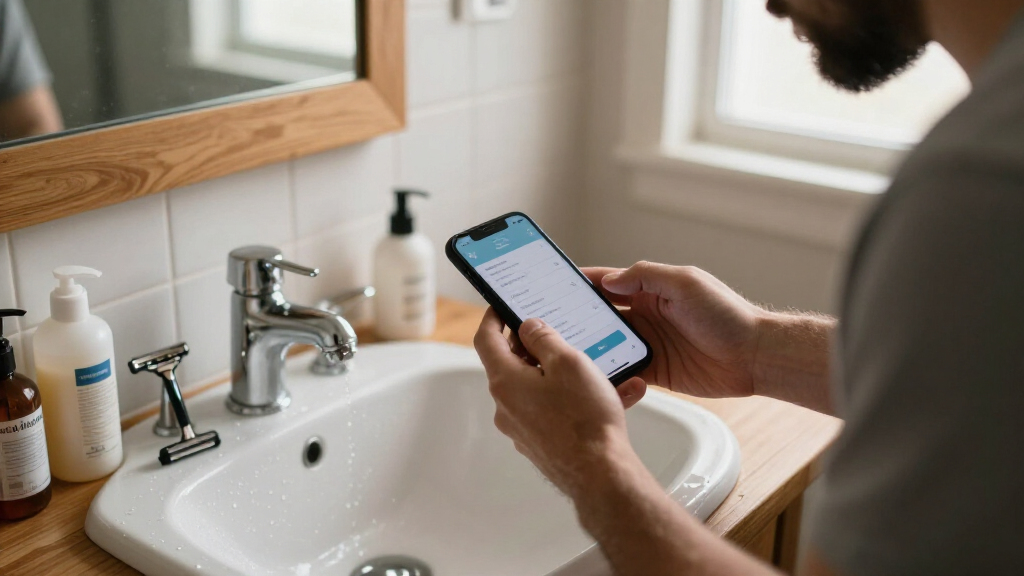
The proposal’s suggested minimum product would invite users to take weekly guided selfies and assess skin clarity, texture and dark circles. Users would also log routines, build streaks and view progress cards described in training-oriented language. The idea is to make habit tracking and visual comparison the product’s central workflow, rather than offer a broad beauty or skincare platform.
IdeaNavigator AI proposes a subscription combined with affiliate recommendations for products linked to apparent gaps in a user’s routine or measurements. The plan does not specify prices, which products would be recommended, how the app would determine a “gap,” or whether recommendations would be reviewed for suitability. The source reports no prototype, commercial partners, launch schedule or measured performance.
A Test of Men-Focused Product Design
IdeaNavigator AI frames the concept around a practical challenge for new skincare users: routines can take time, and day-to-day changes in appearance may be difficult to interpret. A product that records habits and offers consistent photo comparisons could give users a structured way to reflect on their routines. Whether that makes skincare easier to sustain—or gives reliable evidence that a product is working—has not been established by the proposal.
For app developers and grooming businesses, the concept puts positioning and retention alongside the tracking features. IdeaNavigator AI suggests testing whether men respond differently to training-style language than to neutral branding. That could inform how a product is presented, but the source provides no conversion or retention results. Its claim that men’s grooming is a fast-growing segment is not accompanied by market figures.
The proposal also raises a commercial and trust question. Product recommendations linked to measurements could be useful to shoppers, but affiliate revenue can create incentives to promote products. Any working version would need to explain how scores are produced and how paid recommendations are selected, particularly if users interpret a score as a health or clinical assessment.
men's skincare routine tracker app
As an affiliate, we earn on qualifying purchases.
As an affiliate, we earn on qualifying purchases.
From Skincare Routine to Scorecard
IdeaNavigator AI presents the app as a narrow first-use case within men’s grooming technology, not as a general skincare platform. The target is a specific consumer: someone who has started caring for his skin and wants feedback on progress. The source recommends beginning with a limited set of tracking tools rather than a larger suite of beauty features.
The proposal links its timing to men’s skincare interest and to “looksmaxxing” culture, which it characterizes as receptive to metrics and gamification. Those are IdeaNavigator AI’s explanations for why the concept might find an audience, not independently demonstrated findings in the information it provides. The source gives no market-size estimate, adoption data or comparison with existing tracking apps.
IdeaNavigator AI’s suggested validation exercise is to present the same photo-capture technology in two ways: with men’s-training branding and with neutral branding. The stated goal is to compare conversion and retention by audience segment. That framing makes the main near-term question less about whether the technology can capture selfies and more about whether a particular audience wants the experience and keeps using it.
As an affiliate, we earn on qualifying purchases.
Demand, Scores and Privacy
IdeaNavigator AI reports no user test or launch, so it remains unknown whether men entering skincare would use weekly photo tracking, pay a subscription or trust product recommendations tied to scores. The proposal gives no sample size, test period, conversion target or definition of retention. Its suggested branding comparison is a proposed method, not a completed experiment.
The scoring approach also needs more definition. The source does not explain how the app would assess clarity, texture or dark circles, whether scores would be generated automatically or by users, or how it would account for lighting, camera differences and other changes between photos. The information provided does not establish that such scores could measure treatment results or diagnose skin conditions.
Data handling is unspecified in the proposal. A product built around face photographs would need to explain how images are stored, protected, used and deleted. IdeaNavigator AI does not describe privacy safeguards, scoring validation, subscription pricing or affiliate disclosure practices. These details would matter to users deciding whether to share images and rely on commercial recommendations.
men's grooming habit tracker device
As an affiliate, we earn on qualifying purchases.
As an affiliate, we earn on qualifying purchases.
Branding Test Before a Launch
IdeaNavigator AI proposes testing the two brand positions using the same capture technology, then comparing sign-up and retention results across user segments. The source provides no timetable or results. A test would need to define its audience, duration and success measures, and distinguish initial interest from sustained use.
If the idea proceeds, further decisions would include how progress scores are calculated, what limits are placed on their interpretation, and how photo privacy and affiliate recommendations are handled. Until those questions are answered and user evidence is reported, the app remains a proposed experiment rather than a confirmed product or proven market opportunity.
Source: IdeaNavigator AI
men's skincare product recommendations
As an affiliate, we earn on qualifying purchases.
As an affiliate, we earn on qualifying purchases.
Key Questions
Has the men’s skincare tracking app launched?
No launch is reported. IdeaNavigator AI presents the idea as a concept that should be tested with a focused user group.
What would the proposed app do?
IdeaNavigator AI’s concept combines weekly guided selfies, routine logging, streaks and progress cards focused on skin clarity, texture and dark circles.
How would the concept be tested?
The proposal recommends comparing the same capture technology under men’s-training branding and neutral branding, then measuring conversion and retention by segment. IdeaNavigator AI reports no test results.
Would its scores show that skincare products work?
That has not been established. The proposal does not explain how scores would be calculated or validated, and it reports no evidence that photo comparisons could measure treatment effects.
How might the app make money?
IdeaNavigator AI proposes a subscription plus affiliate product recommendations connected to measured gaps. The proposal does not specify pricing, recommendation rules or disclosure practices.
Source: IdeaNavigator AI
Fall Picks
fall essentials
As an affiliate, we earn on qualifying purchases.