AI-driven visual effects boost efficiency and cut costs while opening new creative opportunities. You can achieve complex effects faster, freeing you to focus on storytelling and artistry. Balancing technology with human expertise is key; AI handles routine tasks, but your creative judgment remains irreplaceable. Staying updated on AI tools helps you meet rising industry standards and push your work further. To learn how to harness AI for powerful effects without losing artistry, keep exploring these ideas.
Key Takeaways
- AI streamlines workflows, reducing costs while enabling complex visual effects without sacrificing quality.
- Balancing AI automation with human creativity ensures innovative effects that meet artistic standards.
- Continuous training in AI tools helps studios optimize resources and stay competitive.
- AI allows for faster experimentation, fostering creative risks within budget constraints.
- Maintaining artistic judgment alongside AI advancements preserves emotional impact and storytelling integrity.
Have you ever wondered how artificial intelligence is transforming the world of visual effects? AI is revolutionizing the industry by streamlining workflows, reducing costs, and opening up new creative possibilities. As technology advances, studios and artists are finding innovative ways to integrate AI tools into their projects, but this shift also raises questions about maintaining industry standards and talent integration. You need to understand how these elements work together to guarantee quality and authenticity in your work.
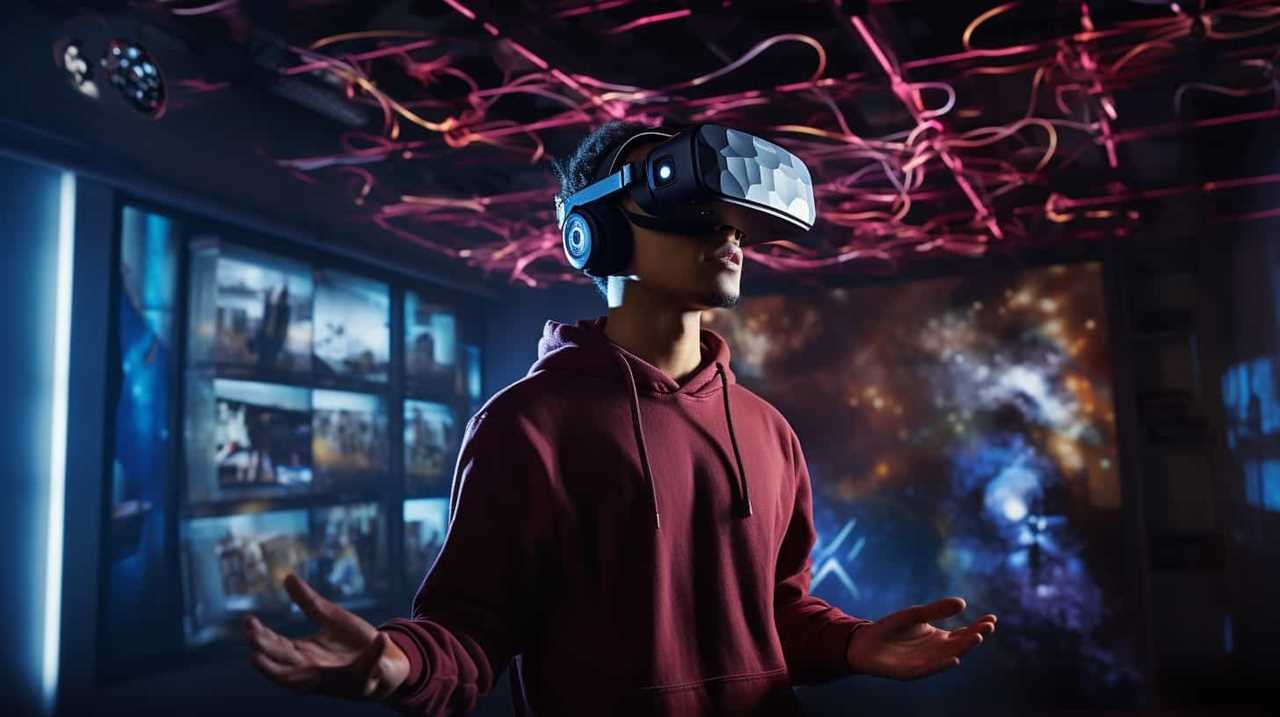
AI-driven techniques are now setting new industry standards for efficiency and realism in visual effects. Automated processes like image enhancement, scene reconstruction, and object tracking allow you to achieve complex effects faster than ever before. This speed doesn’t mean sacrificing quality; instead, it pushes the boundaries of what’s possible within tight deadlines. As a result, studios are adopting AI to stay competitive, and the standards for what constitutes high-quality visual effects are evolving. You can leverage AI to meet these standards while also exploring more ambitious creative visions.
AI enhances efficiency and realism in visual effects, enabling faster, higher-quality work within tight deadlines.
At the same time, talent integration remains a critical factor in AI’s impact on visual effects. While AI tools can handle routine tasks, the creative judgment and artistry of human talent are irreplaceable. You’re still the one making nuanced decisions about storytelling, aesthetics, and emotional impact. The key is to view AI as a collaborator rather than a replacement. Integrating AI into your workflow should enhance your skills, streamline repetitive work, and free you to focus on the creative core of your projects. It’s about striking a balance—using AI to elevate your craft without diminishing the value of your expertise and intuition.
Moreover, the rise of AI prompts new training and education needs. You’ll need to stay updated on the latest tools and techniques, understanding how they fit into existing industry standards. This ongoing learning helps you adapt and thrive in a landscape where technology and talent must work hand-in-hand. As AI becomes more embedded in the industry, those who embrace it and learn to integrate it effectively will set new benchmarks for quality and innovation. Additionally, understanding industry standards and the various technologies involved ensures your work remains relevant and competitive.
Ultimately, AI-driven visual effects are reshaping the industry by setting higher standards for efficiency and creativity. Your role involves harnessing these advanced tools while preserving the artistry and talent that define great visual storytelling. By focusing on seamless talent integration and maintaining industry standards, you can navigate the evolving landscape and produce compelling, high-quality effects that captivate audiences and push the boundaries of imagination.
Frequently Asked Questions
How Does AI Influence Traditional Visual Effects Workflows?
AI influences traditional visual effects workflows by enabling AI automation, which speeds up repetitive tasks like rotoscoping and compositing. It also offers creative augmentation, helping you generate realistic effects with less manual effort. This allows you to focus more on artistic choices, balancing cost and creativity effectively. With AI’s support, your workflow becomes more efficient, freeing up time to experiment and enhance the visual storytelling process.
What Are the Ethical Considerations of Ai-Generated Effects?
You must navigate the ethical storm when creating AI-generated effects, like steering a ship through treacherous waters. Prioritizing AI ethics guarantees you protect creative integrity, avoiding shortcuts that compromise authenticity. You’ll need to question transparency, copyright, and bias—making sure your work respects both artists and audiences. Balancing innovation with responsibility keeps your craft honest, ensuring your visual magic doesn’t come at the expense of morality or originality.
Can AI Replace Human Artists in Visual Effects Production?
AI can’t fully replace human artists in visual effects production because of AI ethics and artistic authenticity. While AI tools can automate tasks and enhance creativity, your artistic intuition, emotional insight, and personal style are irreplaceable. You bring a unique perspective that guarantees authenticity and depth in visuals. Embracing AI as a collaborative tool allows you to elevate your work without sacrificing the human touch essential for truly compelling effects.
How Does AI Impact the Timeline of Visual Effects Projects?
Imagine your visual effects project as a fast-moving river, where AI automation acts like a swift current. It accelerates workflows, reducing timelines considerably, while creative augmentation guarantees quality remains high. You’ll find that AI helps streamline tasks, allowing you to meet tight deadlines without sacrificing artistry. Fundamentally, AI’s impact is a shorter, more efficient pipeline, giving you the flexibility to innovate while staying on schedule.
What Are the Limitations of Current AI Technologies in VFX?
You should know that current AI technologies in VFX face limitations like AI bias, which can skew results and reduce realism. Additionally, maintaining creative authenticity remains a challenge, as AI might not fully grasp artistic nuances. These issues can hinder authenticity and diversity in visual effects, requiring human oversight to verify the final output aligns with creative goals. So, while AI advances, it still needs careful management for quality and authenticity.
Conclusion
As you explore AI-driven visual effects, you realize they offer incredible creativity at a fraction of traditional costs. But can you truly strike the perfect balance between innovation and budget? Embracing this technology means staying ahead in a competitive industry while maintaining quality. So, are you ready to harness AI’s power to transform your projects and push creative boundaries without breaking the bank? The future of visual effects is in your hands—are you prepared to lead the way?