
Virtual concerts and AI avatars are transforming the music industry by letting you experience live shows from anywhere and connect with artists in new ways. These innovations create immersive environments with realistic visuals, AR, and VR, making you feel as if you’re on stage. Interactive features like customizable avatars and real-time chats boost engagement and community. If you want to explore how these tech advances continue to reshape music’s future, keep going.
Key Takeaways
- AI avatars enable lifelike, customizable performances, allowing artists to perform multiple shows simultaneously and reach broader audiences.
- Virtual concerts leverage immersive AR and VR technologies, creating realistic environments that enhance fan engagement.
- Interactive features like polls and Q&A foster deeper connections between artists and fans during virtual events.
- Technological advancements continue to improve visual authenticity, making virtual performances more compelling and immersive.
- The integration of AI and virtual platforms is transforming music promotion, fan interaction, and the overall industry landscape.

Virtual concerts are transforming the way you experience live music, allowing you to attend performances from anywhere in the world. This shift isn’t just about convenience; it’s redefining how you connect with artists and fellow fans. Thanks to technological innovation, these digital shows offer immersive experiences that go beyond traditional concerts. You can engage with your favorite musicians in ways never before possible, whether through interactive features, real-time chats, or customizable virtual environments. Fan engagement becomes more direct and personalized, making you feel like an active participant rather than just a spectator. This heightened level of interaction keeps you more involved in the music and the community, creating a sense of shared excitement that’s often hard to find in standard live shows.
Virtual concerts let you connect with artists worldwide through immersive, interactive experiences that make you feel like an active participant.
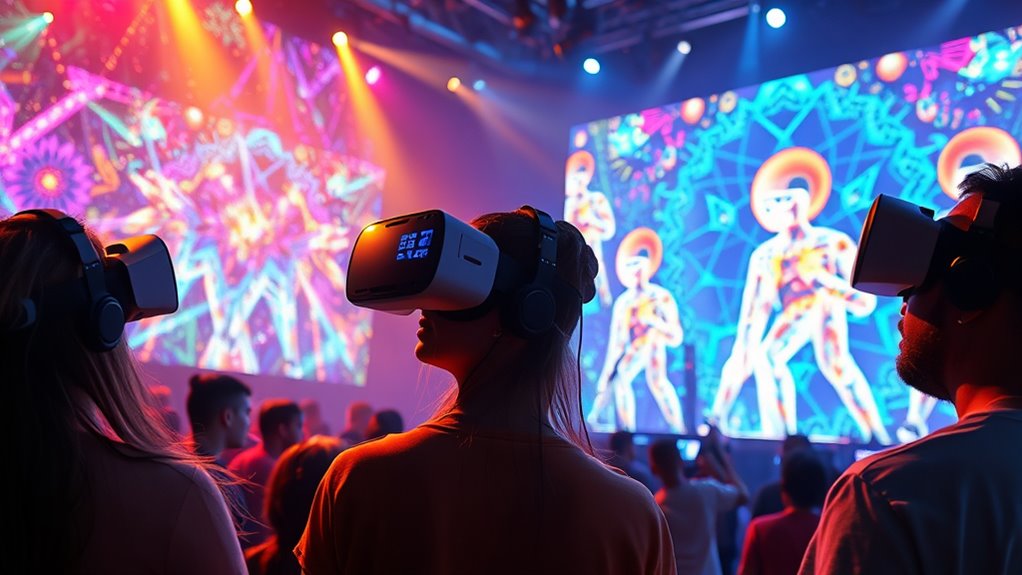
Technological innovation plays a central role in elevating virtual concerts. High-quality streaming, 3D visuals, augmented reality, and virtual reality create stunning, lifelike environments that draw you into the performance. AI-powered avatars of performers, for example, can mimic live movements and expressions with astonishing accuracy, making virtual concerts feel more authentic. These advancements also allow artists to perform in ways that weren’t possible before—such as hosting multiple shows simultaneously across different time zones or creating entirely new visual narratives that enhance their music. As a result, you get a richer, more engaging experience, blurring the lines between physical and digital interaction. Additionally, unique and wicked planters can be integrated into virtual environments to personalize and enhance the aesthetic appeal of these digital concerts.
Moreover, virtual concerts open up new avenues for fan engagement. You can customize your avatar, choose your viewing angles, or participate in interactive polls and Q&A sessions with artists. These features foster a sense of community that’s often missing in traditional settings. You’re not just watching a performance; you’re actively shaping the experience and feeling more connected to the artist and other fans. This level of involvement fuels excitement and loyalty, making these virtual events more than just a workaround—they become an essential part of modern music culture.
As technology continues to evolve, virtual concerts will likely become even more sophisticated and accessible. AI and virtual reality tools will deepen your immersion, allowing you to feel as if you’re right there in the front row. Fan engagement will grow as artists find innovative ways to interact with their audiences, making each concert a unique, memorable event. This ongoing technological innovation is reshaping the music industry, giving you new ways to enjoy live music that are more interactive, personalized, and exciting than ever before.

3D VR Headset, Virtual Reality Glasses Headset Helmets, Compatible with 5.0-7.0 inch with Controller, for Mobile Games & Movies(Black)
【Immersive 3D Movie Viewing】Gaming and watching movies in 3D works best when proper your eyes properly align with…
As an affiliate, we earn on qualifying purchases.
As an affiliate, we earn on qualifying purchases.
Frequently Asked Questions
How Do AI Avatars Influence Artist Royalties?
AI avatars influence artist royalties by complicating royalty distribution and raising questions about intellectual property rights. When AI-generated performances feature a virtual artist, you might need to navigate new licensing agreements to guarantee artists receive proper royalties. This shifts the traditional model, as creators must clarify who owns the intellectual property and how royalties are divided. Ultimately, AI avatars challenge existing systems, demanding updated rules to fairly compensate artists involved.
What Are the Environmental Impacts of Virtual Concerts?
Virtual concerts substantially reduce your carbon footprint by cutting down on travel and venue energy use. They consume fewer resources compared to traditional events, as they rely on digital infrastructure rather than physical setups. However, you should be aware of the energy required for data centers and streaming services, which can contribute to environmental impact. Overall, virtual concerts tend to be more eco-friendly but still involve some resource consumption.
How Secure Are Virtual Concert Platforms From Cyber Threats?
Are virtual concert platforms as safe as they seem? They face significant cyber threats, but strong cybersecurity measures and data privacy protocols can make them secure. While no system is invulnerable, ongoing updates and vigilant monitoring help protect your information. You should stay informed about platform security and use trusted networks to minimize risks. Like a fortress, a well-defended virtual concert guarantees your experience remains safe, private, and enjoyable.
Can AI Avatars Replace Live Musicians Entirely?
AI avatars can’t fully replace live musicians because digital impersonation still lacks the emotional connection and spontaneity of real performances. You can customize avatars to match a musician’s style, but they miss the organic energy and interaction that live music offers. While avatar customization enhances virtual experiences, the human touch remains essential, making live performances irreplaceable for authentic musical expression.
What Are the Accessibility Challenges of Virtual Concerts?
You might find virtual concerts more accessible, but 30% of potential attendees face technological barriers like poor internet or lack of devices. Ticket affordability can also be an issue, as some platforms charge high fees. These challenges limit who can enjoy virtual events, making it harder for everyone to participate equally. To improve accessibility, creators need to lower costs and guarantee technology is user-friendly and widely available.

THIИKAЯ AiLens AI Glasses with 1200Nits Micro-OLED Dual Display, 37g Smart AR Glasses, AI Agent, Realtime Pop-up Message, Translation, Teleprompter for Speech, Music, Special Version
Dual-Lens Waveguide Display Technology: Engineered with an advanced binocular waveguide optical system, these AR smart glasses deliver a…
As an affiliate, we earn on qualifying purchases.
As an affiliate, we earn on qualifying purchases.
Conclusion
You’re standing at the brink of a revolution so massive, it’ll make traditional concerts seem like ancient history. Virtual concerts and AI avatars are transforming the music industry faster than you can blink, creating experiences so immersive, you’ll feel like you’re actually there with the artists. In this brave new world, music isn’t just heard — it’s lived, breathed, and amplified beyond your wildest dreams. Get ready, because the future of music has never been more mind-blowingly unreal.
AI avatar performer figurine
As an affiliate, we earn on qualifying purchases.
As an affiliate, we earn on qualifying purchases.

Meta Quest 3 512GB | VR Headset — Thirty Percent Sharper Resolution — 2X Graphical Processing Power — Virtual Reality Without Wires — Access to 40+ Games with a 3-Month Trial of Meta Horizon+ Included
NEARLY 30% LEAP IN RESOLUTION — Experience every thrill in breathtaking detail with sharp graphics and stunning 4K…
As an affiliate, we earn on qualifying purchases.
As an affiliate, we earn on qualifying purchases.