AI tools are transforming cinema post-production by making editing faster, more precise, and creatively flexible. They automate tasks like isolating objects, backgrounds, and characters, reducing manual labor and speeding up workflows. AI-driven color grading ensures consistent, high-quality results while offering stylistic choices with minimal effort. These tools also help you experiment with visual effects, enhance realism, and improve efficiency, enabling you to push creative boundaries and produce stunning films with less time. If you continue exploring, you’ll uncover how these innovations reshape filmmaking.
Key Takeaways
- AI-powered tools automate complex visual effects, background removal, and compositing to streamline post-production workflows.
- Advanced AI algorithms enhance color grading, ensuring consistent, high-quality visuals and enabling rapid stylistic adjustments.
- AI accelerates editing tasks, allowing filmmakers to experiment with effects and previews instantly, saving time and boosting creativity.
- Ethical AI considerations help maintain content integrity, ensuring realistic effects and responsible use in filmmaking.
- Overall, AI tools expand creative possibilities, reduce technical barriers, and improve efficiency in cinema post-production.
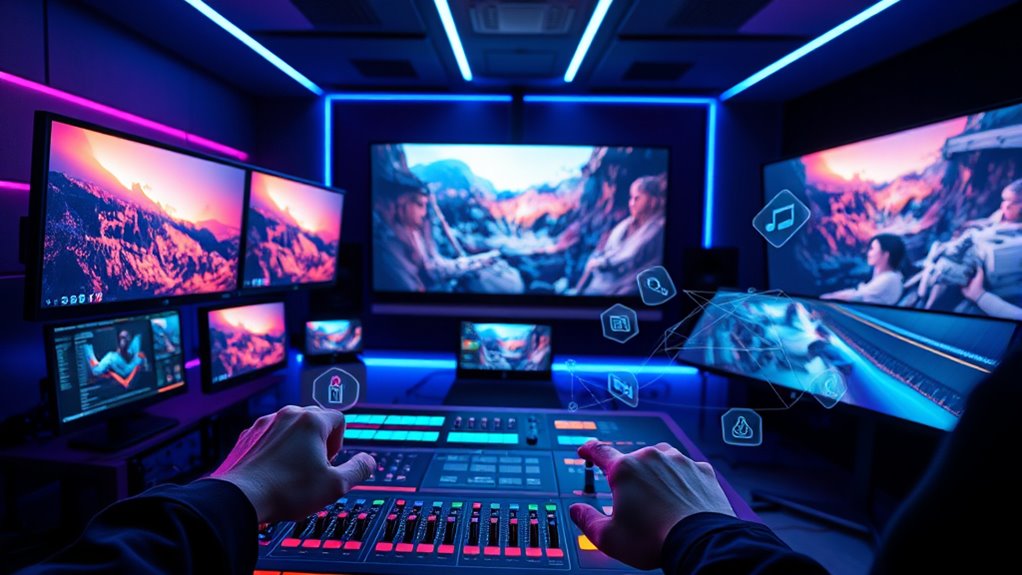
Artificial intelligence is transforming the way filmmakers approach editing and post-production, making processes faster, more precise, and more creative. When it comes to visual effects, AI-powered tools enable you to generate complex imagery and seamless integrations that once required hours of manual work. Instead of painstakingly rotoscoping every frame, you can now leverage AI algorithms to automatically isolate objects, backgrounds, or characters, drastically reducing your editing time. This technology not only accelerates your workflow but also opens up new creative possibilities, allowing you to experiment with effects that were previously too labor-intensive or technically challenging.
In the domain of color grading, AI tools help you achieve consistent, high-quality results with minimal effort. With intelligent algorithms analyzing each shot, you can quickly balance colors, enhance contrast, and apply stylistic looks across entire sequences. This ensures that your project’s visual tone remains cohesive, even when working under tight deadlines. Furthermore, AI-driven color grading can suggest color palettes based on mood or genre, guiding you toward visually compelling choices you might not have considered. By automating routine adjustments, you gain more time to focus on the artistic aspects of your project, refining the emotional impact of each scene.
You’ll find that AI-enhanced visual effects tools can also assist in creating realistic composites, such as adding digital elements into live-action footage. These systems learn from vast datasets to improve accuracy and integration, reducing the need for manual touch-ups. As a result, you can produce high-quality effects that blend seamlessly with real footage, elevating your storytelling without the typical time constraints. Similarly, AI-assisted color grading platforms often come with intuitive interfaces that let you preview different looks instantly, giving you the flexibility to experiment and make informed decisions faster.
Additionally, AI advancements are addressing trustworthiness and vulnerabilities in AI-generated content, helping filmmakers ensure the integrity and ethical use of these tools. In essence, AI tools are redefining what’s possible during post-production. They empower you to work more efficiently, freeing up creative energy and reducing the technical barriers that once limited your vision. Whether it’s enhancing visual effects to create immersive worlds or applying precise color grading to evoke the desired mood, these innovations enable you to deliver polished, visually stunning films in less time. As you incorporate AI into your workflow, you’ll find yourself pushing boundaries further, crafting stories that captivate audiences with richer visuals and more polished aesthetics—all while staying ahead in a competitive industry.
Frequently Asked Questions
How Do AI Tools Impact the Creative Decision-Making Process?
AI tools impact your creative decision-making by enhancing your control and expanding your artistic expression. They provide suggestions, automate mundane tasks, and offer new visual possibilities, allowing you to focus on your vision. While AI can influence your choices, it ultimately empowers you to make more informed decisions, blending technology with your creativity. This collaboration enriches your work, giving you greater flexibility and confidence in shaping your cinematic story.
Are AI Editing Tools Compatible With All Major Film Editing Software?
AI editing tools are generally compatible with major film editing software through software compatibility and plugin integration. You can often add these tools as plugins or extensions within popular platforms like Adobe Premiere Pro, Final Cut Pro, or DaVinci Resolve. However, compatibility varies depending on the specific AI tool and your software version, so always check for plugin updates and system requirements before integrating them into your workflow.
What Are the Ethical Considerations of Using AI in Film Post-Production?
When you use AI in film post-production, you need to consider deepfake ethics and AI bias. You might unintentionally mislead audiences or perpetuate stereotypes if you’re not careful. It’s your responsibility to ensure transparency and fairness, avoiding manipulation that could harm actors’ reputations or cultural groups. By addressing these ethical concerns, you protect your creative integrity and maintain trust with viewers and collaborators alike.
How Do AI Tools Handle Complex Visual Effects and CGI Integration?
You’ll find that AI tools excel at handling complex visual effects and CGI integration, streamlining the process considerably. They utilize virtual environments and real-time rendering, allowing you to see changes instantly. Remarkably, AI-driven CGI can reduce production time by up to 30%. With these tools, you can seamlessly blend live-action footage with digital elements, ensuring realistic effects while saving time and maintaining high-quality visuals for your project.
What Is the Learning Curve for Filmmakers Adopting AI Editing Technologies?
You’ll find that the learning curve for adopting AI editing technologies varies, but generally, the user interface is designed to be intuitive, making skill acquisition smoother. You might need some time to get comfortable with new workflows, but many tools offer helpful tutorials and support. With consistent practice, you’ll quickly become proficient, allowing you to harness AI’s power to streamline editing and enhance your creative process.
Conclusion
As you explore AI tools for editing and post-production, you’ll notice how they seamlessly enhance your workflow, saving time and boosting creativity. Coincidentally, these innovations often mirror your own evolving skills, making complex tasks feel more intuitive. With each new feature, you find yourself pushing boundaries, blending technology with artistry. Embracing these tools isn’t just about efficiency; it’s about shaping your unique cinematic voice, where coincidence and innovation come together to elevate your storytelling.