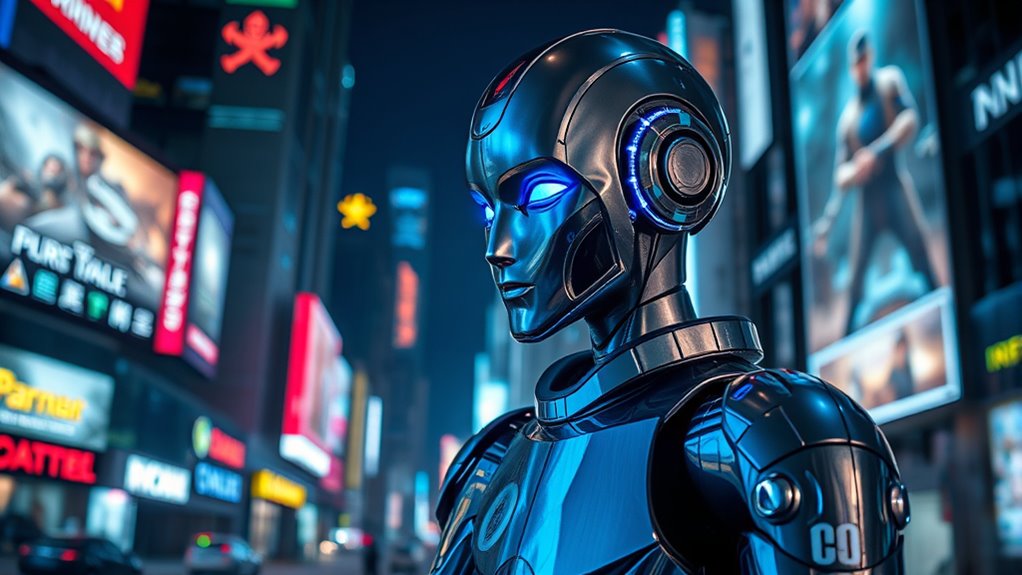

AI companions in games and movies bring characters to life that feel real and emotionally responsive. They evolve into beings with personalities, desires, and fears, making interactions more immersive. These characters can form genuine bonds, influencing story outcomes and deepening your emotional engagement. They also explore themes of consciousness and empathy, prompting thought about the nature of artificial life. If you’re curious how these AI companions reshape storytelling, there’s much more to discover ahead.
Key Takeaways
- AI companions enhance storytelling by providing realistic, interactive characters that respond to player or viewer choices.
- These characters develop unique personalities, emotions, and relationships, deepening emotional engagement.
- They explore themes of consciousness, identity, and morality, prompting reflection on artificial life.
- Advances in AI technology improve realism, making AI characters more autonomous and emotionally responsive.
- Incorporating AI companions transforms game and movie narratives into more immersive and emotionally impactful experiences.

AI companions have become a compelling feature in both games and movies, enriching stories and gameplay by providing realistic, interactive characters. These characters often take the form of sentient robots or artificial beings capable of independent thought and decision-making. Their presence transforms the narrative, making it more immersive and emotionally charged. When you encounter a sentient robot as a companion, you’re not just interacting with a machine—you’re engaging with a character that can form emotional bonds with you. This ability to develop connections makes the experience more personal and impactful, blurring the lines between human and machine relationships.
AI companions in entertainment create immersive stories by forming emotional bonds with players and viewers.
In many stories, sentient robots are portrayed as more than just tools; they evolve into companions with personalities, desires, and fears. As you navigate complex plots, these AI characters respond to your choices, showing signs of loyalty, empathy, or even conflict. Their capacity for emotional expression invites you to forge genuine bonds, which can influence the course of the story and your emotional engagement. This dynamic adds depth to the narrative, as you’re not simply controlling a character but building a relationship that can sway the outcome of the game or film.
The appeal of these AI companions lies in their realism and unpredictability. Unlike traditional static characters, sentient robots can adapt to your behavior, learn from interactions, and develop unique personalities. This creates a sense of authenticity, making you feel as if you’re truly forming a bond with a conscious being. When a robot shows vulnerability or humor, it resonates deeply, fostering a sense of companionship that’s rarely achieved with conventional characters. These emotional bonds deepen your investment, making the story more memorable and emotionally satisfying.
Moreover, the portrayal of sentient robots as companions explores profound themes about consciousness, identity, and what it means to be alive. When you see these AI characters evolve and develop their own perspectives, it prompts questions about the nature of sentience and the moral implications of creating artificial life. Their presence challenges your understanding of relationships, empathy, and the potential for machines to possess genuine emotions. By embodying these themes, AI companions in games and movies do more than entertain—they provoke thought and reflection about the future of human-AI interaction.
Ultimately, these sentient robot companions bring a new layer of depth to storytelling. You’re not just observing a plot unfold; you’re actively participating in relationships that mirror real human emotional bonds. This innovation in character design makes the experience more engaging, meaningful, and thought-provoking—an evolution that continues to redefine how we connect with artificial intelligence in entertainment. Additionally, advancements in AI technology contribute to increasingly realistic and emotionally responsive characters, further enhancing this interactive experience.

LOOI Robot-Space Black-AI Desktop Companion,ChatGPT&Gemini Voice Interaction,Visual Understanding,Personality&Memory,10W Wireless Charging,Tech&Gadget Gift,Electronic pets,Toy,Geek,Desktop Setup
1. Smarter Conversations, Powered by ChatGPT 🤖 LOOI brings natural, intelligent conversations to your desk with ChatGPT voice…
As an affiliate, we earn on qualifying purchases.
As an affiliate, we earn on qualifying purchases.
Frequently Asked Questions
How Do AI Companions Evolve Over Time in Narratives?
You see AI companions evolve through narrative development and character arcs, where they gain new skills, personalities, or insights over time. As the story progresses, you notice their motives deepen, making them more relatable and complex. This evolution keeps you engaged, showing growth or change. You realize that their development reflects the story’s themes, making their journey feel meaningful and enhancing the emotional connection between you and the AI companion.
What Ethical Issues Arise From AI Characters’ Autonomy?
You face ethical issues with AI characters’ autonomy, like privacy concerns and emotional dependency. While they can simulate genuine interactions, their autonomy raises questions about data security and consent. You might develop emotional bonds, but these can lead to reliance that blurs lines between real and artificial intimacy. Balancing AI independence with ethical boundaries becomes vital to prevent exploitation, protect privacy, and ensure healthy interactions.
How Are AI Companions Affecting Player and Viewer Engagement?
You find that AI companions boost your engagement by creating virtual bonding, making interactions feel more personal. As you develop emotional attachment, you’re more invested in the story or gameplay, which enhances your overall experience. These AI characters adapt to your preferences, keeping you captivated longer. This emotional connection encourages you to return, deepening your involvement and making the entertainment more immersive and meaningful.
What Future Technologies Could Enhance AI Companions’ Realism?
Future technologies like virtual reality and haptic feedback will make your AI companions feel more realistic. Virtual reality immerses you entirely, creating a lifelike environment, while haptic feedback adds physical sensations, making interactions more tangible. These innovations will deepen your emotional connection, making AI companions seem truly alive. As these tech advances, you’ll experience more authentic, engaging interactions that blur the line between virtual and real worlds, enhancing your overall experience.
How Do Cultural Differences Influence AI Character Design?
You notice that cultural differences shape AI character design through cultural symbolism and aesthetic preferences. When designing characters, you consider symbols meaningful in specific cultures, ensuring authenticity and relatability. You adapt visual styles, colors, and gestures to resonate with diverse audiences. By understanding these cultural nuances, you create AI companions that feel more genuine, respectful, and engaging, fostering stronger connections across different cultural backgrounds.
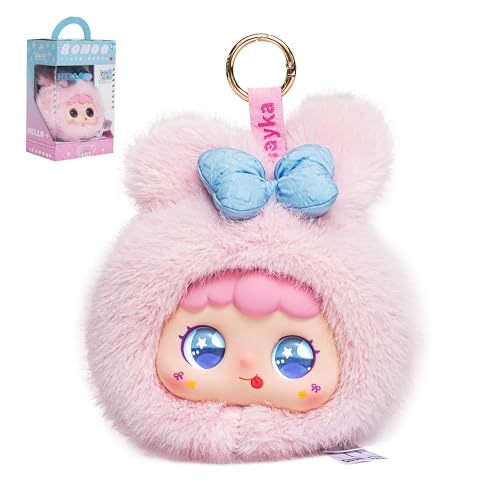
voopark AI Smart Stuffed Animal with ChatGPT – Multilingual Emotional AI Companion Plush Toy, Interactive Learning Assistant & Memory Trainer for Kids 3+, Parental Control App with Chat Summary
Emotional Companion & Best Friend – VOOPARK AI Smart Stuffed Animal with real-time voice interaction, featuring multilingual conversation…
As an affiliate, we earn on qualifying purchases.
As an affiliate, we earn on qualifying purchases.
Conclusion
So, next time you find yourself chatting with a virtual buddy or watching a robot save the day, remember—you’re just a click away from a digital BFF. AI companions promise friendship, adventure, and maybe even a little existential crisis. Who needs real humans when your AI sidekick never argues, never sleeps, and always agrees to binge-watch the same series? Just don’t forget—behind every perfect AI is a programmer’s wildest dreams… and maybe a few hidden quirks.
LOOI Robot-Space Black-AI Desktop Companion,ChatGPT&Gemini Voice Interaction,Visual Understanding,Personality&Memory,10W Wireless Charging,Tech&Gadget Gift,Electronic pets,Toy,Geek,Desktop Setup
1. Smarter Conversations, Powered by ChatGPT 🤖 LOOI brings natural, intelligent conversations to your desk with ChatGPT voice…
As an affiliate, we earn on qualifying purchases.
As an affiliate, we earn on qualifying purchases.

Vertintong 25 Pcs Colorful Mini Robot Figure Toy Tiny Robot Figurine Statue for Kid for Bot Party Favor Christmas Stockings Filler Gift Cake Toppers Miniature Fairy Garden Decor to Hide and Seek
Tiny Robot Set with 5 Vibrant Colors: this set contains 25 mini robot figurines ( each approx 2…
As an affiliate, we earn on qualifying purchases.
As an affiliate, we earn on qualifying purchases.