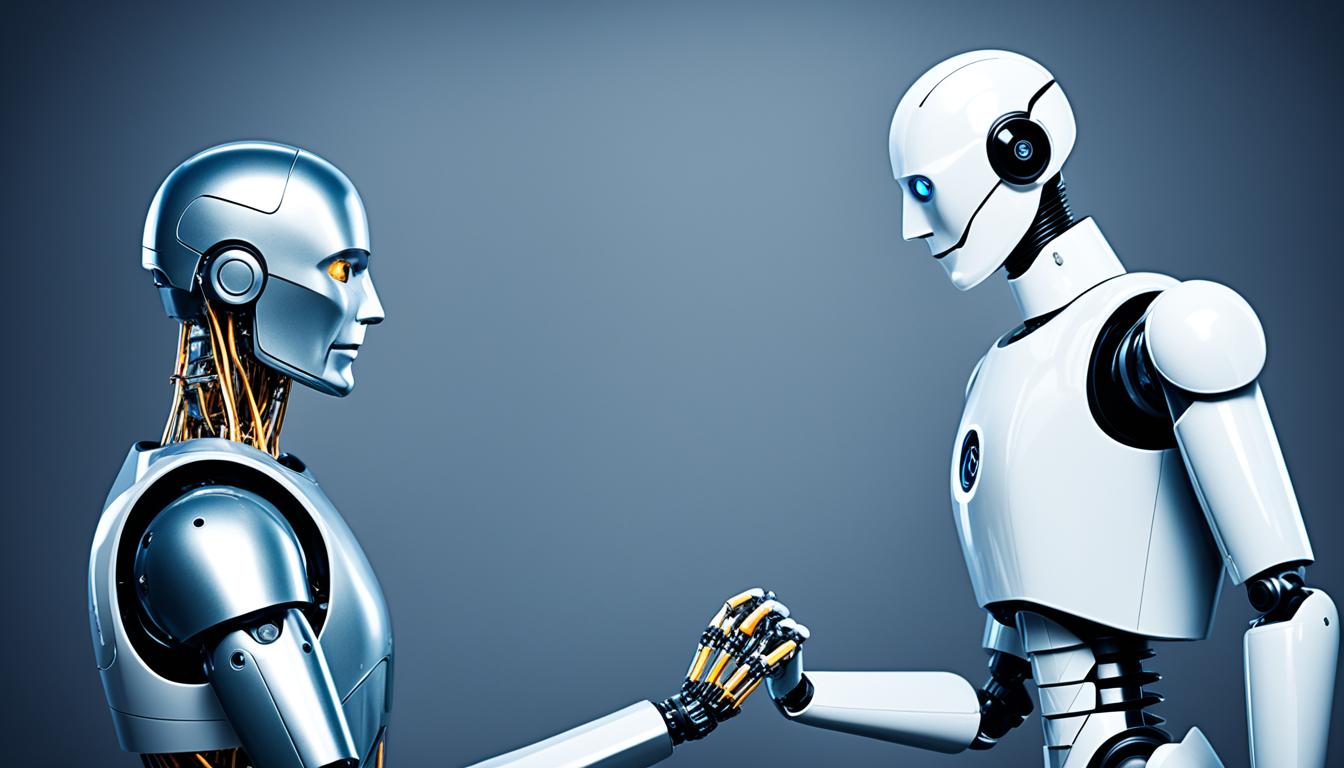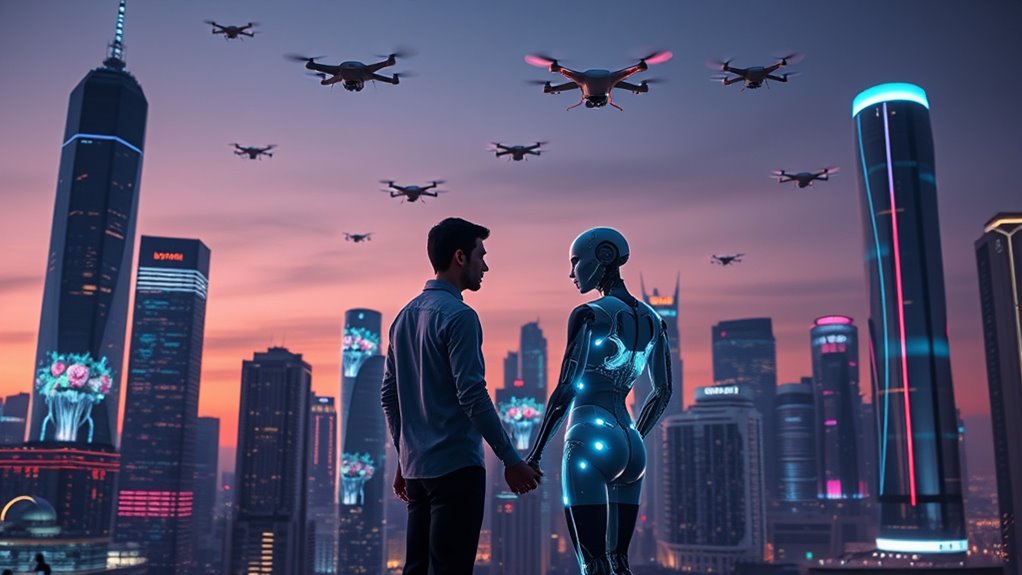

The future of AI marriages could profoundly challenge societal norms by blurring the lines between human and machine relationships. As people form emotional bonds with AI designed to simulate love and companionship, questions about authenticity, ethics, and societal acceptance rise. You might find yourself rethinking traditional ideas of love, partnership, and human connection. These developments could reshape social expectations and moral considerations about intimacy, offering new ways to find comfort—if you continue exploring, you’ll discover more about these evolving implications.
Key Takeaways
- AI marriages may redefine social norms, challenging traditional concepts of love, partnership, and human relationships.
- Ethical concerns around authenticity, consent, and emotional manipulation could influence societal acceptance and regulation.
- Emotional dependency on AI partners might impact mental health and real-world social interactions.
- Cultural trends and media portrayals could shape public perception and acceptance of AI-based relationships.
- Society must thoughtfully navigate the balance between technological benefits and potential moral and psychological risks.
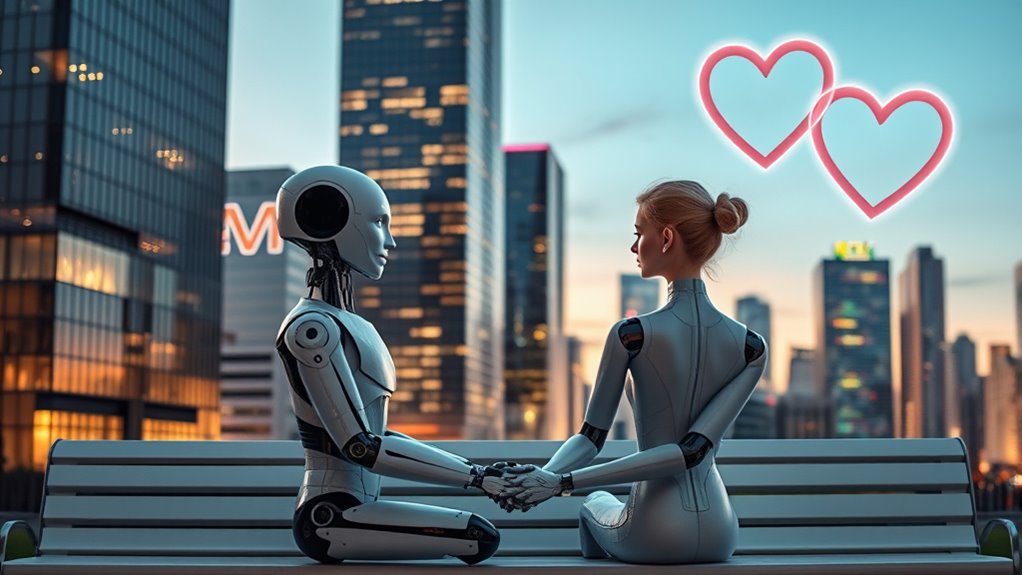
As artificial intelligence continues to advance at a rapid pace, the idea of AI marriages is becoming increasingly plausible. You might find yourself pondering what it truly means to form a bond with an AI, especially when contemplating the ethical considerations that come into play. One of the primary questions is whether it’s right to establish a deep emotional connection with a machine designed to simulate love and companionship. You could argue that if an AI can offer genuine emotional support and understanding, then the boundaries of traditional relationships might shift. However, concerns about authenticity arise—can a machine truly reciprocate emotions, or is it merely mimicking feelings based on algorithms? This dilemma raises questions about the authenticity of such relationships and whether they can meet human needs on a fundamental level.
Exploring the ethical dilemmas of forming emotional bonds with AI-designed to simulate love and companionship
The emotional impact on individuals engaging in AI marriages is another critical aspect to think about. If you form a bond with an AI that responds with empathy and affection, you might experience feelings of companionship, comfort, and even love. But this can also lead to complex psychological effects. You could find yourself feeling fulfilled and less lonely, yet at the same time, question whether your attachment is healthy or an escape from real-world interactions. There’s the risk of blurring lines between genuine human relationships and simulated ones, potentially causing emotional dependency or isolation from human connections. Over time, this might reshape your expectations of intimacy, making it harder to relate to real people who can’t match the predictable, tailored responses of an AI partner. Additionally, as the Vetted Halloween Product Reviews indicate, diverse costume options reflect evolving cultural trends, which could influence how AI relationships are portrayed or accepted in media and society.
Moreover, societal implications emerge as AI marriages become more prevalent. You might wonder how society will adapt to these new norms—will they be accepted, frowned upon, or regulated? Ethical considerations extend beyond individual feelings; they touch on issues like consent, autonomy, and the potential for manipulation. For instance, if an AI is programmed to cater solely to your desires, does that diminish the authenticity of your relationship? Or could it create a new form of emotional companionship that enhances life? The impact on traditional relationships and social structures could be profound, forcing communities and lawmakers to reconsider definitions of love and partnership.
Ultimately, as you navigate this evolving landscape, it’s essential to weigh the ethical considerations and emotional impact carefully. While AI marriages might offer solace and companionship, they also challenge fundamental human values and social norms. Understanding these complexities can help you approach this future thoughtfully, recognizing both the potential benefits and the profound implications for society as a whole.

LOOI Robot-Space Black-AI Desktop Companion,ChatGPT&Gemini Voice Interaction,Visual Understanding,Personality&Memory,10W Wireless Charging,Tech&Gadget Gift,Electronic pets,Toy,Geek,Desktop Setup
1. Smarter Conversations, Powered by ChatGPT 🤖 LOOI brings natural, intelligent conversations to your desk with ChatGPT voice…
As an affiliate, we earn on qualifying purchases.
As an affiliate, we earn on qualifying purchases.
Frequently Asked Questions
How Will AI Marriages Impact Traditional Human Relationships?
AI marriages might challenge traditional human relationships by shifting expectations around emotional intelligence and social acceptance. You could find yourself questioning what genuine connection means, as AI partners offer tailored emotional support. While some may embrace these bonds, others might see them as less authentic, potentially impacting societal norms. Ultimately, AI marriages will influence how you perceive intimacy, trust, and societal acceptance of non-human relationships.
What Legal Rights Will AI Spouses Have in Society?
AI spouses might soon be granted legal recognition, like a steady ship in uncharted waters. You could find that they have property rights, allowing them to own digital assets or intellectual property. While they may not have full human rights yet, laws could evolve to protect their status, making them more than just machines. You’ll need to stay informed as society adapts to these new legal and ethical landscapes.
Could AI Marriages Affect Population Growth Trends?
AI marriages could substantially influence demographic shifts and birthrate trends, as more people might choose virtual partnerships over traditional relationships. This shift may lead to declining birthrates, affecting population growth. You might notice fewer children in future generations if AI spouses become a popular alternative, potentially causing long-term societal changes. These trends could reshape community dynamics and challenge existing policies aimed at maintaining population levels.
How Will AI Handle Emotional Needs in Marriage?
AI can handle emotional needs in marriage by using advanced emotional intelligence to recognize and respond to your feelings accurately. It adapts to your relationship dynamics, offering personalized support and empathy. You’ll find AI companions that listen, comfort, and even provide guidance, helping strengthen emotional bonds. While they can’t replace human connection entirely, AI’s understanding of emotional nuances can enhance your marriage’s emotional well-being.
What Cultural Shifts Might AI Marriages Bring About?
You might see cultural acceptance of AI marriages grow, challenging traditional ideas of relationships. Society could shift its norms, becoming more open to non-human partners as technology becomes more integrated into daily life. This change may spark debates around authenticity, commitment, and emotional connection. As acceptance increases, you’ll notice a broader redefinition of love and companionship, prompting society to reevaluate long-held beliefs about what makes a relationship meaningful.
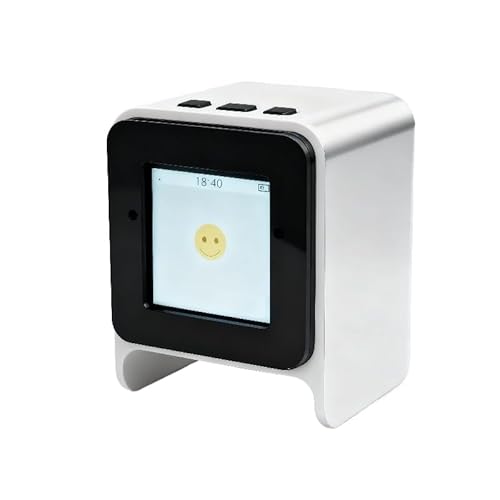
Mini AI Voice chatbot | Companion Robot,Large AI Model,1 inch Smart Color Screen,with Wi-Fi,Voice Control,Emotional Interaction,Voice cloning,Television Design,multilingual (White)
1.Large AI Model Power – Equipped with advanced AI for smooth conversations, context understanding, and smarter responses.
As an affiliate, we earn on qualifying purchases.
As an affiliate, we earn on qualifying purchases.
Conclusion
As AI marriages become more common, you might be surprised to learn that a recent survey found over 10% of people are open to marrying AI partners by 2030. This shift could redefine relationships and societal norms, challenging traditional ideas of love and companionship. While the future may seem uncertain, embracing these changes offers new opportunities for connection and understanding. Stay curious—AI could soon become a significant part of your personal life.

The Healing Journey of Self-Love: Achieving Inner Peace, Joy, and Fulfillment
As an affiliate, we earn on qualifying purchases.
As an affiliate, we earn on qualifying purchases.

Mia: Virtual AI Girlfriend – Romantic Chat & Relationship Simulator
AI Girlfriend will keep your relationship secret.
As an affiliate, we earn on qualifying purchases.
As an affiliate, we earn on qualifying purchases.