
🔍 Read the full analysis: Inside Modern Manufacturing: AI Robots At Work on ThorstenMeyerAI.com

Get everyday essentials delivered free with Prime
- Fast, free delivery on millions of items
- Prime Video, Amazon Music and more included
- Member-only deals all year
TL;DR
The International Federation of Robotics reported 5 million industrial robots operating worldwide in 2025, with China accounting for 59% of new installations. Research cited by ThorstenMeyerAI.com finds that robots can displace manufacturing workers, but employment effects differ by country and may be offset by growth in services. The source does not establish that the robots counted are AI-powered.
Five million industrial robots were operating in factories worldwide in 2025, according to the International Federation of Robotics (IFR), as reported in a Nov. 24 article by ThorstenMeyerAI.com. The report examines whether factory automation eliminates jobs, citing research that finds the effects vary across countries and workers; the source does not say that all robots in its count use AI.
The IFR’s World Robotics report, published Sept. 24, 2026, counted 5 million robots in operation in 2025, up 9% from 2024 and more than double the number seven years earlier. Factories installed more than 600,000 new robots during 2025. China accounted for 354,000 installations, or 59% of the global total. The United States installed almost 38,500, while Japan installed 36,219, South Korea 30,000 and Germany fewer than 25,000, according to the source’s account of IFR figures.
The article traces industrial robotics to Unimate, a robot used at a General Motors plant in Trenton, New Jersey, in 1961 to unload a die-casting press. It describes the early machines as taking on hot, heavy and hazardous tasks before robots spread into welding and other factory work. At GM’s Lordstown plant in 1969, more than 90% of body welding was automated, the IFR says, compared with 20% to 40% at traditional plants.
For employment effects, the report cites a 2020 study by economists Daron Acemoglu and Pascual Restrepo. Their estimate for the United States from 1990 to 2007 was that each additional industrial robot displaced about 3.3 workers across the economy, with roughly 400,000 jobs lost in total over that period. The article contrasts this with Germany, where it says research found factory job losses were approximately offset by gains in services.
Infographic 01 · Five million robots
Where the robots work
Sixty-five years after the first Unimate, five million industrial robots work in the world's factories. South Korea has by far the most per worker.
Robots per 10,000 employees in manufacturing · 2024
Where the new robots went · 2025
- China: 354,000 installed, 59% of the world total.
- United States: almost 38,500 (+12%), again the second-largest market.
- Japan 36,219 (−19%) · South Korea 30,000 · Germany fewer than 25,000 (−8%), Europe’s largest market.
Robot density = operational industrial robots per 10,000 employees in manufacturing. China (166 in 2024) is not compared here: the IFR switched to updated Chinese labour data in 2026, which changed the denominator.
Sources: IFR, robot density press release, 8 Apr 2026 (data 2024); IFR, World Robotics 2026 press release, 24 Sep 2026.
Powered by Thorsten Meyer AI
Automation’s Uneven Employment Effects
The figures show that industrial robotics is no longer limited to a handful of pioneering plants: millions of machines are now in operation, and annual installations exceed 600,000. The scale matters to workers and employers weighing how production methods may change, particularly in manufacturing economies where robotics investment is concentrated.
But a robot count does not, on its own, reveal the effect on employment. The cited US research estimates job displacement, while the Germany comparison points to a different overall outcome when service-sector gains are included. The distinction is important: factory jobs, total employment and opportunities for future workers are not interchangeable measures. The source also cautions that effects can differ between workers who lose positions and people who may never enter an automated factory job.
The report is about industrial robots broadly, not a measurement of AI adoption. Readers should not interpret the five-million figure as a count of AI-equipped machines: the supplied source gives no such breakdown.
Products Worth Considering
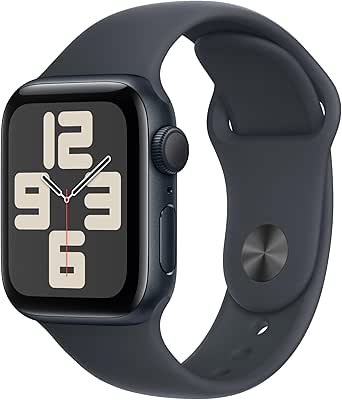
Apple Watch SE (2nd Generation) GPS 40mm Smartwatch with Midnight Aluminum Case and Midnight Sport Band (S/M)

Jackery Explorer 1000 v2 Portable Power Station, 1024Wh LiFePO4 Battery

Bose Home Speaker 500 Smart Bluetooth Speaker with Alexa, Black
As an affiliate, we earn on qualifying purchases.
From Unimate to Global Deployment
The report begins with a 1954 patent application by inventor George C. Devol for a programmed machine that could transfer articles. Devol and entrepreneur Joseph Engelberger formed Unimation, and the first Unimate went to GM’s Trenton plant to unload a die-casting press. The Henry Ford museum holds that robot, according to the source.
Robots moved into welding as manufacturers sought ways to automate repetitive and hazardous work. The article says Japan’s Kawasaki licensed Unimation technology in 1968 and completed its first Kawasaki-Unimate 2000 in 1969. Germany and Sweden also developed industrial robots in the 1970s. The historical account helps explain the current deployment, but it does not establish that today’s factory robots all perform the same tasks or have the same capabilities.
Robot density offers another way to compare countries. IFR figures for 2024, published in April 2026, put South Korea at 1,220 robots per 10,000 manufacturing employees, followed by Singapore at 818, Germany at 449 and Japan at 446. The United States ranked eighth at 307, against a global average of 132. These figures measure robots relative to manufacturing employment, not the share of jobs automated.
What the Robot Counts Do Not Show
The source does not provide a breakdown of how many of the 5 million robots use AI, how much autonomy they have or which tasks they perform. The headline topic refers to AI robots, but the figures cited concern industrial robots generally. It is not possible from this material to quantify AI’s role in the reported total.
The employment estimates also have limits. The US study covers 1990 to 2007, and the supplied article does not provide its full methods or confidence ranges. The Germany comparison is summarized rather than documented in detail here. The material does not establish how current robot installations will affect employment, wages or hiring in particular industries, nor does it give a single global estimate of net jobs created or lost.
New Data Will Test the Employment Picture
The next useful milestone will be later IFR reporting on robot installations, operating stocks and robot density, alongside newer research that tracks both factory displacement and employment in other sectors. Those measures can show whether deployment keeps growing and where it is concentrated, but they will not by themselves settle the employment question.
For now, the report’s evidence supports a bounded conclusion: industrial robots are widely deployed, while their employment effects depend on the country, period and workers being counted. The source provides no specific forecast or announced next step for the cited study, and it does not say when a separate global estimate of AI-related factory jobs may be available.
Key Questions
How many industrial robots were operating worldwide in 2025?
The International Federation of Robotics counted 5 million industrial robots in operation worldwide in 2025, according to its report published Sept. 24, 2026.
Does the five-million figure refer to AI robots?
No AI-specific breakdown is provided. The figure counts industrial robots generally; the source does not state how many use AI.
Which country installed the most robots in 2025?
China installed 354,000 new industrial robots in 2025, or 59% of the global total, according to the IFR figures cited in the report.
Do industrial robots reduce employment?
The research summarized in the report finds that robots displaced workers in the United States during 1990–2007, while the Germany comparison suggests service-sector gains approximately offset factory losses. The effects vary by place and measure; the figures do not establish a universal outcome.
Source: ThorstenMeyerAI.com