
TL;DR
Nvidia is scheduled to report quarterly results on Nov. 17, while Anthropic’s prospectus sets out a proposed IPO timetable for later in the week. For AI buyers and workers, the disclosures point to questions about compute supply, service terms, data-center staffing and possible job disruption; the IPO price and some details remain subject to change.
Nvidia is due to report quarterly results on Nov. 17, while Anthropic plans to price its initial public offering around Nov. 18 and begin Nasdaq trading on Nov. 19, according to the companies’ announcements and Anthropic’s prospectus. The closely timed disclosures put a focus on the infrastructure and workforce behind AI: Nvidia’s outlook can inform buyers’ understanding of compute supply, while Anthropic’s filing describes risks involving access to computing capacity, service terms and data-center staffing.

Get everyday essentials delivered free with Prime
- Fast, free delivery on millions of items
- Prime Video, Amazon Music and more included
- Member-only deals all year
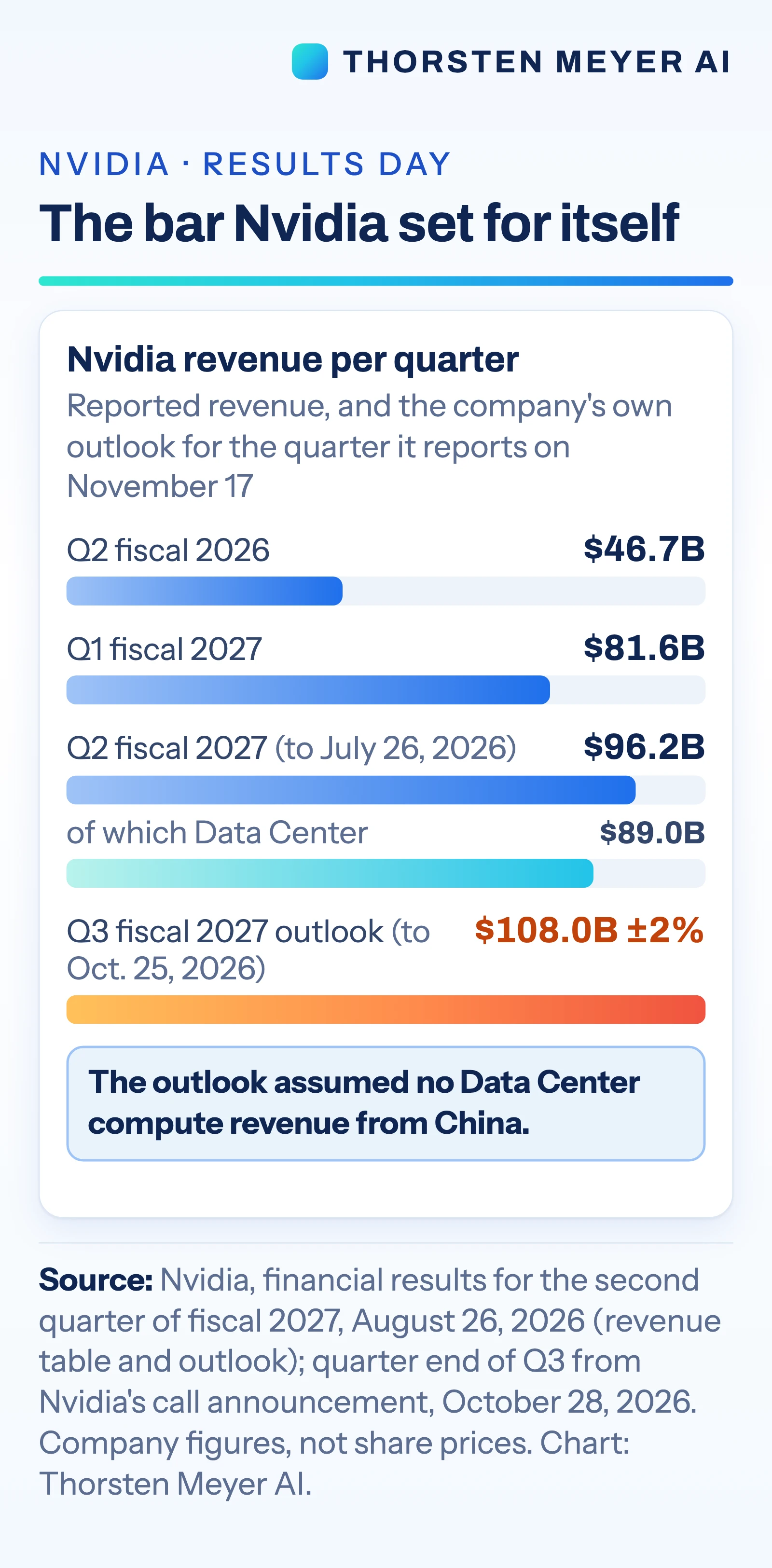
Nvidia said it expected quarterly revenue of $108 billion, plus or minus 2%, in guidance issued before the results. The company’s forecast assumed no data-center compute revenue from China. Nvidia scheduled results for about 1:20 p.m. Pacific time on Nov. 17 and a conference call for 2 p.m. Pacific. The results will show how actual performance compares with that outlook; the supplied material does not include the reported results.
Anthropic’s European prospectus, approved Nov. 11, lists an offer period ending on or about Nov. 18, an expected start of trading on the Nasdaq Global Select Market under the ticker ANT on Nov. 19, and completion of the offering on Nov. 20. The prospectus says the offer price depends on regulatory clearance, demand and market conditions. It also describes a private placement with suppliers, including Nvidia, after the offering.
Anthropic’s filing identifies operational risks relevant to customers using Claude: access to compute, changes to usage limits, the retirement of older models, outages and the company’s governance after the IPO. Those disclosures identify areas customers may want to monitor, but do not establish that any particular service change or interruption is planned.
Compute Supply and Workforce Stakes
For companies buying AI services, these events offer separate signals. Nvidia’s results and outlook may help customers and infrastructure planners gauge demand for the chips used to run AI systems. But the provided information does not establish that Nvidia’s results will directly determine the price or availability of any one customer’s compute. Buyers still need to assess service contracts, capacity commitments and the risk of changes to model access and usage limits.
Anthropic’s prospectus makes clear that customers should track service continuity and product terms alongside the company’s listing. Its stated risks include outages, compute access and model retirement. For organizations that rely on Claude in business processes, those issues affect planning for backups, migration and the cost of switching, even though the filing does not say a disruption is imminent.
The workforce implications extend beyond software companies. Anthropic says it plans to use offering proceeds in part for hiring and retention, and warns that building data centers depends on skills that are currently in short supply. At the same time, it says public concern about AI-related job losses could lead to new regulation. These are company disclosures about risks and intended uses, not evidence that specific jobs will be eliminated or created.
Products Worth Considering

Samsung 27-Inch Odyssey OLED G5 QHD Gaming Monitor (G50SF)

Samsung Galaxy Tab A11+ Kids Edition, 128GB, Royal Blue

Bose Smart Dolby Atmos Soundbar with Alexa, A.I. Dialogue Mode, and Bluetooth, Black
As an affiliate, we earn on qualifying purchases.
A Week of AI Market Disclosures
The schedule arrives amid a reported downturn in U.S. stocks. Reuters reported that markets ended sharply lower on Monday, Nov. 16, as investors reacted to developments around Nvidia and concerns about AI stocks. Reuters quoted Baird investment strategy analyst Ross Mayfield describing the market swings as a day-to-day pattern, while saying investors were not panic-selling. These market movements are context for the week, not a measure of the companies’ operating performance.
Nvidia’s Nov. 17 board announcement names Colette Kress as interim CEO and establishes a National Security and Export Control Oversight Committee. The company said the committee will oversee national security policies, export-control compliance and global trade risk management. That structure is relevant to buyers because export rules and trade restrictions can affect which chips are available in particular markets. The source material also links investor concern to restrictions on China’s access to advanced AI chips.
Federal Reserve Chair Kevin Warsh discussed possible economic outcomes from advanced AI in remarks on Nov. 16. He described a range that included gains shared across workers and capital owners, substantial labor-market disruption as jobs are displaced, and disappointing productivity effects accompanied by economic weakness. These were scenarios, not forecasts of a specific outcome.
“Revenue of $108.0 billion, plus or minus 2%, and no data-center compute revenue from China assumed.”
— Nvidia, in its quarterly outlook
IPO Pricing and AI Job Effects
Anthropic’s timetable is not final: its prospectus says pricing and completion depend on regulatory clearance and market conditions, and dates after publication may move. The source material does not give the final offer price, the final number of shares sold or confirmed first-day trading performance. A report that the offering had attracted about six times the orders for available shares was attributed by Bloomberg to people familiar with the matter; it is not a final allocation or a guarantee of market demand after listing.
Nvidia’s results were scheduled for Nov. 17, but the supplied material gives the company’s prior outlook rather than the results themselves. It is not yet clear how actual revenue, demand or forward guidance compare with that forecast. The material also does not quantify how any change in chip availability or price would affect individual AI buyers.
The labor effects remain uncertain. Anthropic flags possible regulation tied to job-loss concerns, and Warsh outlined several possible economic outcomes. Neither source establishes how many jobs AI will displace, what new roles will be created, or when those changes might occur.
Results, Pricing and Nasdaq Debut
Nvidia’s results call is scheduled for 2 p.m. Pacific on Nov. 17; its reported performance and any updated outlook will provide the next company-specific information for chip buyers and the broader AI market. Anthropic’s prospectus places the end of its offer period around Nov. 18, the planned Nasdaq start under ANT on Nov. 19, and completion on Nov. 20. Each date and the offering price remain subject to the conditions in the filing. Customers and workers will have to look beyond the market events for further detail on service terms, hiring plans and the practical effects of AI adoption.
Key Questions
When are Nvidia’s results and Anthropic’s IPO events scheduled?
Nvidia scheduled its results for Nov. 17, 2026, with a call at 2 p.m. Pacific. Anthropic’s prospectus lists pricing around Nov. 18, a planned Nasdaq trading start on Nov. 19 and offering completion on Nov. 20; dates may change.
What did Nvidia forecast before reporting?
Nvidia’s prior outlook was $108 billion in quarterly revenue, plus or minus 2%. It said the forecast assumed no data-center compute revenue from China. The supplied source does not include the results themselves.
What should businesses using Claude watch?
Anthropic’s prospectus lists risks involving compute access, usage limits, older-model retirement, outages and company control after the IPO. The filing identifies risks; it does not announce that a specific service change or outage is planned.
Does the IPO or Nvidia report show how AI will affect jobs?
No. Anthropic says data-center construction depends on skills currently in short supply and identifies hiring and retention as uses of proceeds. The Federal Reserve chair discussed several possible labor-market outcomes, but the source material provides no confirmed estimate of jobs lost or created.
Source: Thorsten Meyer AI