Set up your kitchen and cookware to prepare a Thanksgiving meal with less last-minute searching and safer food handling. This guide is for home cooks at any experience level, especially anyone hosting a multi-dish meal in a small or busy kitchen. Allow 2-3 hours to inventory equipment, plan oven use, and organize ingredients; the cooking itself takes longer and depends on your menu.

Get everyday essentials delivered free with Prime
- Fast, free delivery on millions of items
- Prime Video, Amazon Music and more included
- Member-only deals all year

MALACASA Ceramic Casserole Baking Dishes, Set of 4, Orange
- ✔ Material: Ceramic porcelain
- ✔ Set: Four rectangular dishes
- ✔ Capacities: 0.8 qt, 1.5 qt, 2 qt, and 3 qt

Uiifan Pumpkin Ceramic Bowls with Lids, 17 oz, Set of 2, Orange
- ✔ Material: Ceramic
- ✔ Set: Two bowls with lids
- ✔ Capacity: 17 oz (500 ml) each
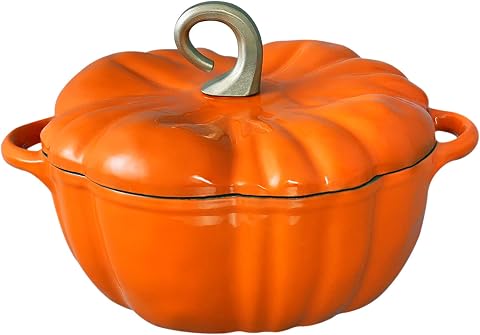
Flavehc 3.8-Qt Enameled Cast Iron Pumpkin Dutch Oven with Lid
- ✔ Material: Enameled cast iron
- ✔ Capacity: 3.8 qt
- ✔ Cooktop compatibility: Gas, electric, ceramic, and induction
Difficulty: Beginner | Time: 2-3 hours of preparation, plus cooking time
What You’ll Need
Tools & Materials:
- Your Thanksgiving menu and recipes
- Oven-safe roasting pan and rack, if roasting a turkey
- Instant-read food thermometer
- Saucepans, skillets, baking dishes, and sheet pans sized for your recipes
- Cutting boards, sharp knives, measuring tools, and heat-resistant oven mitts
- Food storage containers, labels, and a kitchen timer
Knowledge:
- Basic knife and stovetop skills
- How to read recipe temperatures and cooking times
- How to use a food thermometer
Check recipes for pan dimensions, oven temperatures, and whether dishes can be made ahead. If serving turkey, thaw it safely in the refrigerator; allow about 24 hours for every 4-5 pounds. Never thaw turkey on the counter. Keep raw poultry separate from ready-to-eat foods.
MALACASA Ceramic Casserole Baking Dishes, Set of 4, Orange
When we need several dishes for a holiday spread, MALACASA’s four-size set offers the broadest baking flexibility in this group. Its capacities run from 0.8 to 3 quarts, so we can use the smaller dishes for a modest portion and reserve the largest for a shared casserole or side. Compared with the single 3.8-quart Flavehc Dutch oven, this set gives us more size options; compared with Uiifan’s two small bowls, it is much better suited to food prepared for the table as a group.The porcelain dishes are described as chip and scratch resistant, and they can go in the oven, microwave, refrigerator, and dishwasher. That range is useful when we need to bake ahead, chill leftovers, or reheat a side. Handles help when lifting, but ceramic still has substantial weight: the listed set weight is 5 kg. There are also no lids, so these dishes are less convenient than Uiifan’s bowls for covered storage or serving. We’d choose them for baking variety, not as a lightweight or lidded storage system.
Pros:
- Four capacities, from 0.8 to 3 quarts, cover varied portions and sides.
- Oven, microwave, refrigerator, and dishwasher safe.
- Handles provide a more secure way to lift the dishes.
- Orange porcelain brings a coordinated seasonal look to the table.
Cons:
- The set has a listed weight of 5 kg, so handling may feel cumbersome.
- No lids are included for storage or covered serving.
- Ceramic baking dishes do not provide the stovetop flexibility of the Flavehc Dutch oven.
Best for: Cooks who prepare several baked Thanksgiving sides in different portion sizes and want oven-to-table ceramic dishes.
Not ideal for: Anyone who needs lightweight cookware, covered storage, or one vessel for stovetop cooking.
Bottom line: We’d pick MALACASA for the widest range of Thanksgiving baking tasks, provided we have room for its weight and do not need lids.
“We’d pick MALACASA for the widest range of Thanksgiving baking tasks, provided we have room for its weight and do not need lids.”
Uiifan Pumpkin Ceramic Bowls with Lids, 17 oz, Set of 2, Orange
Uiifan’s pumpkin-shaped bowls are the most focused serving pick here. Each holds 17 ounces, and the two included lids make the set useful for portioned soup, oatmeal, pasta, or dessert. Compared with MALACASA’s open baking dishes, these bowls offer covered individual servings; compared with Flavehc, they are designed for the table rather than for cooking a shared dish on a range.The ceramic bowls are listed as safe for the oven, microwave, refrigerator, and dishwasher. The lids need a little care: they should not go in the microwave, even though the bowls can. Their pumpkin shape and orange finish fit a fall table without requiring a large decorative vessel, but each 17-ounce portion is relatively small. We would choose them for soup courses or individual desserts, not for holding a side that everyone will scoop from. The listed 1.53 kg item weight is also worth considering when storing or carrying the pair.
Pros:
- Two lidded bowls make portioned serving and short-term storage convenient.
- Each bowl holds 17 ounces for individual courses.
- Bowls are listed as oven, microwave, refrigerator, and dishwasher safe.
- Pumpkin shape and orange color suit a Thanksgiving table.
Cons:
- The 17-ounce capacity is small for a shared side or large serving.
- Lids should not be microwaved.
- These serving bowls do not offer the cooktop use of the Flavehc Dutch oven.
Best for: Hosts who want covered, individual servings of soup or dessert with a seasonal look.
Not ideal for: Cooks serving a large shared side or looking for one pot that can move from cooktop to oven.
Bottom line: We’d use Uiifan for individual fall-themed servings, while keeping larger dishes and main cooking tasks to the other picks.
“We’d use Uiifan for individual fall-themed servings, while keeping larger dishes and main cooking tasks to the other picks.”
Flavehc 3.8-Qt Enameled Cast Iron Pumpkin Dutch Oven with Lid
For a Thanksgiving dish that starts on a burner and finishes in the oven, Flavehc is the most capable cooking vessel in this roundup. The 3.8-quart enameled cast iron pot works on gas, electric, ceramic, and induction cooktops, and it is oven safe up to 500°F. That makes it a better fit for soups, stews, casseroles, or bread than either MALACASA’s baking dishes or Uiifan’s serving bowls. Its pumpkin shape and golden stem knob also let us bring the pot to the table as part of the seasonal presentation.Cast iron’s heat retention can help keep food warm during serving, but it comes with a real handling cost: the pot weighs 5.63 kg before we add food. Its 3.8-quart capacity is useful but finite, so a large gathering may call for a second batch or a separate serving dish. MALACASA gives us more pieces and sizes for multiple sides, while Flavehc gives us a single vessel with cooktop compatibility. Choose this model for cooking range and warm serving, not if low weight or high batch capacity is the priority.
Pros:
- Compatible with gas, electric, ceramic, and induction cooktops.
- Oven safe up to 500°F for cooking that moves from burner to oven.
- Enameled cast iron retains heat for serving.
- Lid and pumpkin design support covered cooking and seasonal presentation.
Cons:
- The listed 5.63 kg weight can make the pot difficult to lift when full.
- The 3.8-quart capacity may be limiting for a large gathering.
- A single pot is less flexible for multiple side dishes than MALACASA’s four-piece set.
Best for: Cooks who want one seasonal vessel for stovetop soups or stews and oven finishing.
Not ideal for: Anyone prioritizing easy lifting, a large batch size, or several baking dishes for separate sides.
Bottom line: We’d choose Flavehc when cooktop-to-oven versatility matters most and its weight and capacity fit our meal.
“We’d choose Flavehc when cooktop-to-oven versatility matters most and its weight and capacity fit our meal.”
As an Amazon Associate we earn from qualifying purchases.
Before You Start
Write down every dish, its cooking temperature, cooking time, pan size, and whether it needs the oven, stovetop, or refrigerator. Check the turkey weight and thawing status several days ahead. Wash and dry cookware before storing or stacking it, and discard any pan with a loose handle, cracked surface, or damaged nonstick coating. Clear a landing area near the oven for hot dishes, and keep children and pets away from it.
Step-by-Step Instructions
Step 1: Inventory the cookware
Match each recipe to the pan or pot it requires. Set out the roasting pan, baking dishes, sheet pans, saucepans, skillets, mixing bowls, colander, measuring tools, knives, cutting boards, thermometer, and serving utensils. Check that baking dishes fit in the oven with space around them and that lids fit their pots.
Use cookware labeled oven-safe at the recipe’s temperature. Do not assume a skillet handle, glass lid, or nonstick pan can go in the oven; check the manufacturer’s markings or instructions.
Tip: If a recipe names a pan size, use that size. A smaller or deeper pan can change cooking time and browning.
Check: Every recipe has a suitable pan or pot, and oven-bound dishes fit inside the oven.
Step 2: Check and organize the oven
Remove stored pans, check that the oven racks are clean, and set the racks to the positions your recipes need. Confirm the oven heats by setting it to one recipe temperature and checking its display after preheating. If you have an oven thermometer, compare its reading with the set temperature.
Group dishes by temperature and schedule. Note which can bake together and which need the oven alone, such as a large turkey. Leave room for air to circulate around pans, and avoid blocking the oven vents.
Tip: Do not plan to fit every side dish into the oven at once. Use make-ahead recipes, stovetop cooking, or reheating after the turkey comes out.
Check: You have a written oven sequence, and the required racks and pans fit without crowding.
Step 3: Create a cooking schedule
Start with the serving time and work backward. Add the turkey’s estimated cooking time from a reliable recipe, plus resting time before carving. Schedule dishes that can be made the day before, then assign each remaining dish a start time and cooking location.
Include time to preheat the oven, wash tools between raw and cooked foods, and transfer finished dishes to serving containers. Put the schedule where you can see it while cooking.
Tip: Turkey cooking times are estimates. Use a thermometer to determine doneness rather than relying on the clock or the color of the meat.
Check: The schedule shows when each dish starts, where it cooks, and when it will be ready to serve.
Step 4: Prepare safe work zones
Set up one area for raw meat and poultry and another for washed produce, cooked food, and serving items. Use separate cutting boards when possible. If you have only one board, wash it with hot, soapy water and sanitize it after handling raw poultry before using it for other foods.
Place soap, paper towels or clean cloths, and a food-safe sanitizer within reach. Keep raw turkey and its juices away from counters, utensils, and foods that will not be cooked.
Tip: Wash hands with soap and water after touching raw poultry, its packaging, or any surface it has contacted.
Check: Raw and ready-to-eat foods have separate work areas, and cleanup supplies are accessible.
Step 5: Prep ingredients and label dishes
Measure dry ingredients, wash produce, and chop vegetables ahead when recipe timing allows. Store prepped ingredients in covered containers in the refrigerator and label each with the dish name and the time it should be added. Keep perishable ingredients chilled until needed.
Place serving spoons, trivets, and oven mitts near the dishes they will be used with. Keep hot pans on a stable, heat-resistant surface rather than directly on a counter that may be damaged.
Tip: Do not leave cut produce, dairy, eggs, or cooked food at room temperature for more than two hours, or one hour when the room is above 90°F (32°C).
Check: Prepped ingredients are covered, labeled, and refrigerated when they need to stay cold.
Step 6: Cook and check food temperatures
Follow each recipe’s sequence and use a timer for separate dishes. For turkey, check the temperature with an instant-read thermometer in the thickest part of the breast and the innermost part of the thigh and wing, avoiding bone. The turkey is safe when each reading reaches 165°F (74°C).
Check stuffing cooked inside the bird in its center; it also needs to reach 165°F (74°C). Cook stuffing separately if you want it to reach a safe temperature more quickly. Clean the thermometer between readings and foods.
Tip: If one area has not reached 165°F (74°C), continue cooking and recheck that area. Do not judge doneness by skin color or juices alone.
Check: The turkey and any stuffing inside it have verified safe temperatures, and timers keep other dishes on track.
Step 7: Rest, serve, and store leftovers
Rest the turkey according to your recipe before carving, keeping it protected from contamination. Use clean utensils and serving dishes for cooked food; never reuse a plate or board that held raw poultry unless it has been washed. Set hot food out close to serving time.
Refrigerate leftovers within two hours in shallow containers so they cool promptly. Remove turkey meat from the bones, cover containers, and label them with the date. Refrigerate at 40°F (4°C) or below and use leftovers within 3-4 days, or freeze them for longer storage.
Tip: Divide large amounts of soup, gravy, or other dense foods into smaller containers to help them cool faster.
Check: Cooked foods are served with clean utensils, and leftovers are labeled and refrigerated promptly.
Common Mistakes to Avoid
- Using the same board or utensils for raw poultry and cooked food. — Separate tools and work areas, or wash and sanitize tools between uses.
Troubleshooting
Problem: The thermometer reading is below 165°F (74°C).
Solution: Return the turkey or stuffing to the heat and check again in the same area after additional cooking. Clean the probe between readings and avoid touching bone, which can distort a reading.
What Success Looks Like
Your kitchen is ready when each recipe has the correct cookware, the oven schedule fits the available space, and raw poultry can be handled separately from ready-to-eat food. The meal is ready to serve when turkey and any stuffing inside it reach 165°F (74°C), dishes are transferred with clean utensils, and leftovers are refrigerated within two hours.
Next Steps
After the meal, refrigerate leftovers promptly, wash cookware with the care method recommended by its manufacturer, and dry pans fully before storing them. Note which dishes needed more oven space or time than expected. Use those observations to adjust your schedule and cookware setup for the next large meal.
Frequently Asked Questions
How do I know whether a pan is safe for the oven?
Check the pan’s markings or manufacturer instructions for its maximum oven temperature. Include handles, knobs, and lids in the check; one component may have a lower temperature limit than the pan itself.
Can I cook stuffing inside the turkey?
Yes, but the center of the stuffing must reach 165°F (74°C). Check it with a clean thermometer. Cooking stuffing separately makes temperature checks and timing easier.
How much time should I allow to thaw a turkey?
Allow about 24 hours in the refrigerator for every 4-5 pounds of turkey. Keep it in its wrapper on a tray to contain drips, and never thaw it at room temperature.
Can I put a hot glass baking dish on the counter?
Place it on a dry, heat-resistant trivet or board. Sudden temperature changes or a wet or cold surface can cause some glass cookware to break; follow the dish manufacturer’s handling instructions.
How long can Thanksgiving leftovers stay in the refrigerator?
Keep the refrigerator at 40°F (4°C) or below and use refrigerated leftovers within 3-4 days. Freeze portions you will not eat in that period, and reheat leftovers to 165°F (74°C).