
📊 Full opportunity report: What To Check When Auditing Restaurant Supplier Invoices on IdeaNavigator AI — validation score, market gap, and execution plan.

Get everyday essentials delivered free with Prime
- Fast, free delivery on millions of items
- Prime Video, Amazon Music and more included
- Member-only deals all year
TL;DR
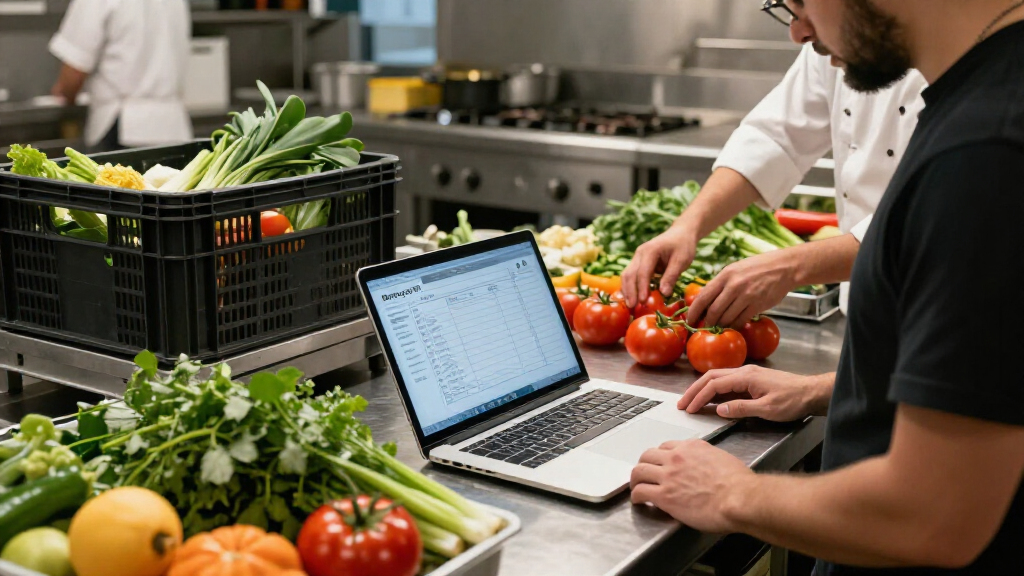
A proposal from IdeaNavigator AI outlines an invoice-audit workflow for independent restaurant groups, comparing supplier bills with agreed prices, purchase orders and received goods. It is a business concept, not a reported launch or measured result; the proposal recommends testing it against 90 days of records from three groups.
IdeaNavigator AI’s proposal describes a supplier-invoice auditing workflow for independent multi-unit restaurant groups. It is designed to compare what a business ordered and received with what suppliers billed and what contracts or quotes specify. The proposal recommends first testing the idea against 90 days of records from three restaurant groups; it reports neither a product launch nor demonstrated recoveries.
According to the IdeaNavigator AI proposal, intended users would include a restaurant group’s director of purchasing or controller, particularly at businesses buying from broadline and specialty food and beverage suppliers. The proposal describes the problem as a high volume of supplier invoices that can make it difficult to catch a contracted price that was not applied, a billed case that was short-shipped, a more expensive substitution, or a line price that rose between orders. It provides no independent measurement of invoice volumes or error rates.
The proposed product would ingest invoices through electronic data interchange (EDI) when available, or through PDF and photo-based optical character recognition. As outlined by IdeaNavigator AI, it would load supplier contracts or quote sheets and the restaurant group’s order guide, then compare each invoice line against the ordered, received, billed and agreed-price records. The system would flag potential discrepancies and draft a credit request for the supplier.
The proposal also calls for tracking each request until a credit appears on a later invoice. It suggests a monthly subscription per location, with an optional contingency fee tied to recovered credits for groups that prefer payment based on results. These are proposed product and pricing choices, not reported commercial terms for an existing service.
Protecting Food-Cost Margins
The IdeaNavigator AI proposal addresses a practical cost-control issue: a mismatch between a supplier’s agreed price and its invoice, or between a delivery and its billed quantity, can add expense without producing additional ingredients for a restaurant. The proposal says checking individual lines across a large volume of invoices takes staff time; its suggested matching workflow is intended to help purchasing and finance teams identify items for review.
For cost context, the proposal cites a USDA Economic Research Service Food Price Outlook dated September 25, 2026. That outlook forecasts 2026 retail beef and veal prices rising 9.4% and wholesale beef prices rising 8.5%, while food-away-from-home prices are forecast to rise 3.5%. These are forecasts, not confirmed outcomes. If costs for key ingredients rise faster than restaurants can raise menu prices, finding billing discrepancies could matter to margins. Neither the USDA figures nor the proposal establish how much any particular restaurant could recover.
For operators, the main practical question is whether documented discrepancies and collected credits would justify the labor, software fee and supplier follow-up involved. For a product developer, the proposal recommends a test to distinguish a recurring, recoverable problem from occasional errors that are too small or difficult to resolve to support a paid service.
Products Worth Considering

Bose SoundLink Flex Bluetooth Speaker (2nd Gen) – Portable Outdoor Speaker with Hi‑Fi Audio, Waterproof and Dustproof, USB‑C, Up to 12 Hours

EcoFlow Delta 3 Portable Power Station – 1024 Wh, 1800 W

Anker SOLIX C300 Portable Power Station, 288Wh
As an affiliate, we earn on qualifying purchases.
Testing the Invoice Workflow
The IdeaNavigator AI proposal frames the idea as a narrow first use case, rather than a complete restaurant procurement platform: identify invoice discrepancies for one type of buyer and track supplier credits. It points to contracts or quote sheets, order guides, purchase orders, delivery records and invoices as relevant records, while assuming they can be brought together and matched reliably.
The proposal recommends a 90-day lookback across three restaurant groups. The groups would compare paid invoices with contracts or quote sheets and calculate the dollars associated with prices above agreement, short-shipped cases billed in full and price changes over time. Its stated decision rule is to proceed only if documented credits per location clearly exceed the planned subscription fee.
The proposal cites USDA Food Price Outlook figures as a cost backdrop, but those figures do not validate the proposed product. IdeaNavigator AI reports no results from completed audits, customer interviews, supplier responses or a working software test. The recommendation is to measure the problem before investing in a product, not evidence that restaurant groups have already adopted one.
Evidence Still to Be Gathered
IdeaNavigator AI reports no completed pilot or recovered-credit totals. Its proposal does not establish how many discrepancies a typical group would find, what share suppliers would accept as valid, how long credits would take to appear, or whether the total would exceed a subscription price after staff time and other costs are counted.
The proposal does not specify how the system would confirm what was physically received when delivery records are incomplete, or how it would distinguish a legitimate substitution or price change from an error. EDI availability and the quality of PDFs, photos, contracts and order guides may vary by supplier and restaurant group. The proposal identifies no participating groups, product name, launch date or finalized pricing.
The cited USDA numbers are forecasts for 2026, not realized price data. The proposal provides no separate estimate of their effect on restaurant margins. Its claims about invoice volume and common billing problems are part of the business case; no independent measurements are supplied.
A Three-Group Records Review
IdeaNavigator AI proposes collecting 90 days of paid invoices and contract or quote records from three restaurant groups and calculating potential discrepancies by location and supplier. A useful test would also verify each flagged item against order and delivery records, document whether a supplier accepts the claim, and confirm whether the credit appears on a later invoice.
Only after those checks would the groups have evidence to compare recoveries with a proposed subscription fee and the effort required to manage exceptions. The proposal names no scheduled pilot or launch, so whether any group will run the test—and whether the results would support building the workflow—remains unknown.
Source: IdeaNavigator AI
Key Questions
Has an invoice-auditing product launched?
No launch is reported. IdeaNavigator AI describes a proposed workflow and recommends a test using restaurant-group records; it does not identify a product already available to buyers.
What would the proposed tool compare?
IdeaNavigator AI says it would compare invoice lines with contracts or quote sheets, order guides, purchase orders and received quantities to flag possible price and quantity discrepancies.
How would the proposal be tested?
IdeaNavigator AI recommends a 90-day review of paid invoices and contract or quote records from three restaurant groups, measuring discrepancies and documented credits per location.
Are supplier credits or savings confirmed?
No savings or recovered credits are reported. The proposal says to track credit requests through later invoices, but provides no pilot results or supplier acceptance rates.
Source: IdeaNavigator AI