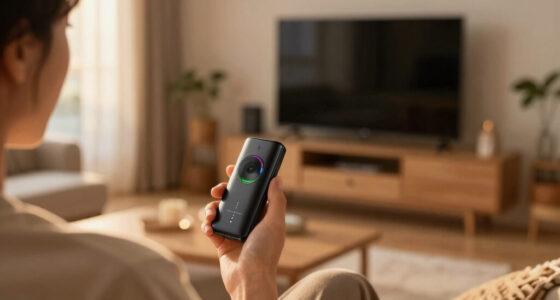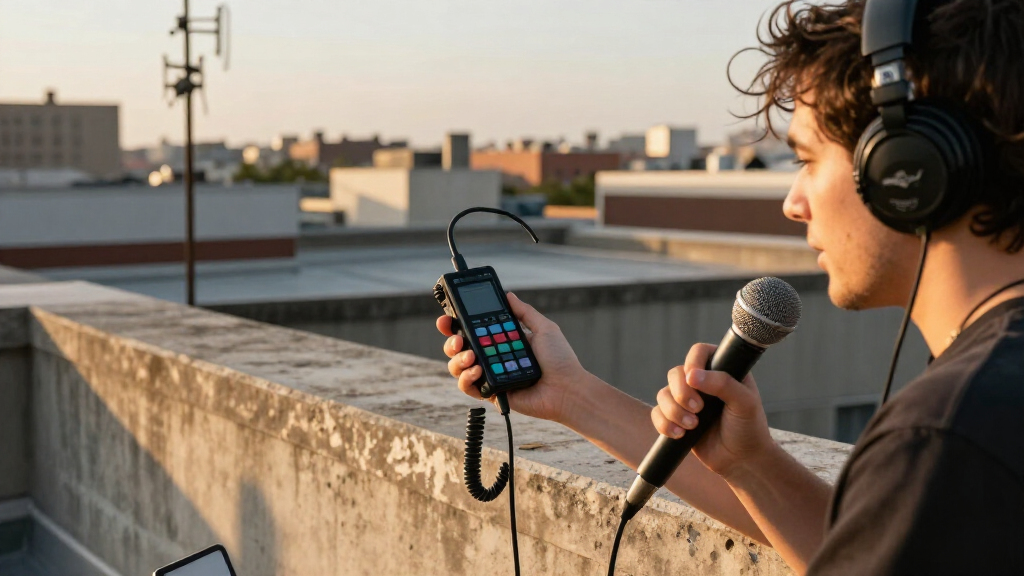
The best portable podcast recorder for most people is the Zoom PodTrak P4next, which pairs a podcast-focused layout with flexible recording options. The Zoom PodTrak P4 is a simpler choice for multivoice shows, while the TASCAM DR-40XP suits creators who want a field recorder that can also serve as a USB audio interface. Your main tradeoff is between fast, dedicated podcast controls and broader recording flexibility, alongside the number of people and microphones you need to handle. Bundles can reduce setup shopping, but they may include more gear than a lean solo setup needs. Read on for the full ranking, practical buying advice, and picks for different recording styles.

Get everyday essentials delivered free with Prime
- Fast, free delivery on millions of items
- Prime Video, Amazon Music and more included
- Member-only deals all year
Key Takeaways
- The PodTrak P4next ranks first for its podcast-oriented workflow; the H6essential offers more scope for expanded recording, but is a less focused fit for a straightforward podcast setup.
- The PodTrak P4 and P4next solve similar group-recording needs, while the P4next is the stronger fit for buyers prioritizing newer workflow features.
- The H1essential and H2essential prioritize compact stereo recording, not the multi-microphone setup a host needs for a roundtable show.
- The TASCAM DR-40XP and Zoom H4essential bridge podcasting and field recording, making them more versatile than dedicated podcast-first models but less specialized in layout.
- Bundles mainly trade simplicity for included equipment: the two-mic P4 bundle and four-mic P4next bundle suit different group sizes, while a recorder-only setup leaves more room to choose gear separately.
| Zoom H1 XLR 2-Channel Recorder |  | Best Compact Recorder for XLR Mics | Recording resolution: 32-bit float / up to 96 kHz | Inputs: Two XLR/TRS combo inputs; 3.5 mm stereo input | Output: 3.5 mm headphone output | VIEW LATEST PRICE | See Our Full Breakdown |
| Zoom PodTrak P4next Podcast Recorder |  | Best for Multi-Guest Podcast Sessions | Microphone inputs: Four XLR | Headphone outputs: Four, with separate volume controls | Maximum gain: +70 dB | VIEW LATEST PRICE | See Our Full Breakdown |
| Zoom H4essential Handheld Recorder |  | Best All-Round Handheld Recorder | Tracks: Four | Recording: 32-bit float; up to 96 kHz | Microphones: Built-in stereo microphones | VIEW LATEST PRICE | See Our Full Breakdown |
| Zoom PodTrak P2 Podcast Recorder with 2 USB Mic Inputs and AI Noise Reduction |  | Best for USB-Mic Podcast Setups | Microphone inputs: Two USB | Headphone outputs: Two | Recording format: WAV | VIEW LATEST PRICE | See Our Full Breakdown |
| TASCAM DR-40XP 4-Channel 32-Bit Float Portable Field Recorder and USB-C Audio Interface |  | Best for Flexible Stereo Mic Placement | Channels: Four | Recording formats: 32-bit float, 24-bit, and 16-bit WAV | Sample rates: 44.1, 48, and 96 kHz | VIEW LATEST PRICE | See Our Full Breakdown |
| Zoom R4 4-Track 32-Bit Float Recorder |  | Best for Layered Solo Podcasts | Tracks: Up to 4 | Recording format: WAV | Audio resolution: 32-bit float | VIEW LATEST PRICE | See Our Full Breakdown |
| Zoom PodTrak P4 Portable Podcast Recorder |  | Best for Multi-Guest Podcasts | Microphone inputs: 4 XLR inputs with phantom power | Headphone outputs: 4 with individual volume control | Sound pads: 4 | VIEW LATEST PRICE | See Our Full Breakdown |
| Zoom H2essential Handheld Recorder |  | Best for Flexible Field Recording | Built-in microphones: 3 | Recording patterns: 9 | Audio quality: Up to 32-bit float/96 kHz | VIEW LATEST PRICE | See Our Full Breakdown |
| Zoom PodTrak P4 Portable Multitrack Podcast Recorder Bundle with Two ZDM-1 Podcast Packs |  | Best Starter Podcast Kit | Microphone inputs: 4 high-gain XLR inputs with +48V phantom power | Headphone outputs: 4 independent outputs | Sound pads: 4 | VIEW LATEST PRICE | See Our Full Breakdown |
| Zoom H1essential Stereo Recorder |  | Best Compact Recorder for Solo Creators | Microphone: Built-in X/Y stereo microphones | Recording format: WAV | Recording mode: 32-bit float | VIEW LATEST PRICE | See Our Full Breakdown |
| Zoom PodTrak P4next Podcast Recorder Bundle with 4 Microphone Packs, Boom Arms, and Accessories |  | Best for Four-Person Podcast Setups | Recorder: Zoom PodTrak P4next portable multitrack podcast recorder | XLR inputs: 4, with up to +70 dB gain | Phantom power: 48 V on every channel | VIEW LATEST PRICE | See Our Full Breakdown |
| Zoom H6essential 6-Track Portable Recorder |  | Best for Flexible Field Recording | Recording: 6-track, 32-bit float | Inputs: 4 XLR/TRS combo inputs | Built-in microphones: Stereo X/Y; microphone SPL up to 135 dB | VIEW LATEST PRICE | See Our Full Breakdown |
| portable podcast recorder | Weight | Storage | Power |
|---|---|---|---|
| Zoom H1 XLR 2-Channel Recorder | 6.4 ounces | SDXC cards up to 1 TB | Two AA batteries; up to 10 hours battery life |
| Zoom PodTrak P4next Podcast Re | 10.56 ounces | SDHC; maximum capacity listed as 2 TB | Two AA batteries |
| Zoom H4essential Handheld Reco | — | SD card, up to 1 TB | — |
| Zoom PodTrak P2 Podcast Record | 7.04 ounces | Up to 1 TB | Four AA batteries, USB, or AC adapter |
| TASCAM DR-40XP 4-Channel 32-Bi | — | — | — |
| Zoom R4 4-Track 32-Bit Float R | 9.6 ounces | — | 4 AA batteries or USB-C |
| Zoom PodTrak P4 Portable Podca | 130 g | — | — |
| Zoom H2essential Handheld Reco | 6.72 oz | SD card, up to 2 TB | — |
| Zoom PodTrak P4 Portable Multi | — | — | 2 AA batteries included |
| Zoom H1essential Stereo Record | 92 g | SD card, up to 1 TB | 2 AAA batteries |
| Zoom PodTrak P4next Podcast Re | — | — | 2 AA batteries, USB/bus power, or AC adapter; up to approximately 3.5 hours on batteries |
| Zoom H6essential 6-Track Porta | 450 g | SD card recording; listed memory capacity 1 TB | — |
More Details on Our Top Picks
Zoom H1 XLR 2-Channel Recorder
The Zoom H1 XLR is a focused choice for podcasters who want a small recorder built around external microphones. Its two locking XLR/TRS inputs accommodate common mic and instrument connections, while 32-bit float recording at up to 96 kHz gives more flexibility when a speaker’s level changes unexpectedly. The OLED waveform display also makes it easier to check that a take is being captured. Compared with the Zoom H4essential, the H1 XLR is lighter and simpler, but it lacks built-in stereo microphones and the H4essential’s four-track setup. It also offers only two inputs, so it is a poor fit for a panel. The tradeoff is a portable, external-mic-first design that still depends on AA batteries and SDXC storage.
Pros:- Two locking XLR/TRS inputs suit external microphones, instruments, and other sources.
- 32-bit float recording at up to 96 kHz provides flexibility with changing input levels.
- OLED waveform display helps check recording activity at a glance.
- Supports SDXC cards up to 1 TB.
Cons:- Two inputs limit its usefulness for multi-guest roundtables.
- Requires two AA batteries.
- Does not include built-in stereo microphones.
Best for: Solo hosts or two-person interviewers who already own XLR microphones and want a lightweight recorder for location sessions.
Not ideal for: Panel hosts needing more than two microphone inputs, or podcasters who want built-in microphones for quick recording without extra gear.
- Recording resolution:32-bit float / up to 96 kHz
- Inputs:Two XLR/TRS combo inputs; 3.5 mm stereo input
- Output:3.5 mm headphone output
- Storage:SDXC cards up to 1 TB
- Display:0.96-inch OLED
- Power:Two AA batteries; up to 10 hours battery life
- Weight:6.4 ounces
Our verdict“Choose the H1 XLR for a compact, external-mic recorder for one or two voices; pick the H4essential if built-in mics or more tracks matter.”
Zoom PodTrak P4next Podcast Recorder
For a host recording several people around a table, the Zoom PodTrak P4next makes a stronger case than the smaller, two-input Zoom H1 XLR. It has four XLR microphone inputs and four headphone outputs with separate volume controls, so each guest can monitor without sharing a feed. Multitrack recording, phone connectivity, and USB audio-interface mode also suit shows that mix in-person and remote contributors. AI noise reduction and voice effects add practical processing options, though they do not remove the need for good mic technique or a quiet room. The tradeoff is a setup geared toward microphones rather than a grab-and-go stereo recorder: it requires two AA batteries, uses SDHC media, and its listed maximum gain may not be enough for some microphones. I’d choose the H4essential instead for built-in mics and broader field-recording use.
Pros:- Four XLR inputs support multitrack recording with multiple guests.
- Four headphone outputs have individual volume controls.
- Phone connectivity and USB audio-interface mode support remote and computer-based workflows.
- AI noise reduction and Tone Enhancement provide built-in processing options.
Cons:- Requires two AA batteries.
- Listed maximum gain may be insufficient for some microphones.
- SDHC storage format is less suited to buyers seeking a simple built-in-mic field recorder.
Best for: Small podcast teams recording up to four XLR-mic guests who want separate headphone controls and a recorder that can also connect to a phone or computer.
Not ideal for: Solo field recordists or users with low-output microphones who need built-in mics or more gain than the listed maximum provides.
- Microphone inputs:Four XLR
- Headphone outputs:Four, with separate volume controls
- Maximum gain:+70 dB
- Recording format:WAV
- Storage:SDHC; maximum capacity listed as 2 TB
- Power:Two AA batteries
- Weight:10.56 ounces
Our verdict“Pick the P4next for multi-person XLR podcast sessions with shared monitoring; choose a handheld recorder if portability and built-in microphones matter more.”
Zoom H4essential Handheld Recorder
The Zoom H4essential is the most adaptable handheld choice here: its built-in stereo microphones handle quick interviews and ambient sound, while two XLR/TRS inputs let a host bring external mics or other sources. Four-track, 32-bit float recording at up to 96 kHz gives it more flexibility than the two-input H1 XLR, and USB-C recording or streaming extends its use to phones, tablets, and computers. It can also save a backup to SD card, a useful safeguard for location work. The color LCD and spoken menu guidance distinguish it from more stripped-back options. Its limitation is that four tracks still do not match the P4next for a four-mic guest table, and the H4essential relies on AA batteries and a separately supplied SD card for onboard backup recording.
Pros:- Built-in stereo microphones and two XLR/TRS inputs cover both quick capture and external-mic setups.
- 32-bit float recording at up to 96 kHz supports recordings with changing sound levels.
- USB-C supports recording or streaming with compatible phones, tablets, and computers.
- Spoken menu guidance and a color LCD aid operation and navigation.
Cons:- Two external inputs are fewer than the four XLR inputs on the P4next.
- Requires two AA batteries.
- An SD card is needed for direct onboard backup recording.
Best for: Interviewers, field podcasters, and creators who need one portable device for built-in stereo capture, two external mics, and USB-C recording.
Not ideal for: Podcast crews recording four XLR microphones at once, or buyers who want onboard backup recording without supplying an SD card.
- Tracks:Four
- Recording:32-bit float; up to 96 kHz
- Microphones:Built-in stereo microphones
- Inputs:Two XLR/TRS
- Connectivity:USB-C; 3.5 mm headphone jack
- Storage:SD card, up to 1 TB
- Screen:2-inch color LCD
- Power and weight:Two AA batteries; 243 g
Our verdict“Choose the H4essential if you want a single handheld recorder for built-in-mic field work and two external sources, rather than a dedicated multi-guest mixer.”
Zoom PodTrak P2 Podcast Recorder with 2 USB Mic Inputs and AI Noise Reduction
The Zoom PodTrak P2 is the clear fit for podcasters who prefer USB microphones and do not want to build a setup around XLR gear. Its two USB mic inputs, two headphone outputs, and built-in voice processing cover a straightforward two-person show, while Mix-Minus helps prevent echo with remote guests. It can stream while recording individual tracks to an SD card, which gives it a more podcast-specific workflow than the handheld Zoom H4essential. The distinction also defines its limit: USB microphones are central to the design, so it is not the flexible choice for a conventional XLR mic collection like the P4next. Power options include batteries, USB, or an AC adapter, but the listed battery life is only up to four hours. I’d favor it for a compact desk or travel rig, not long sessions on batteries alone.
Pros:- Two USB microphone inputs and two headphone outputs suit a compact two-host setup.
- Mix-Minus helps reduce echo with remote guests.
- Can stream while recording individual tracks to an SD card.
- AI noise reduction, tone shaping, compression, and de-essing are built in.
Cons:- USB mic inputs make it a poor match for hosts who rely on XLR microphones.
- Battery life is listed as up to four hours on four AA batteries.
- Four AA batteries are not stated to be included.
Best for: Two-person podcast hosts using USB microphones who want headphone monitoring, remote-guest echo control, and simultaneous streaming and SD recording.
Not ideal for: Hosts with XLR microphones, larger guest groups, or long recording sessions that must run solely on batteries.
- Microphone inputs:Two USB
- Headphone outputs:Two
- Recording format:WAV
- Storage:Up to 1 TB
- USB interface:USB 3.0 Type-C
- Power:Four AA batteries, USB, or AC adapter
- Battery life:Up to 4 hours on four AA batteries
- Weight:7.04 ounces
Our verdict“Choose the P2 for a portable two-host show built around USB microphones; opt for the P4next if your microphones use XLR.”
TASCAM DR-40XP 4-Channel 32-Bit Float Portable Field Recorder and USB-C Audio Interface
The TASCAM DR-40XP stands apart for its adjustable built-in A-B or X-Y microphones, giving field podcasters a choice of stereo capture patterns before adding external sources. It records up to four channels and can capture its internal mics alongside two XLR/TRS inputs, while 32-bit float WAV recording at up to 96 kHz offers headroom for unpredictable location audio. Its 2-in/2-out USB-C interface also lets it serve as a computer or compatible mobile recording device. Compared with the Zoom H4essential, it shares the blend of built-in and external mics, but the TASCAM emphasizes adjustable mic positioning and lists a 125 dB maximum SPL. The practical drawback is that batteries and microSD media are not included, so it is less ready to record out of the box. It is a field recorder first, not a four-mic podcast mixer like the P4next.
Pros:- Adjustable A-B or X-Y microphones offer different stereo capture arrangements.
- Can record built-in microphones and two external XLR/TRS inputs simultaneously.
- 32-bit float WAV recording supports changing levels, with sample rates up to 96 kHz.
- 2-in/2-out USB-C interface supports computer or compatible mobile recording.
Cons:- Batteries and microSD card are not included.
- Two external inputs do not match the P4next’s four-microphone setup.
- Built around field recording rather than dedicated multi-guest podcast monitoring.
Best for: Field podcasters and interviewers who want adjustable built-in stereo microphones, two external inputs, and USB-C interface capability in one recorder.
Not ideal for: Podcast teams needing four XLR microphones and individual guest headphone controls, or buyers who expect batteries and storage media to be included.
- Channels:Four
- Recording formats:32-bit float, 24-bit, and 16-bit WAV
- Sample rates:44.1, 48, and 96 kHz
- Built-in microphones:Adjustable A-B or X-Y unidirectional condenser microphones
- External inputs:Two XLR/TRS
- Maximum SPL:125 dB
- USB audio interface:2-in/2-out USB-C
- Weight and dimensions:6.1 ounces; 1.38 × 2.76 × 6.13 inches
Our verdict“Pick the DR-40XP for adaptable stereo field capture plus two external sources; choose the P4next for a multi-microphone podcast table.”
Zoom R4 4-Track 32-Bit Float Recorder
I’d choose the Zoom R4 for a solo host who wants to build a show in layers rather than manage several live guests. Its 32-bit float recording helps accommodate changing levels, while bouncing tracks frees channels for more overdubs—useful for adding narration, music, and effects to one project. Compared with the Zoom PodTrak P4, the R4 offers built-in stereo microphones and more track-layering flexibility, but it has only two XLR/TS inputs and lacks the P4’s four independent headphone outputs. The rhythm patterns and effects also suit creators making music-led segments or demos. The tradeoff is that its workflow is less tailored to roundtable podcasting, and portable use depends on four AA batteries unless USB-C power is available.
Pros:- 32-bit float recording helps handle varying levels without constant gain adjustments.
- Track bouncing frees channels for additional overdubs.
- Built-in stereo microphones and effects support recording without a separate mic setup.
- Works as a 2-in/2-out USB audio interface and can run on USB-C power.
Cons:- Only two XLR/TS combo inputs, limiting simultaneous external microphones.
- Battery-powered operation requires four AA batteries.
- Its track-layering workflow is less suited to managing multiple live podcast guests.
Best for: Solo podcasters who record narration, music, and effects in separate layers and want a portable recorder that can also serve as a USB interface.
Not ideal for: Hosts recording four-person conversations who need an XLR input and individual headphone feed for each guest.
- Tracks:Up to 4
- Recording format:WAV
- Audio resolution:32-bit float
- Inputs:2 XLR/TS combo
- USB interface:2-in/2-out
- Built-in microphones:Stereo
- Power:4 AA batteries or USB-C
- Weight:9.6 ounces
Our verdict“Choose the R4 for portable, layered solo production; pick the PodTrak P4 instead for live conversations with several guests.”
Zoom PodTrak P4 Portable Podcast Recorder
For a podcast recorded around a table, I rank the Zoom PodTrak P4 ahead of handheld recorders because it is built around four XLR microphone inputs and four headphone outputs with separate volume controls. That lets guests monitor their own audio without needing a separate headphone amp. Sound pads and phone connectivity add practical options for playback and remote interviews, while multitrack recording gives you more control in editing than a simple stereo capture. Compared with the Zoom R4, the P4 is much better organized for live, multi-person sessions, but it does not offer the R4’s track-bouncing workflow or built-in stereo microphones. Its up-to-3.5-hour battery life also calls for planning on longer sessions, and two AA batteries are required for battery operation.
Pros:- Four XLR inputs with phantom power support a group of external microphones.
- Four headphone outputs have individual volume controls for guest monitoring.
- Sound pads and TRRS phone connectivity support playback and remote interviews.
- Portable unit supports multitrack recording.
Cons:- Battery life is listed at up to 3.5 hours, which may not cover longer recording days.
- Battery-powered operation requires two AA batteries.
- No built-in microphones are listed, so recording requires external mics or another input source.
Best for: Small podcast teams recording up to four XLR microphones who want separate headphone volume controls and straightforward phone or USB connections.
Not ideal for: Solo field reporters looking for a pocket-sized recorder with built-in microphones and extended battery runtime.
- Microphone inputs:4 XLR inputs with phantom power
- Headphone outputs:4 with individual volume control
- Sound pads:4
- Recording format:WAV
- USB interface:2-in/2-out
- Phone connectivity:TRRS jack
- Battery life:Up to 3.5 hours on 2 AA batteries
- Weight:130 g
Our verdict“Pick the PodTrak P4 for a portable four-mic table setup, but choose a handheld recorder for simpler solo field capture.”
Zoom H2essential Handheld Recorder
The Zoom H2essential is the most adaptable handheld choice here for podcasters who record in changing environments. Its three built-in microphones and nine recording patterns let you select mono, stereo, or surround capture without packing external microphones, while 32-bit float recording helps handle unpredictable volume changes. Compared with the simpler Zoom H1essential, it offers more pickup patterns and surround recording; the H1essential is a leaner fit when conventional stereo capture is all you need. The H2essential can also record to an SD card while acting as a USB microphone, making it useful for both location work and desk sessions. That flexibility comes with a more involved choice of patterns, and its Bluetooth timecode feature requires compatible H2essential units.
Pros:- Three built-in microphones and nine patterns offer flexible pickup options.
- Records mono, stereo, and surround audio at up to 32-bit float/96 kHz.
- Can record to an SD card while functioning as a USB microphone.
- Audible menu navigation is available in seven languages.
Cons:- Bluetooth timecode syncing requires compatible H2essential units.
- Portable battery operation requires two AA batteries.
- The range of recording patterns may add setup choices for users who only need basic stereo.
Best for: Field podcasters and interviewers who need several built-in pickup patterns, flexible mono-to-surround recording, and USB microphone use.
Not ideal for: Creators who only need straightforward stereo recording and want the simplest possible handheld setup.
- Built-in microphones:3
- Recording patterns:9
- Audio quality:Up to 32-bit float/96 kHz
- Recording modes:Mono, stereo, and surround
- Storage:SD card, up to 2 TB
- USB interface:USB 3.0 Type-C
- Battery life:Up to 20 hours on 2 AA batteries
- Weight:6.72 oz
Our verdict“Choose the H2essential for flexible field capture across different recording setups; choose the H1essential for simpler stereo work.”
Zoom PodTrak P4 Portable Multitrack Podcast Recorder Bundle with Two ZDM-1 Podcast Packs
This bundle is my pick for a small podcast team that wants a recorder and two mic setups in one package. The PodTrak P4 handles up to four microphones, provides four independent headphone outputs, and supports two remote call-ins; its mix-minus support helps reduce echo on connected calls. Two ZDM-1 Podcast Packs add microphones, headphones, stands, cables, and accessories, so a pair of hosts can start with more of the recording gear in hand than they would get with the standalone PodTrak P4. The P4 itself remains a four-input system, so the bundle does not provide a complete mic pack for every possible participant. It also relies on AA batteries or another power source, making power planning part of taking the setup on location.
Pros:- Records up to four microphones with high-gain XLR inputs and phantom power.
- Two ZDM-1 packs include microphones, headphones, stands, cables, and accessories.
- Four independent headphone outputs support separate monitoring for guests.
- TRRS and USB call-in connections support remote interviews with mix-minus.
Cons:- The bundle includes two mic packs, not a full kit for all four possible microphone inputs.
- The recorder needs AA batteries or another power source for operation.
- A larger bundle is less suitable for buyers who already have compatible recording gear.
Best for: Two-person podcast teams who need a portable recorder, matching microphone kits, guest monitoring, and remote-call support in one bundle.
Not ideal for: Four-person teams expecting a microphone pack for every guest, or buyers who already own microphones, headphones, and stands.
- Microphone inputs:4 high-gain XLR inputs with +48V phantom power
- Headphone outputs:4 independent outputs
- Sound pads:4
- Call-in connections:TRRS and USB
- Microphone compatibility:Dynamic and condenser
- Bundle contents:PodTrak P4 recorder and 2 ZDM-1 Podcast Mic Packs
- Power:2 AA batteries included
Our verdict“Choose this bundle to equip a two-host show with a recorder and matching mic kits, while teams with existing gear may prefer the standalone PodTrak P4.”
Zoom H1essential Stereo Recorder
For a solo host or reporter who wants to record quickly without carrying a mixer, I’d favor the Zoom H1essential. Its built-in X/Y stereo microphones provide a self-contained way to capture interviews, room sound, or spoken segments, and 32-bit float recording helps handle sudden changes in volume. USB-C connection also lets it function as a microphone for computers and mobile devices, giving it a role beyond standalone SD-card recording. Compared with the Zoom H2essential, the H1essential is the more focused choice: it offers stereo capture rather than the H2essential’s multiple patterns and surround options. That simpler setup is easier to pack, but it is not a substitute for a multi-XLR recorder such as the PodTrak P4 when several guests need separate microphones. It also runs on two AAA batteries.
Pros:- Built-in X/Y microphones capture stereo without an external mic.
- 32-bit float recording helps accommodate sudden volume changes.
- Records to SD card and connects by USB-C as a microphone.
- Spoken menu guidance supports accessible operation.
Cons:- Two AAA batteries are required for battery-powered recording.
- Stereo-focused capture offers less pattern flexibility than the H2essential.
- A single handheld recorder does not provide separate XLR microphone inputs for a group.
Best for: Solo podcasters, interviewers, and video creators who want a compact stereo recorder that can also connect as a USB microphone.
Not ideal for: Podcast teams needing multiple XLR inputs, separate guest headphone feeds, or flexible surround and multi-pattern capture.
- Microphone:Built-in X/Y stereo microphones
- Recording format:WAV
- Recording mode:32-bit float
- USB interface:USB Type-C
- Storage:SD card, up to 1 TB
- Recording time:Up to 10 hours
- Power:2 AAA batteries
- Weight:92 g
Our verdict“Pick the H1essential for compact, self-contained stereo recording; move up to the H2essential for more pickup patterns or the PodTrak P4 for a group.”
Zoom PodTrak P4next Podcast Recorder Bundle with 4 Microphone Packs, Boom Arms, and Accessories
This bundle is the most ready-to-record choice here for a four-person podcast: it pairs the PodTrak P4next’s four XLR inputs and independent headphone outputs with four microphone packs and boom arms. Separate headphone volume controls let each guest monitor comfortably, while AI noise reduction and voice processing can help tame distracting sound without adding external gear. Compared with the Zoom H6essential, this package is built around a seated, multi-host conversation rather than flexible field recording with built-in stereo microphones and 32-bit float capture. Its tradeoffs are limited battery runtime—about 3.5 hours on AA batteries—and a confusing storage listing: a 64 GB card is included, although the recorder description says the card is sold separately. I’d choose it for a group setup, not for long, unattended location sessions.
Pros:- Four XLR inputs and four independent headphone outputs suit group recording.
- Four microphone packs and boom arms provide a coordinated multi-person setup.
- AI noise reduction and voice processing offer onboard help with speech clarity.
- Can run on AA batteries, USB/bus power, or an AC adapter.
Cons:- AA battery operation lasts only about 3.5 hours.
- The storage information conflicts: the bundle lists a 64 GB card, while the recorder description says the card is sold separately.
Best for: Small podcast teams recording up to four people who want matching microphones, headphones, boom arms, and individual headphone controls in one package.
Not ideal for: Solo field recordists or crews needing long battery-powered sessions; the four-person microphone bundle adds gear they may not use, and AA runtime is about 3.5 hours.
- Recorder:Zoom PodTrak P4next portable multitrack podcast recorder
- XLR inputs:4, with up to +70 dB gain
- Phantom power:48 V on every channel
- Headphone outputs:4 independent outputs with individual volume controls
- Recording media:microSD; bundle lists a 64 GB microSDXC card
- Power:2 AA batteries, USB/bus power, or AC adapter; up to approximately 3.5 hours on batteries
- Microphone packs:4 Zoom ZDM-1 packs, each with dynamic microphone, closed-back headphones, tabletop stand, XLR cable, and foam windscreen
- Boom arms:4 On-Stage MBS5000 arms, each with pre-installed 10-foot XLR cable
Our verdict“Choose this bundle for a four-person podcast station with matching gear; choose the H6essential instead if flexible field recording and longer stated battery life matter more.”
Zoom H6essential 6-Track Portable Recorder
The H6essential suits podcasters who record both interviews and ambient sound, rather than building a fixed multi-host desk. Its four XLR/TRS combo inputs handle external mics, while built-in stereo X/Y microphones capture a room or location without extra equipment. Six-track 32-bit float recording gives more room to recover recordings with uneven levels than a conventional fixed-gain workflow, and spoken menu guidance supports accessible operation. Compared with the PodTrak P4next bundle, the H6essential is less turnkey for four hosts: it does not include four microphone packs, boom arms, or individual headphone outputs. In return, it’s a more adaptable handheld recorder, with a stated 18-hour battery life and USB interface use while recording to an SD card. The four AAA batteries and optional interchangeable capsules are practical limits to weigh.
Pros:- 32-bit float recording helps accommodate changing input levels.
- Combines four XLR/TRS combo inputs with built-in stereo X/Y microphones.
- Can record to an SD card while functioning as a USB audio interface.
- Spoken menu guidance supports accessible navigation.
Cons:- Requires four AAA batteries, which may be less convenient to keep on hand than other power options.
- Interchangeable microphone capsules beyond the built-in setup are optional.
- Does not include the multi-mic and boom-arm package suited to a four-person podcast desk.
Best for: Interviewers, documentary podcasters, and small crews who need built-in stereo mics, multiple external inputs, and a recorder that can also serve as a USB interface.
Not ideal for: Four-host shows seeking a complete microphone-and-boom-arm package or separate headphone mixes; the PodTrak P4next bundle is better equipped for that setup.
- Recording:6-track, 32-bit float
- Inputs:4 XLR/TRS combo inputs
- Built-in microphones:Stereo X/Y; microphone SPL up to 135 dB
- USB audio interface:Compatible with PC, Mac, iOS, and Android
- Storage:SD card recording; listed memory capacity 1 TB
- Battery:4 AAA batteries required; stated battery life of 18 hours
- Display and headphone output:2-inch screen; 3.5 mm headphone jack
- Weight:450 g
Our verdict“Pick the H6essential for adaptable field interviews and ambient recording, but favor the PodTrak P4next bundle for a ready-made four-person podcast setup.”
How We Picked
I ranked these 12 options by how well their recording workflow matches common podcast setups, then weighed input flexibility, portability, ease of operation, and usefulness beyond podcasting. A recorder that makes it practical to capture multiple voices earns a higher place for group-show needs; a compact stereo device can still be the better fit for solo creators, interviews, or ambient sound. I also treated bundled microphones and accessories as a convenience, not an automatic advantage, since included gear may not match every room or production style.
The order favors useful capability without adding unnecessary setup complexity. Podcast-focused models rise when their controls and connections suit spoken-word sessions, while field recorders rank well when their broader recording roles justify a more general interface. I considered the tradeoff between simple operation and room to grow, and the rankings distinguish similar products by workflow and intended use rather than treating extra features as a win on their own.
| portable podcast recorder | Storage |
|---|---|
| Zoom H1 XLR 2-Channel Recorder | SDXC cards up to 1 TB |
| Zoom PodTrak P4next Podcast Re | SDHC; maximum capacity listed as 2 TB |
| Zoom H4essential Handheld Reco | SD card, up to 1 TB |
| Zoom PodTrak P2 Podcast Record | Up to 1 TB |
| TASCAM DR-40XP 4-Channel 32-Bi | — |
| Zoom R4 4-Track 32-Bit Float R | — |
| Zoom PodTrak P4 Portable Podca | — |
| Zoom H2essential Handheld Reco | SD card, up to 2 TB |
| Zoom PodTrak P4 Portable Multi | — |
| Zoom H1essential Stereo Record | SD card, up to 1 TB |
| Zoom PodTrak P4next Podcast Re | — |
| Zoom H6essential 6-Track Porta | SD card recording; listed memory capacity 1 TB |
Factors to Consider When Choosing Portable Podcast Recorders
Before choosing a model, map the recorder to the way your show is actually made. A two-person remote interview, a four-host table, and a solo narration session place different demands on inputs, monitoring, and setup time. These broader choices can prevent paying for channels you will not use—or buying a compact recorder that cannot handle your next format.
Count people, microphones, and separate tracks
Start with the largest session you expect to record, not your usual one. Each person may need a microphone input and a way to monitor their own voice, and recording separate tracks gives you more control when one guest is loud or a room noise intrudes. A recorder advertised with multiple tracks does not always provide the same number of microphone inputs, so check the signal path rather than relying on the headline count. Also account for phone calls, remote guests, or a music source if your format uses them. Buying too few inputs creates workarounds; buying far more than you need can make a simple session harder to run.
Choose between podcast controls and field-recorder flexibility
A podcast-focused recorder often puts common spoken-word tasks close at hand, which can reduce setup friction when several people are waiting to record. A general field recorder may cover more kinds of sources or recording situations, but its controls can feel less tailored to a studio-style conversation. Think about whether you will mostly sit at a table or regularly capture sound away from home. For a mixed workflow, versatility may justify a less specialized layout; for a repeatable weekly show, ease of operating the recorder can matter more than extra modes. Do not confuse a long feature list with a faster session.
Decide how much portability matters in practice
Portable can mean easy to carry in a bag, able to record without a computer, or convenient to operate in a cramped location. Those are different needs, so consider where the recorder will sit and what else must travel with it, including microphones, cables, stands, and power. A compact handheld recorder is appealing for travel and quick stereo capture, but it may not replace a multi-mic podcast setup. Larger control surfaces can be easier to manage on a table yet less convenient for location work. Judge portability by the full kit, not the recorder alone.
Treat bundles as a workflow choice, not a shortcut to quality
A bundle can save time when its microphones and accessories match the number of hosts and the recording space. It can also leave you with stands, arms, or other parts that do not fit your desk or preferred microphone placement. Check what is included, how many people it supports, and whether the accessories solve a real setup problem for you. If you already own microphones, a recorder-only option may be a better match and let you choose accessories for your room. The best bundle is the one that removes specific setup work, not simply the one with the longest contents list.
Plan for the recording environment and editing workflow
Room sound can affect a spoken-word recording as much as the recorder, so avoid expecting a new device to fix echo, traffic, or a noisy fan. Consider whether you can position microphones close to speakers and monitor the recording while it happens. Separate tracks give you more editing flexibility, but they also create more files and require a workflow that can organize them. If speed after recording matters, a simpler capture setup may be easier to maintain. Think through where files go, who edits them, and how often you need to recover or share a session.
Pay for growth only when it matches a likely next step
Extra inputs and broader recording options are useful when you can name the next use: adding co-hosts, recording a roundtable, or capturing music alongside speech. Without that plan, added capability can bring a larger device and more setup decisions without improving the current show. A compact recorder can be the sensible choice for a solo creator who values quick capture, while a more expandable unit may prevent a near-term replacement for a growing team. Compare the cost of unused capacity with the disruption of outgrowing a limited setup. Choose the smallest workflow that comfortably supports the sessions you expect to record.
Frequently Asked Questions
Can a compact stereo recorder handle a podcast with several hosts?
It can capture a conversation as a stereo mix in some situations, but that is not the same as giving each host a separate microphone track. A shared mix offers less control if one person speaks softly or a sound interrupts the session. For multiple hosts, check the number of microphone inputs and whether each voice can be recorded independently. Compact stereo models in this roundup make more sense for solo narration, quick interviews, or general sound capture than as the center of a multi-microphone table setup. If you expect the show to grow, plan for that before choosing a recorder.
Should I choose a PodTrak recorder or a handheld field recorder for interviews?
It depends on where the interview happens and how many voices you need to capture. A podcast-focused recorder is a natural fit for a seated, multi-microphone conversation where direct access to podcast controls helps keep the session moving. A handheld field recorder can suit mobile interviews and broader location recording, especially when portability and non-podcast uses matter. Check input needs, monitoring, and how you plan to connect microphones before deciding. For a show that alternates between table sessions and field work, a general recorder may be more adaptable, while a repeatable studio workflow can favor the dedicated layout.
Do I need separate tracks for every speaker?
Separate tracks are not mandatory, but they give an editor more control over levels and unwanted sounds after a session. That flexibility can be helpful when guests have different speaking volumes or a room is not perfectly quiet. A single mixed file is easier to manage and may suit a simple show with consistent speakers and a quick publishing process. Consider who edits your episodes and how much time they can spend correcting problems. If you often record several people, separate tracks are usually a more forgiving workflow than relying on one combined mix.
Is a recorder bundle a better choice than buying microphones separately?
A bundle is helpful when its included microphones and accessories match your host count, desk layout, and recording plans. It can reduce the number of compatibility and setup decisions, especially for a new show. But bundled gear is not automatically the right fit for your room, and some creators already own microphones or prefer different stands and placement. Compare the complete included kit with what you would actually use rather than choosing by the number of pieces. The P4 bundle with two microphone packs and the P4next bundle with four packs suit different group sizes, so the larger set is only useful if the extra capacity serves your show.
When does it make sense to choose a more expandable recorder?
More expandability makes sense when you have a specific plan to add speakers, microphones, or non-podcast recording tasks. It can also help if the recorder must cover both a regular show and occasional field sessions, reducing the need for separate devices. The tradeoff is that added flexibility can mean more controls and a less focused workflow for a basic conversation. If your format and equipment are stable, prioritize ease of operation over capacity you may never use. If a change is likely soon, compare the inputs and recording workflow you will need rather than buying extra capability on speculation.
Conclusion
Best overall: I recommend the Zoom PodTrak P4next for buyers who want a podcast-centered workflow with room to handle varied sessions. Best value: The Zoom PodTrak P4 is the straightforward pick for a multi-microphone show that does not need the P4next’s newer feature set. Best premium: Choose the Zoom H6essential if broader recording flexibility and a more expandable setup matter more than a dedicated podcast layout. Best for beginners: The Zoom PodTrak P4 bundle with two microphone packs gives a small show a more direct starting point, while the H1essential is a simpler fit for solo stereo recording. Best for specific needs: Pick the TASCAM DR-40XP for a podcast-and-field-recording mix, the H2essential for compact stereo capture, or the four-microphone P4next bundle when a larger group needs an included kit. Match the recorder to your actual number of speakers and recording locations, then favor the simplest setup that can handle them.