
TL;DR

Get everyday essentials delivered free with Prime
- Fast, free delivery on millions of items
- Prime Video, Amazon Music and more included
- Member-only deals all year
JCDecaux, the outdoor advertising company that owns billboards and other assets worldwide, has emerged as an unexpected beneficiary of the AI boom. Its shares have risen more than 70% this year, which MoneyWeek links to changing advertiser spending; the available report does not give a time-stamped share price or details of the spending shift.
JCDecaux, the outdoor advertising company with billboards and other advertising assets around the world, has become an unexpected beneficiary of the global AI boom, with its shares rising more than 70% this year, according to MoneyWeek. The reported link is a shift in advertiser spending toward real-world advertising assets, although the report does not detail how much spending has moved or how much of the share gain is tied to AI.
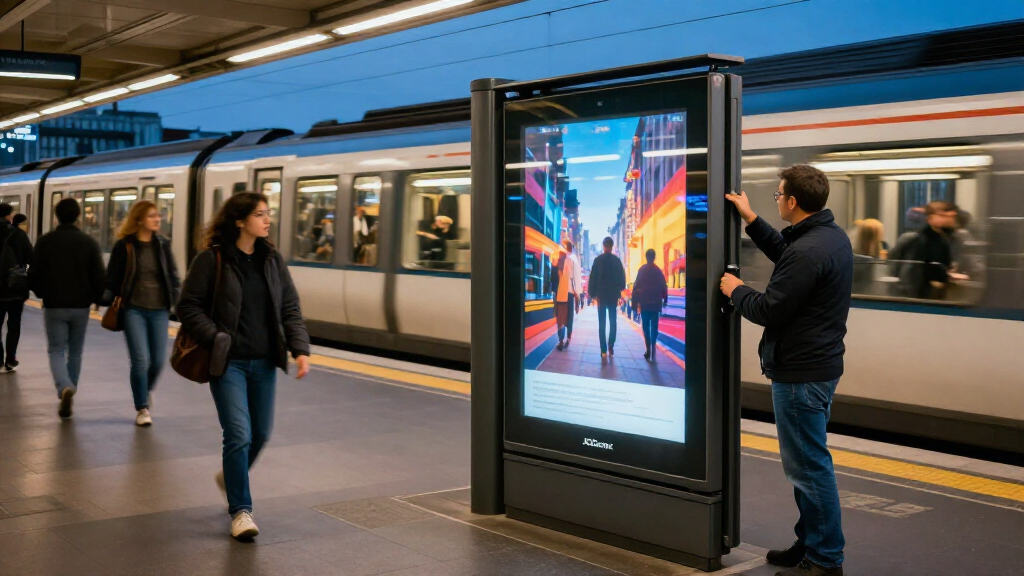
The case for JCDecaux as an AI-related investment is not that it sells AI systems. The company owns and operates a large network of physical advertising locations, giving it exposure to campaigns placed in public spaces rather than only to digital platforms or technology vendors. MoneyWeek describes this extensive real-world estate as the basis for the company’s unexpected position in the AI boom.
MoneyWeek says advertisers are shifting spending toward real-world advertising, a change it presents as benefiting JCDecaux. The report does not name the advertisers involved, give spending figures, or break down which markets or types of advertising are driving the change. The spending shift is therefore a reported explanation, not a quantified account of the company’s revenue growth.
The clearest numerical detail is the stock’s reported rise of more than 70% this year. No exact starting or ending date, share price, or comparison index is supplied, so the figure should be read as the increase reported at the time of publication, not as a current live return. The report also does not provide financial forecasts or company guidance to show how the share performance relates to future results.
Outdoor media · Market signal · AI economy
How JCDecaux Became An Unexpected Winner Of The AI Boom
The company does not sell AI technology. MoneyWeek links its reported share rise to advertisers shifting spend toward real-world advertising assets—an investment narrative that remains unquantified.
JCDecaux shares rose more than 70% this year, according to MoneyWeek.
“This year” refers to the report’s publication period. No exact dates, share price or market comparison were supplied.
The market story, in context
The reported link is a change in where advertisers spend. The account does not establish how much AI has changed JCDecaux’s business.
Physical ad space
JCDecaux owns and operates billboards and other advertising assets in public spaces around the world.
Spend moves offline
MoneyWeek says advertisers are directing more spending toward real-world advertising assets.
AI boom connection
The wider technology cycle may influence ad budgets, but the report gives no mechanism or budget figures.
Why physical inventory is in focus
An AI investment story can reach beyond model makers, chip companies and data centers when spending patterns shift.
Locations with reach
The company can sell access to advertising locations in the places people live, travel and gather.
Beyond digital platforms
Outdoor advertising provides a physical channel alongside online ad inventory and technology services.
Exposure, not proof
A broad physical network may be relevant to changing budgets; a rising share price does not prove an AI-driven gain.
Signal vs. evidence
A compelling market narrative, with gaps
The share move is the clearest number in the report. The proposed link to advertiser spending is described broadly, without a breakdown by advertiser, market or format.
No company statement, executive quotation or financial forecast confirms that AI-related demand drove the performance.
What remains unknown
The report describes a market interpretation, not a verified account of AI-driven financial gains.
Which advertisers are shifting spend, by how much, and into which regions or formats?
What effect, if any, has the trend had on advertising revenue, operating performance or cash flow?
What dates define “this year,” and how did the shares perform versus the wider market?
Is the reported spending trend sustained, and how specifically does it connect to AI?
Evidence to watch next
Company disclosures can show whether the market narrative is appearing in operating performance.
Read the results
Look for reported revenue and performance by geography or advertising format.
Track advertiser spend
Watch for figures or commentary that describe demand trends and budget changes.
Seek company detail
Check whether management connects demand or results to AI-related activity.
Test persistence
Compare forward guidance with evidence that the trend continues over time.
Key questions
What the report says—and what it leaves open.
It owns real-world ad locations
MoneyWeek points to advertiser spending shifting toward physical assets. The report does not explain the specific mechanisms behind the shift.
More than 70% this year
The report gives no exact measurement dates, share price or comparison with a market index.
That is not the claim
The report presents JCDecaux as an outdoor advertising business whose physical network may benefit from changing advertiser spending.
No company confirmation is included
No company statement or figures attribute revenue growth or the share rise to AI-related demand.
Why Physical Ad Space Is in Focus
JCDecaux’s reported rise illustrates how an AI investment story can extend beyond companies that build models, chips or data centers. If advertisers are directing more money toward physical locations, owners of prominent outdoor inventory may benefit even without selling AI products. That makes the company’s real-world advertising footprint relevant to investors trying to understand where spending associated with the broader technology cycle may flow.
But a rising share price alone does not establish that AI has improved JCDecaux’s business. The available account does not quantify the effect of AI on advertising budgets, connect the stock move to a specific company announcement, or distinguish the spending shift from other possible factors affecting the shares. Readers should separate the reported market narrative from evidence of changes in sales, profit or cash flow.
Products Worth Considering

Apple iPad Air (4th Generation, 10.9-inch, Wi-Fi, 256GB) – Space Gray

DJI Osmo Mobile 8 Standard Combo Phone Gimbal Stabilizer

Logitech MX Keys S Wireless Keyboard, Graphite
As an affiliate, we earn on qualifying purchases.
JCDecaux’s Assets Behind the Story
JCDecaux is described by MoneyWeek as an owner of thousands of billboards and other advertising assets worldwide. That physical network is the relevant context for the AI-related investment argument: the company can sell access to advertising locations in the built environment, rather than relying solely on online ad inventory.
The report frames the development as a change in how advertisers allocate spending as interest in AI grows. It does not set out a detailed timeline, identify a new JCDecaux contract or product, or report a company announcement that triggered the share move. The account is therefore about a market interpretation of the company’s assets and the reported direction of advertiser spending, rather than a confirmed corporate AI launch.
What the Report Does Not Quantify
The report does not identify which advertisers are moving budgets, how much spending is changing, or whether the trend is concentrated in particular regions or formats. It also gives no figures showing the effect on JCDecaux’s advertising revenue, operating performance or outlook. The relationship between the AI boom and the reported spending shift is presented broadly, without a breakdown of the mechanisms behind it.
It is also unclear what period the reported share rise covers beyond “this year,” or how the figure compares with the wider market. No company statement or executive quotation is included to confirm that JCDecaux itself attributes its performance to AI-related demand. The available information does not establish how durable the trend may be.
Evidence to Watch in Company Results
The next useful evidence would be JCDecaux’s financial disclosures and any company commentary on advertising demand. Revenue by geography or format, advertiser spending trends, and management’s outlook could help show whether the reported shift is appearing in business performance, rather than only in the market’s view of the company.
Investors will also need more detail on how the spending trend connects to AI and whether it is sustained. Until figures or company statements clarify those points, JCDecaux’s status as an AI-boom beneficiary remains a reported market interpretation alongside a substantial share-price rise, not proof that AI has generated a specific financial gain for the company.
Source: rss
Key Questions
Why is JCDecaux being linked to the AI boom?
MoneyWeek says advertisers’ spending is shifting toward real-world advertising assets. JCDecaux owns billboards and other advertising locations, making its physical network the basis of the reported connection. The report does not explain the specific mechanisms behind the shift.
How much have JCDecaux shares risen?
MoneyWeek reports a rise of more than 70% this year. It does not state the exact measurement dates or a comparison with a market index.
Does JCDecaux sell AI technology?
The report does not describe JCDecaux as an AI technology seller. It presents the company as an outdoor advertising business whose worldwide physical assets may benefit from changing advertiser spending.
Has JCDecaux confirmed that AI is driving its results?
No company confirmation is included in the report. It does not provide a JCDecaux statement, financial figures attributing growth to AI, or details quantifying the effect on revenue.
Source: rss