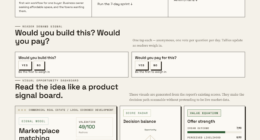
📊 Full opportunity report: Independent Retailers Can Source Wholesale Without Buying In Bulk on IdeaNavigator AI — validation score, market gap, and execution plan.

Get everyday essentials delivered free — and shop member deals
- Fast, free delivery on millions of items
- Access to Prime Big Deal Days deals on October 6–7
- Prime Video, Amazon Music and more included
TL;DR

IdeaNavigator AI has outlined a proposed small-order sourcing platform for independent retailers that struggle with distributor minimums. The concept would test five-unit product assortments and consolidated shipping, but it has not been shown to be an operating marketplace; its proposed first step is a manual trial with 20 brands and 50 shops.
IdeaNavigator AI has proposed a wholesale-sourcing marketplace where independent retailers could test products in small quantities instead of meeting distributor case or opening-order minimums. The idea remains a proposed business concept, with a manual trial involving 20 brands and 50 shops suggested as the first test of whether small orders lead to standard wholesale reorders, according to the IdeaNavigator AI proposal.
In its proposal, IdeaNavigator AI describes a dedicated marketplace lane for trial-size orders. Participating brands would set micro-minimums, while fulfillment would be consolidated to reduce the shipping cost of sending small quantities. Retailers could order a five-unit assortment, track how those products sell, and establish a standard wholesale relationship if a test performs well. These are elements of the suggested model, not confirmed features of a launched service.
For validation, IdeaNavigator AI recommends manually brokering trial orders between 20 brands and 50 independent shops. The proposal identifies conversion from an initial trial order to a standard reorder within a quarter as the measure. It does not report that the pilot has begun, give results, or specify which products or retailers would take part.
The proposed revenue model combines a take rate on orders with subscriptions for brand-facing analytics about trial performance, according to the outline. Those revenue streams, like the fulfillment approach, are part of the concept; the proposal gives no figures for fees, operating costs, shipping savings, or retailer demand.
Testing Products Without Case Commitments
For an independent shop, a distributor minimum can turn a product test into a larger inventory commitment. A small trial order could lower the amount of stock a retailer must buy before learning whether local customers respond. That may give shops with limited buying budgets more room to experiment, although IdeaNavigator AI’s proposal has not established that five-unit orders would be available at a workable total cost.
Brands could also gain a way to reach shops that are unwilling or unable to place conventional opening orders. The proposal’s suggested sell-through tracking would give brands a measure of how trial products perform before they pursue a larger relationship. But the concept’s value depends on results: retailers must reorder at a meaningful rate, and shipping and platform fees must not erase the advantage of buying small quantities.
The key business question is consequently not just whether a small order can be placed. It is whether consolidated fulfillment can support it economically and whether a trial converts into repeat purchasing. IdeaNavigator AI proposes a quarterly reorder measure to test that commercial link, but provides no benchmark or expected conversion rate.
As an affiliate, we earn on qualifying purchases.
The Proposed Marketplace Model
IdeaNavigator AI’s proposal describes a familiar problem in independent retail wholesale: distributors may set case minimums or opening orders designed for larger buyers. Smaller stores that want to try unfamiliar products can face a choice between committing to more stock than they want or passing on the item. The outline says discovery may then be concentrated at trade shows, but provides no data on how often this happens or how much it affects purchasing.
The proposal points to the wholesale-marketplace model established by Faire as precedent for online wholesale sourcing, then frames very small trial orders with consolidated shipping as an underserved need. That is the proposal’s market rationale, not independent evidence that existing marketplaces lack such options or that retailers would switch to a new service.
IdeaNavigator AI recommends a deliberately narrow sequence: first broker orders manually, then measure whether shops reorder through standard wholesale channels. This would test retailer behavior before the operator invests in a larger marketplace. The outline does not specify the technology, brand categories, geographic reach, shipping partners, or arrangements for handling returns and unsold stock.
As an affiliate, we earn on qualifying purchases.
Pilot Results And Costs Unknown
IdeaNavigator AI’s proposal identifies no operating platform, completed pilot, participating brands, or retailer commitments. It is therefore not yet clear whether the service will launch or whether the suggested 20-brand, 50-shop test is underway. The outline reports no sales figures or reorder results.
The economics remain open. Consolidated fulfillment is central to making five-unit tests practical, but the proposal gives no shipping method, cost estimate, delivery timetable, or explanation of how orders from multiple brands would be combined. It also does not state the marketplace’s take rate, subscription price, or how trial performance would be measured and shared.
Finally, the outline does not define what counts as a successful trial, how many products a shop could order, or what “within a quarter” means for brands with different sales cycles. Until those details and pilot outcomes are available, claims about retailer savings, brand sales, or marketplace viability should be treated as untested.
consolidated shipping for small orders
As an affiliate, we earn on qualifying purchases.
As an affiliate, we earn on qualifying purchases.
A Manual Trial Would Test Reorders
IdeaNavigator AI proposes manually brokering orders between 20 brands and 50 shops as the next step. The trial would track whether a retailer’s small initial purchase leads to a standard wholesale reorder within a quarter. That measure could help establish whether limited-quantity sampling creates durable purchasing relationships rather than one-off experiments.
The proposal supplies no schedule, recruitment plan, or public reporting date. If the test proceeds, useful results would include the number of shops placing trial orders, the share that reorder, the time to reorder, and the costs of fulfillment. Until those details are reported, the proposal remains a business hypothesis rather than a confirmed new sourcing option for retailers.
Source: IdeaNavigator AI proposal
independent retailer product testing kits
As an affiliate, we earn on qualifying purchases.
As an affiliate, we earn on qualifying purchases.
Key Questions
Is the small-order marketplace available now?
No launch is reported. IdeaNavigator AI’s proposal describes a possible marketplace and recommends a manual trial; it does not identify an operating service or a launch date.
How small could a retailer’s order be?
The proposal uses a five-unit assortment as an example of a trial order. It does not specify whether five units would apply to each product, each brand, or the total order.
How would the service make money?
The suggested model combines a take rate on orders with subscriptions for analytics sold to brands, according to the proposal. No fee levels or financial projections are provided.
What would the proposed pilot measure?
IdeaNavigator AI proposes tracking whether shops that place trial orders make a standard wholesale reorder within a quarter. The proposal reports no pilot results or target reorder rate.
Source: IdeaNavigator AI
Fall Picks
fall essentials
As an affiliate, we earn on qualifying purchases.