
🔍 Read the full analysis: “TURBINE — WERK 9”: A Study In AI And Scroll-Driven Design on ThorstenMeyerAI.com

Get everyday essentials delivered free — and shop member deals
- Fast, free delivery on millions of items
- Access to Prime Big Deal Days deals on October 6–7
- Prime Video, Amazon Music and more included
TL;DR
TURBINE — WERK 9 is an interactive web project that uses scrolling to drive the movement of an SVG rotor, connecting page navigation to an industrial visual concept. ThorstenMeyerAI.com describes the experience and points readers to a live version and a design case study, but provides no technical specifications, performance data or named team members.
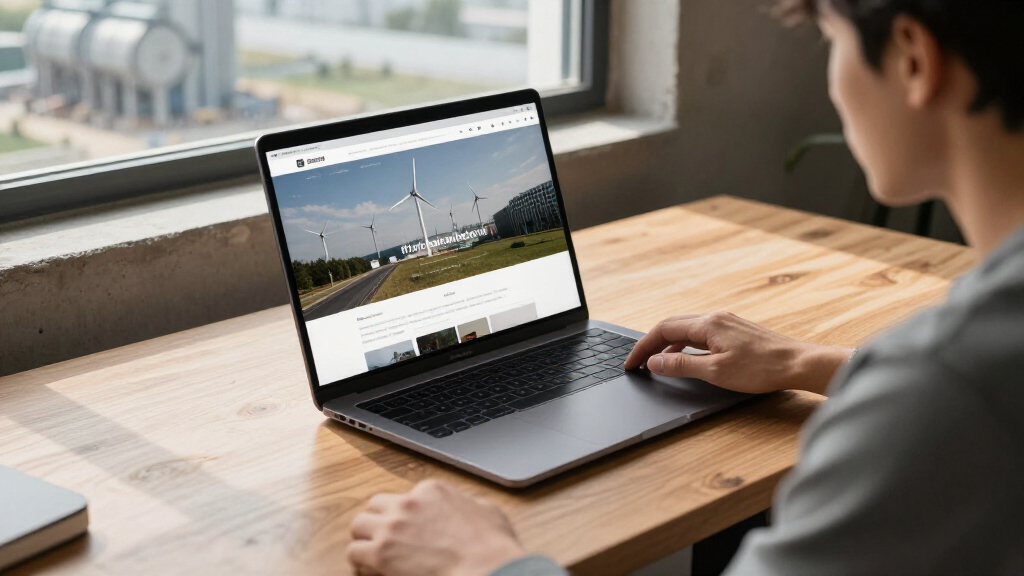
ThorstenMeyerAI.com is presenting TURBINE — WERK 9, an interactive web experience in which scrolling drives an SVG rotor as visitors move through a page designed like an industrial field guide. The project uses a familiar browser action to connect navigation with a machine-inspired visual element, though its publication description does not provide technical specifications or independent performance results.
The project is framed as a response to a design question: whether a web page can behave less like a brochure and more like a machine visitors can explore. Its central interaction is a scroll-driven rotor drawn with vector paths. As a visitor scrolls, the rotor’s movement is intended to make progress through the page feel connected to the mechanics of the setting.
ThorstenMeyerAI.com describes the site as an interactive field guide, pairing that visual format with an industrial atmosphere. The page invites visitors to explore rather than simply read a sequence of static sections. The description says the design combines a browser, constructed vector paths and scrolling, but does not identify the implementation framework, the people who built it or the exact interaction rules.
The project’s page directs visitors to both a live room and a full design teardown. The teardown is described as covering how the rotor’s movement was shaped, how the visual system was organized and how the team translated a physical-feeling space into a browser experience. Those details are presented as topics in the case study; the available description does not supply the underlying design decisions or technical evidence.
When Scrolling Drives the Interface
TURBINE — WERK 9 makes page navigation part of the visual concept: scrolling is not only a way to reach more information but also the input that animates the rotor. That approach offers a focused example of how a familiar browser control can support a more distinctive experience without asking visitors to learn a new input method.
For readers interested in interactive design and automation, the project is relevant as a design demonstration, not as evidence of a broader technical breakthrough. The presentation suggests that a carefully designed SVG can help give a page a sense of physical motion. It does not report usability testing, loading performance, accessibility results or comparisons with other approaches, so the project’s practical advantages remain unmeasured in the published description.
As an affiliate, we earn on qualifying purchases.
A Field Guide Built for Browsing
The project’s framing combines two ideas: an industrial environment and a browser-based guide that visitors move through by scrolling. Rather than presenting the work solely as a collection of static images, its description emphasizes the relationship between the rotor and the visitor’s movement down the page. The intended result is an interface where the act of reading also shapes what the central graphic does.
ThorstenMeyerAI.com’s short presentation points to a fuller design case study for more detail about the visual system and animation. It does not provide a timeline, project credits or a stated release date, and it does not identify a client or explain whether the design is connected to a physical turbine or facility. The industrial setting is part of the project’s presentation; further real-world links are not specified.
“What if a web page behaved less like a brochure and more like a machine you could walk around?”
— ThorstenMeyerAI.com
scroll-driven interactive web components
As an affiliate, we earn on qualifying purchases.
As an affiliate, we earn on qualifying purchases.
Technical Details Still Unpublished
The project description does not specify how the rotor animation is implemented, what technologies besides SVG are involved, or whether the movement responds continuously to scroll position or through another interaction pattern. It also gives no measurements for load time, device support, accessibility or user response.
Although the page calls the experience live, it provides no launch date or details about its availability across browsers and devices. The description does not name the team, explain whether the project serves a client, or establish a connection to an operating industrial site. Those points cannot be confirmed from the available information.
As an affiliate, we earn on qualifying purchases.
The Case Study Holds More Detail
Visitors can explore the live version and read the full design teardown linked from ThorstenMeyerAI.com. The case study is described as covering the rotor’s motion, the visual system and the translation of a physical-feeling space into a browser experience. No later release, feature update or additional announcement is specified.
Further reporting would need the case study’s technical details or direct information from the project’s creators to establish how the interaction was built and tested. Until then, TURBINE — WERK 9 is best understood as a presented design experience, with its broader usability and technical claims not established by the brief description.
Source: ThorstenMeyerAI.com
As an affiliate, we earn on qualifying purchases.
Key Questions
What is TURBINE — WERK 9?
It is an interactive web experience presented by ThorstenMeyerAI.com as an industrial-inspired field guide, with a rotor graphic that responds to scrolling.
How does the rotor move?
The presentation says scrolling drives an SVG rotor, but does not explain the precise animation method or technical implementation.
Can visitors try the project?
ThorstenMeyerAI.com links to a live room. The available description does not give details about device or browser compatibility.
What does the design teardown cover?
It is described as explaining how the rotor’s motion was shaped, how the visual system was organized and how a physical-feeling space was adapted for the browser.
Who created TURBINE — WERK 9?
The project description does not name its creators or provide team credits, so individual authorship cannot be confirmed from the available information.
Source: ThorstenMeyerAI.com
Fall Picks
fall essentials
As an affiliate, we earn on qualifying purchases.