
Smart home devices in 2026 mostly fall into two camps: affordable plug-and-play gear that automates what you already own, and hub-style control panels that tie an entire ecosystem together. For most buyers, the Kasa Smart Plug HS103P4 (4-Pack) is the best overall pick — it combines reliable performance, Alexa and Google support, and a low per-plug price that makes whole-room automation realistic. If you want a command center instead, the Amazon Echo Hub is the standout premium option, while the Linkind Matter Smart Plug is the pick for future-proofing thanks to Matter support across Apple, Alexa, and Google. The main tradeoff to weigh is ecosystem lock-in versus flexibility, plus whether you need voice-first devices (Echo Dot, Echo Show 5) or accessory devices (plugs, thermostat). Keep reading for the full breakdown of all 11 devices.
Open a free Amazon Business account
Business pricing, bulk buying and tax-exempt orders.
Create a free accountAs an affiliate, we earn on qualifying purchases.
Key Takeaways
- Matter compatibility is the biggest differentiator in this lineup: only the Linkind plug works natively across Apple Home, Alexa, Siri, and Google, which matters if you might switch platforms later.
- Buying plugs in 4-packs (amazon.com/dp/B0BCR7M9KX?tag=press-report-20&ascsubtag=dc-993142″ target=”_blank” rel=”nofollow sponsored noopener”>amazon.com/dp/B07RCNB2L3?tag=press-report-20&ascsubtag=dc-993142″ target=”_blank” rel=”nofollow sponsored noopener”>Kasa, EIGHTREE, Govee, amazon.com/dp/B09B2SRGXH?tag=press-report-20&ascsubtag=dc-993142″ target=”_blank” rel=”nofollow sponsored noopener”>amazon.com/dp/B0CL9D9HM4?tag=press-report-20&ascsubtag=dc-993142″ target=”_blank” rel=”nofollow sponsored noopener”>Amazon Basics) cuts the per-device cost by roughly 40% compared with Amazon’s single Smart Plug, making multi-packs the smarter default for most homes.
- The Echo Hub and Echo Show 5 solve different problems: the Hub is a wall-mounted whole-home controller, while the Show 5 is a bedside or desk smart display — paying more for the Hub only makes sense above roughly 15 connected devices.
- The Amazon Smart Thermostat is the only device here with measurable payback, since it can lower heating and cooling bills — every other pick is a convenience upgrade rather than a money-saver.
- Alexa-only devices (Amazon Smart Plug, Echo line) trade cross-platform flexibility for the easiest setup; if your household is already Alexa-based, that tradeoff usually pays off.
| Amazon Basics Smart Plug, 4-Pack | 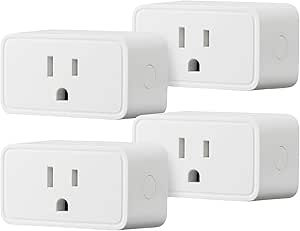 | Best Value for Alexa Households | Compatibility: Alexa only | Plug Type: Type B, 2-pin | Amperage: 15 A | VIEW LATEST PRICE | See Our Full Breakdown |
| Amazon Echo Show 5 (Newest Model) |  | Best Smart Home Command Center | Display: 5.5 inches | Camera: 2 MP with built-in shutter | Speaker: 1.75-inch full-range | VIEW LATEST PRICE | See Our Full Breakdown |
| Amazon Smart Plug – Works with Alexa, Easy Setup, Compact Design |  | Best Single Plug for Alexa Households | Size: 3.2 x 1.5 x 2.2 inches | Weight: 3.1 oz | Electrical Rating: 120VAC, 15A max | VIEW LATEST PRICE | See Our Full Breakdown |
| Kasa Smart Plug HS103P4, Wi-Fi Outlet, Works with Alexa & Google, 15 Amp, 4-Pack |  | Best Value Multi-Pack | Current Rating: 15A | Operating Voltage: 120V | Max Wattage: 1800W | VIEW LATEST PRICE | See Our Full Breakdown |
| EIGHTREE Smart Plug WiFi Outlet Works with Alexa & Google Home, 15A, 4-Pack |  | Best Budget 4-Pack Alternative | Current Rating: 15A | Operating Voltage: 120V | Max Wattage: 1800W | VIEW LATEST PRICE | See Our Full Breakdown |
| Govee Smart Plug – WiFi Outlet Compatible with Alexa & Google Assistant (4 Pack) |  | Best for Govee Ecosystem Users | Connection: Wi-Fi and Bluetooth | Compatibility: Amazon Alexa, Google Assistant | Max Current: 10A | VIEW LATEST PRICE | See Our Full Breakdown |
| Amazon Echo Hub (newest model), 8″ Smart Home Control Panel with Alexa+ |  | Best Premium Command Center | Display: 8-inch touchscreen, 1280 x 800 | Connectivity: Dual-band Wi-Fi, Bluetooth, Zigbee, Thread, Matter | Power: USB-C PD; PoE supported with converter | VIEW LATEST PRICE | See Our Full Breakdown |
| Amazon Smart Thermostat |  | Best Budget Smart Climate Control | Compatibility: Works with Alexa and Ring | C-wire required: Yes | Energy savings: Estimated $90 annually | VIEW LATEST PRICE | See Our Full Breakdown |
| smart home device | Compatibility | Connectivity |
|---|---|---|
| Amazon Basics Smart Plug | Alexa only | — |
| Amazon Echo Show 5 | — | — |
| Amazon Smart Plug | Alexa app, Fire OS, Android, iOS | 2.4 GHz Wi-Fi, 802.11 b/g/n |
| Kasa Smart Plug HS103P4 | — | Wi-Fi (2.4 GHz) |
| EIGHTREE Smart Plug WiFi Outle | Alexa, Google Assistant, SmartThings, iOS, Android | Wi-Fi 2.4 GHz |
| Govee Smart Plug | Amazon Alexa, Google Assistant | — |
| Amazon Echo Hub | — | Dual-band Wi-Fi, Bluetooth, Zigbee, Thread, Matter |
| Amazon Smart Thermostat | Works with Alexa and Ring | — |
More Details on Our Top Picks
Amazon Basics Smart Plug, 4-Pack
For anyone building an Alexa-centered smart home on a budget, this four-pack is the cheapest credible way to automate four outlets at once. Setup is genuinely frictionless: plug in, open the Alexa app, and the plug appears — no hub and no third-party app required, which is exactly where the GHome and Linkind plugs demand more patience. Compared with the Kasa HS103P4, you give up Google Assistant support and the more polished Kasa scheduling app, but you pay noticeably less per outlet. The tradeoff is ecosystem lock-in — this plug speaks Alexa only, so if you ever switch to Google or Apple Home, these become dumb plastic. The compact housing usually leaves the second outlet free, though tight duplex outlets and power strips may still crowd neighboring sockets.
Pros:- Dead-simple setup directly in the Alexa app
- No hub or extra app required
- Lowest per-plug cost in the roundup
- Compact body leaves adjacent outlets usable
Cons:- Alexa-only compatibility with no cross-platform support
- Too bulky for some power strips and older outlets
Best for: Alexa households outfitting several rooms with smart plugs for under $25 total
Not ideal for: Google Home or Apple Home users — Alexa is the only voice platform supported
- Compatibility:Alexa only
- Plug Type:Type B, 2-pin
- Amperage:15 A
- Control:Voice, app, schedules
- Hub Required:No
- Pack Size:4 plugs
- Dimensions:2.7″D x 2.1″W x 1.5″H
Our verdict“Buy this if you’re all-in on Alexa and want the most outlets per dollar; skip it if your home runs on anything else.”
Amazon Echo Show 5 (Newest Model)
A smart home eventually needs a screen to orchestrate it all, and the Echo Show 5 is the most affordable way to get one. The 5.5-inch display turns abstract voice commands into a visual dashboard — tap camera feeds, check weather, or see which lights are on — something the Echo Dot simply can’t do. Its improved speaker with deeper bass also outclasses the Dot for music in a bedroom or kitchen. Compared with the Echo Hub, you lose the dedicated wall-mounted control panel experience and larger screen, but you pay a fraction of the price and gain a camera for video calls. The 2 MP camera is fine for casual calls yet underwhelming for anything serious, and it still needs compatible devices — pairing it with the Amazon Basics plugs in this lineup is where it shines.
Pros:- Visual smart home dashboard with camera feed viewing
- Noticeably better bass and vocals than the Echo Dot
- Video calling with a physical camera shutter
- Built-in privacy controls including mic-off button
Cons:- 2 MP camera is dated for video calls or security use
- Screen feels cramped for managing many devices at once
Best for: Users ready to graduate from voice-only control to a visual smart home dashboard with video calls
Not ideal for: Apple-centric households — it has no HomeKit support and the screen is too small for whole-home wall control
- Display:5.5 inches
- Camera:2 MP with built-in shutter
- Speaker:1.75-inch full-range
- Wi-Fi:Dual-band 802.11a/b/g/n/ac
- Bluetooth:A2DP and AVRCP
- Size:5.8″W x 3.6″D x 3.2″H
- Weight:16.1 oz (456 g)
Our verdict“The best entry point if you want a screen directing your Alexa smart home without paying Echo Hub prices.”
Amazon Smart Plug – Works with Alexa, Easy Setup, Compact Design
Best Single Plug for Alexa Households — this pick makes the most sense for anyone who wants one plug to work flawlessly with an Echo device and nothing else. Setup is genuinely painless: the Alexa app detects the plug almost instantly, with no hub, no third-party app, and no account juggling. Compared with the Kasa HS103P4, which requires the Kasa app and works across both Alexa and Google, the Amazon Smart Plug trades flexibility for polish — routines, schedules, and grouping all live natively inside the Alexa ecosystem.
The tradeoff is real, though. Alexa-only compatibility locks out Google Home and Apple Home users, and like most plugs in this lineup it’s limited to 2.4 GHz Wi-Fi. Buying singles also costs more per outlet than the four-packs.
Pros:- Near-instant setup directly in the Alexa app with no extra accounts
- Compact housing leaves the second outlet usable
- Routines and scheduling integrate natively with Alexa
- Reliable reconnection after power or network outages
Cons:- Alexa-only — no Google Assistant or Apple Home support
- Buying singles is poor value compared to multi-packs
- 2.4 GHz Wi-Fi only
Best for: Alexa-centric households adding one or two devices who value zero-friction setup
Not ideal for: Google Home or Apple Home users, since voice control only works through Alexa
- Size:3.2 x 1.5 x 2.2 inches
- Weight:3.1 oz
- Electrical Rating:120VAC, 15A max
- Connectivity:2.4 GHz Wi-Fi, 802.11 b/g/n
- Compatibility:Alexa app, Fire OS, Android, iOS
- Use:Indoor only
Our verdict“If you live inside the Alexa ecosystem and only need a plug or two, this is the smoothest path to voice-controlled outlets.”
Kasa Smart Plug HS103P4, Wi-Fi Outlet, Works with Alexa & Google, 15 Amp, 4-Pack
Best Value Multi-Pack — this four-pack is the workhorse of the group. Where the Amazon Smart Plug gives you one outlet for roughly the same price as a pair here, Kasa delivers dependable plugs at a far better per-outlet cost, plus the flexibility of both Alexa and Google Assistant support. The Kasa app is also more capable than most: scheduling, timers, and away modes are straightforward, and the plugs reconnect reliably after outages.
Compared with the EIGHTREE 4-pack, Kasa’s advantage is maturity — the app is stable, the brand has a long track record, and safety certification is UL rather than just ETL. The drawbacks are modest but worth knowing: it’s 2.4 GHz only, capped at 15A, and there’s no physical button to toggle an outlet by hand if Wi-Fi drops.
Pros:- Excellent per-outlet value in a four-pack
- Works with both Alexa and Google Assistant
- Full scheduling and timer features in a polished app
- UL certified for safety
Cons:- No physical on/off button on the plug itself
- 2.4 GHz Wi-Fi only
- 15A ceiling rules out heavy appliances
Best for: Budget-minded buyers outfitting several lamps, fans, or holiday lights at once
Not ideal for: Households that want a manual override button when the network goes down
- Current Rating:15A
- Operating Voltage:120V
- Max Wattage:1800W
- Connectivity:Wi-Fi (2.4 GHz)
- Controller Compatibility:Amazon Alexa, Google Assistant
- Quantity:4-pack
- Certification:UL
Our verdict“For most people automating multiple outlets on a budget, this is the default choice.”
EIGHTREE Smart Plug WiFi Outlet Works with Alexa & Google Home, 15A, 4-Pack
Best Budget 4-Pack Alternative — this option stands out for squeezing in SmartThings support alongside Alexa and Google, something neither the Kasa HS103P4 nor the Amazon Smart Plug offers. The compact housing fits snugly in tight power strips and behind furniture, and setup via the Smart Life app with a Bluetooth-assisted connection is quicker than manually entering Wi-Fi credentials.
The tradeoff is ecosystem friction: setup runs through Smart Life, not Alexa directly, so you’re managing a second app before voice control works — a step the Amazon plug skips entirely. Scheduling and timers work well once configured, and ETL/FCC certification covers the safety basics. At full 15A capacity it matches Kasa on power handling, but the app experience and long-term firmware support lag behind the more established brand.
Pros:- Supports Alexa, Google Assistant, and SmartThings
- Bluetooth-assisted setup speeds up installation
- Compact design suits power strips and tight spaces
- Full 15A / 1800W capacity
Cons:- Setup requires the Smart Life app — no direct Alexa connection
- 2.4 GHz Wi-Fi only
- App polish and brand track record trail Kasa
Best for: Price-sensitive buyers who want four plugs with SmartThings support included
Not ideal for: Anyone who wants to avoid third-party apps and cloud accounts for setup
- Current Rating:15A
- Operating Voltage:120V
- Max Wattage:1800W
- Connectivity:Wi-Fi 2.4 GHz
- Compatibility:Alexa, Google Assistant, SmartThings, iOS, Android
- Quantity:4-pack
- Certification:ETL, FCC
Our verdict“A capable, affordable four-pack if you don’t mind routing setup through the Smart Life app first.”
Govee Smart Plug – WiFi Outlet Compatible with Alexa & Google Assistant (4 Pack)
Best for Govee Ecosystem Users — this set makes the most sense for anyone already running Govee lights or sensors, since everything consolidates into one Govee Home app with group control baked in. The Bluetooth pairing option is a genuine convenience the Kasa and EIGHTREE plugs lack, letting you add plugs without fumbling through Wi-Fi setup screens.
The headline drawback is power: at 10A / 1200W, it handles lamps and fans fine but falls short of the 15A plugs elsewhere in this lineup for anything demanding like a space heater on high. Grouping and scheduling work reliably through the app, and ETL certification checks the safety box. If you’re not invested in Govee gear, the Kasa HS103P4 offers more headroom for similar money.
Pros:- Bluetooth pairing simplifies initial setup
- Group control unifies multiple plugs and Govee devices
- ETL and FCC certified
- Compact, space-saving design
Cons:- Only 10A / 1200W versus 15A on rival plugs
- No 5 GHz Wi-Fi support
- Best experience depends on buying into the Govee app ecosystem
Best for: Govee device owners who want unified app control and group scenes across lights and plugs
Not ideal for: Anyone powering high-draw appliances — the 10A limit is noticeably below competing plugs
- Connection:Wi-Fi and Bluetooth
- Compatibility:Amazon Alexa, Google Assistant
- Max Current:10A
- Max Power:1200W
- Voltage:120V
- Quantity:4-pack
- Certification:ETL, FCC
Our verdict“Choose this if Govee already runs your smart home; otherwise the lower amperage is a real limitation.”
Amazon Echo Hub (newest model), 8″ Smart Home Control Panel with Alexa+
Best Premium Command Center — the Echo Hub plays a different game than every plug in this roundup. Instead of adding one controllable outlet, it becomes the wall-mounted brain that manages all of them. Its 8-inch touchscreen dashboard gives instant access to cameras, thermostats, and routines, and with built-in Zigbee, Thread, and Matter radios it can directly command devices that would otherwise need separate hubs — a capability neither the Amazon Smart Plug nor the Kasa HS103P4 can touch.
The tradeoffs are cost and permanence. It needs wall mounting or a separately sold stand, PoE requires an extra converter, and it’s not designed to move around the house like an Echo Show 5 can. You’re paying a premium for a fixed control surface, so it only earns its price once your device count justifies it.
Pros:- Built-in Zigbee, Thread, and Matter radios replace multiple hubs
- Customizable 8-inch dashboard for devices, cameras, and routines
- Strong privacy controls including a mic-off button
- Integrates with Alexa and Ring for security automation
Cons:- Stand, PoE converter, and cable pass-throughs sold separately
- Requires permanent mounting for the intended experience
- Expensive relative to a simple smart display
Best for: Owners of 15+ smart devices who want a dedicated wall panel for whole-home control and camera feeds
Not ideal for: Small-apartment renters with a handful of devices — an Echo Show 5 does the job for far less
- Display:8-inch touchscreen, 1280 x 800
- Connectivity:Dual-band Wi-Fi, Bluetooth, Zigbee, Thread, Matter
- Power:USB-C PD; PoE supported with converter
- Audio:Stereo speakers with Bluetooth streaming
- Sensors:Passive infrared, ambient light sensor
- Integration:Alexa+, Ring
Our verdict“A splurge that pays off for large, multi-protocol smart homes — overkill for anyone running a few plugs.”
Amazon Smart Thermostat
Among a lineup full of plugs and speakers, this is the only pick that attacks your utility bill directly, with Amazon estimating around $90 in annual energy savings from programmable schedules and automatic adjustments. Compared with something like the Kasa Smart Plug HS103P4, which controls individual appliances, this thermostat automates the single biggest energy consumer in most homes — the HVAC system. The tradeoff is compatibility friction: it requires a C-wire, which many older homes lack, and it depends on the Alexa app for remote control. Pairing it with an Amazon Echo Dot (4th Gen) gives hands-free voice adjustments, but Google Home users should look elsewhere. The DIY install is app-guided and manageable for most homeowners, though renters and anyone with complex multi-stage systems may want professional help.
Pros:- App-guided DIY installation most homeowners can handle in under an hour
- Estimated $90 per year in energy savings through schedules and auto-adjustments
- Seamless integration with Alexa and Ring devices for voice control
- Remote temperature control from anywhere via the Alexa app
Cons:- C-wire requirement rules out many older homes without extra wiring work
- Remote features stop working without an internet connection
- Locked into the Alexa ecosystem — no Google Home or Apple Home support
Best for: Homeowners with Alexa-based setups and a C-wire who want lower heating and cooling bills without paying premium thermostat prices
Not ideal for: Google Home households, homes without a C-wire, and renters who can’t modify their HVAC wiring
- Compatibility:Works with Alexa and Ring
- C-wire required:Yes
- Energy savings:Estimated $90 annually
- Programmable:Yes
- Control:On-the-go via Alexa app
- Installation:DIY guided by app
Our verdict“If your home already runs on Alexa and has a C-wire, this is the cheapest meaningful upgrade you can make to cut energy costs — everyone else should check their wiring and ecosystem first.”
How We Picked
I ranked these devices on four buyer-relevant criteria: ecosystem compatibility, ease of setup, reliability over time, and value per device. Ecosystem compatibility carried the most weight because a smart plug that only works with one assistant becomes dead weight the moment a household switches phones or adds a second platform. Devices supporting both Alexa and Google scored well; Matter support pushed a product higher still, since it is the closest thing to a universal standard in 2026.
Setup and reliability separated the plug brands more than specs did — a 15-amp rating means little if Wi-Fi connections drop or the app is clunky. Finally, I weighed cost per outlet, which is why multi-packs dominate the middle of the rankings while single devices and the premium Echo Hub and Smart Thermostat occupy distinct niches. The ordering reflects a simple logic: start with what works for the most homes at the best price, then layer in specialist picks for specific needs.
| smart home device | Compatibility |
|---|---|
| Amazon Basics Smart Plug | Alexa only |
| Amazon Echo Show 5 | — |
| Amazon Smart Plug | Alexa app, Fire OS, Android, iOS |
| Kasa Smart Plug HS103P4 | — |
| EIGHTREE Smart Plug WiFi Outle | Alexa, Google Assistant, SmartThings, iOS, Android |
| Govee Smart Plug | Amazon Alexa, Google Assistant |
| Amazon Echo Hub | — |
| Amazon Smart Thermostat | Works with Alexa and Ring |
Factors to Consider When Choosing Smart Home Devices
Before buying any of these devices, it helps to understand the bigger patterns in the smart home market — the mistakes that trap buyers into ecosystems they later regret, and the situations where spending more actually pays off.Ecosystem Lock-In Is the Decision That Matters Most
The first purchase in a smart home usually decides the next ten. Amazon’s devices are polished and cheap, but they nudge you deeper into Alexa, and the Amazon Smart Plug in particular refuses to work with Google or Apple. Linkind’s Matter plug is the escape hatch: the Matter standard lets one device serve every major platform, so switching assistants later doesn’t mean rebuying hardware. A common mistake is buying the cheapest plug today, then discovering a partner’s iPhone and Apple Home can’t control it. My advice is to decide on your assistant (Alexa, Google, Siri, or mixed) before the first purchase, not after. Households with mixed devices should treat Matter support as non-negotiable, even at a small price premium.
Buy Plugs in Packs, Not One at a Time
Almost nobody automates a single lamp. Once one plug proves useful, buyers typically want three or four more within a month — which is why 4-packs like the Kasa HS103P4, EIGHTREE, Govee, and Amazon Basics exist. The per-plug savings are substantial, often bringing the cost from around $25 for a single Amazon Smart Plug down to $8–12 per outlet in a pack. The tradeoff is committing to one brand’s app, so it pays to pick the brand with the app and scheduling features you like before bulk buying. A practical approach: buy one brand’s 4-pack first, live with it for two weeks, then expand only if the app experience holds up. Skipping the single-plug stage entirely saves both money and app clutter.
Know When a Hub Earns Its Price
The Echo Hub costs as much as six or seven smart plugs, and it only earns that price above a certain scale. Below roughly 10–15 devices, a phone app or an Echo Dot handles control perfectly well, and a dedicated wall panel is a luxury. Above that threshold, the Hub changes the experience: it becomes a single glanceable screen for cameras, thermostats, plugs, and routines, mounted where the whole household can reach it. The mistake I see most is buyers purchasing a hub first, hoping it will inspire a smart home — it won’t, and it ends up as an expensive clock. Build the device collection first, then add the Hub when juggling apps becomes genuinely annoying. That sequencing is the difference between a control panel and a paperweight.
Voice Speakers Are Entry Points, Not Accessories
The Echo Dot and Echo Show 5 are often bought as gadgets, but their real role is as the voice layer that makes every other device here more useful. A house full of smart plugs without a speaker still requires pulling out a phone for everything, which kills the convenience factor. The choice between them comes down to screen versus sound: the Show 5’s display adds weather, timers, camera feeds, and touch controls, while the Dot stays cheaper and less conspicuous. One speaker per high-traffic floor is usually enough — covering a hallway or kitchen beats blanketing every room. Buyers who skip this layer entirely often report their smart plugs feeling ‘not that smart’ within weeks.
Only One Device Here Pays for Itself
Nearly every product in this roundup is a convenience purchase, and that’s fine — but the Amazon Smart Thermostat is the exception with actual financial math behind it. Heating and cooling typically dominate home energy bills, and even basic scheduling and eco modes can shave a meaningful percentage off them. That reframes the value question: a thermostat can justify its cost within a year or two, while plugs, speakers, and hubs never will. The common mistake is expecting energy savings from smart plugs; they add scheduling convenience but don’t reduce consumption unless paired with genuinely wasteful habits. If budget is limited to one device, the thermostat is the rational pick. Everything else should be judged on how much daily friction it removes.
Frequently Asked Questions
Can I mix Amazon smart plugs with Google Home or Apple devices?
Not for the Amazon Smart Plug specifically — it is Alexa-only by design, which is its biggest limitation compared with alternatives like the Kasa or EIGHTREE plugs that support both Alexa and Google. If your household runs mixed platforms, the Linkind Matter Smart Plug is the safest choice, since Matter lets a single plug respond to Apple Home, Siri, Alexa, and Google commands interchangeably. The Echo speakers themselves are slightly more flexible than Amazon’s plugs, but voice control from Google or Apple still won’t reach them. The practical rule: Amazon hardware assumes an Amazon ecosystem. Anyone anticipating a platform switch or a mixed-device household should default to Matter-certified products from the start, because rebuying a dozen plugs later costs far more than the small per-plug premium for Matter today.
Is the Echo Hub worth it if I already own an Echo Show 5?
It depends on what the Show 5 is doing now. As a bedside or desk device, the Show 5 covers timers, weather, music, and video calls well, and a small home doesn’t need more. The Echo Hub earns its price only when it takes on a different job: a wall-mounted, always-visible control panel for a growing collection of cameras, plugs, thermostats, and routines. Homes with fewer than 10–15 connected devices will find the Hub redundant, since the Show 5’s touch screen can do much of the same controlling. Above that scale, the Hub’s purpose-built dashboard, wall mounting, and faster whole-home view justify the upgrade. My suggestion is to keep the Show 5 wherever it lives now and add the Hub only when app-juggling across devices becomes a daily annoyance.
Which 4-pack of smart plugs should I buy — Kasa, EIGHTREE, Govee, or Amazon Basics?
The Kasa HS103P4 is the strongest all-around choice, with a track record for stable Wi-Fi connections, a clean app, and reliable scheduling that competing brands don’t always match. EIGHTREE is the value play — comparable 15-amp specs at a lower price — making it a good fit for buyers outfitting several rooms on a budget. Govee lands in between, with solid app features and a design geared toward people who already like Govee’s lighting ecosystem. Amazon Basics is the simplest option and integrates smoothly with Alexa, but its app and scheduling depth trail Kasa’s. If I had to pick one, Kasa’s reliability edge wins; if price per outlet is the deciding factor, EIGHTREE. Whichever you choose, buy one brand consistently so everything lives in a single app.
Do I need a smart speaker for smart plugs to work?
No — every plug in this lineup works through its own app for on/off control, scheduling, and timers, so a speaker is technically optional. In practice, though, plugs without voice control lose much of their appeal, because unlocking a phone to turn off a lamp is barely easier than flipping the switch. A single Echo Dot covers this gap cheaply and also enables routines like ‘goodnight’ commands that shut down multiple plugs at once. The Show 5 adds a screen for touch control and camera feeds if you want more than voice. My recommendation is to budget for at least one speaker in a common area whenever you buy plugs, since the combination is what makes automation feel effortless rather than gimmicky.
Does the Amazon Smart Thermostat really save money?
It can, and it’s the only device in this roundup with a plausible payback period. Because heating and cooling account for the largest share of most home energy bills, even modest improvements — automatic eco modes when nobody is home, smarter schedules, and easier fine-tuning — typically reduce usage enough to recover the thermostat’s modest cost within one to two heating or cooling seasons. The savings come from behavior change the device enables, not magic: it makes it effortless to avoid heating an empty house. It requires a compatible HVAC system and C-wire (or adapter), so verify compatibility before buying, since that’s the most common installation snag. Compared with smart plugs, which add convenience but minimal savings, the thermostat is the one purchase here where the energy-bill math genuinely works in your favor.
Conclusion
Matching the right device to the right buyer closes this decision quickly. For best overall, the Kasa Smart Plug HS103P4 wins on reliability, dual-platform support, and per-plug value — it’s the pick I’d point most homes toward. The best value crown goes to the EIGHTREE 4-pack, which covers whole rooms for less without giving up the 15-amp rating. Best premium is the Amazon Echo Hub, the only device here that unifies an entire home on one wall-mounted screen — worth it once your device count grows past the point where apps become a chore. For beginners, the Amazon Echo Dot plus a single Amazon Smart Plug is the gentlest on-ramp, since setup takes minutes and everything stays inside one ecosystem. Specific needs round out the list: the Linkind Matter plug for mixed-platform or future-proofing buyers, the Echo Show 5 for anyone who wants a screen at the bedside or desk, and the Amazon Smart Thermostat as the one pick that can actually pay for itself through lower energy bills. Start with the category that solves your most annoying daily friction, and build outward from there.
Fall Picks
fall essentials
As an affiliate, we earn on qualifying purchases.