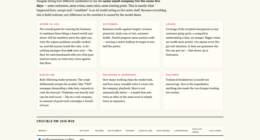

📊 Full opportunity report: Signal: Europe Is Actually Shopping for Its Palantir Exit on ThorstenMeyerAI.com — validation score, market gap, and execution plan.

Get everyday essentials delivered free — and shop member deals
- Fast, free delivery on millions of items
- Access to Prime Big Deal Days deals on October 6–7
- Prime Video, Amazon Music and more included
TL;DR
European governments are procuring alternatives to Palantir for military and intelligence data analysis, with several contracts awarded and timelines set. This marks a shift toward sovereignty in defense software, driven by concerns over dependency on US vendors.
European governments are actively procuring alternatives to Palantir’s data analysis systems, with recent contracts awarded and testing underway, indicating a strategic move toward sovereignty in defense technology. This shift is driven by concerns over dependency on US-based vendors and recent NATO deployment of Palantir’s Maven system.
In May 2026, Germany’s domestic intelligence agency (BfV) awarded a large-scale data analysis contract to France’s ChapsVision, explicitly over Palantir, signaling a decisive move away from the US vendor. The Dutch defense ministry announced in early June a plan to develop a fully independent system within two years, citing operational security concerns. Additionally, the UK parliamentary committee criticized reliance on Palantir, calling it an ‘unacceptable weakness’ and urging review of existing contracts, including the NHS’s £330 million deal.
France is testing Arcadia, a NATO-interoperable battlefield AI system, as a sovereign alternative to Palantir’s Maven. Meanwhile, other European contenders such as Helsing in Germany, Systematic in Denmark, and Octostar in Italy are advancing their own platforms, with some already adopted by NATO or national agencies. The landscape is increasingly fragmented but also more competitive, with multiple vendors vying to replace Palantir’s dominance.
Despite these developments, Palantir’s products remain mature and combat-proven at the alliance level, and switching costs for European governments are high due to data models, workflows, and analyst training. Several countries, including France and Greece, continue to operate Palantir systems while funding alternatives, illustrating a cautious transition process.
Europe Is Actually Shopping
for Its Palantir Exit
Same-day-verified market pulse · from conference-panel phrase to procurement category in ninety days
How sentiment became procurement
The contender field — honestly assessed
STEELMAN: WHY PALANTIR KEEPS WINNING ANYWAY
Mature, integrated, combat-proven at alliance scale — and switching costs in intelligence tooling are brutal. No European contender today offers the full bundle; several governments funding alternatives still run Palantir somewhere in the stack. The Dutch two-year timeline exists precisely because rip-and-replace carries real operational risk.
The signal: named contracts, named deadlines, named systems under test — demand has moved from sentiment to procurement. Supply is credible but fragmented; expect consolidation and consortiums, because buyers now want the bundle without the flag. Decided in the next 24 months.
Implications for European Defense Sovereignty
This shift indicates a move toward greater sovereignty in European defense data systems, reducing reliance on US vendors like Palantir. It reflects concerns over data security, political independence, and operational control, especially after NATO’s deployment of Maven and Palantir’s publicized involvement in operations against Iran. The development of indigenous or alternative systems aims to mitigate risks associated with dependency on foreign technology providers, which could be re-priced or restricted based on political interests.
For European nations, this transition could reshape the defense technology landscape, fostering local innovation and potentially establishing a new regional standard for military data analysis. However, the high switching costs and existing reliance on Palantir’s mature systems will likely slow full migration, making this a gradual process over the next two years.
As an affiliate, we earn on qualifying purchases.
Recent European Moves Toward Data Sovereignty
Over the past ninety days, European countries have shifted from rhetorical discussions about alternatives to Palantir to concrete procurement actions. Germany’s BfV awarded a contract to France’s ChapsVision, overtaking Palantir in a major intelligence project. The Netherlands announced a two-year timeline to develop a fully independent system, citing operational security concerns. The UK parliamentary committee criticized the UK’s reliance on Palantir, advocating for a review of existing contracts, including the NHS deal.
France is testing Arcadia, a NATO-interoperable battlefield AI system designed as a sovereign alternative to Palantir’s Maven. Other contenders such as Helsing (Germany), Systematic (Denmark), and Octostar (Italy) are making progress with their platforms, some already integrated into NATO operations. Ukraine’s DELTA system also demonstrates that non-US solutions can operate effectively in combat conditions, reinforcing the viability of alternative approaches.
While Palantir remains a mature, combat-proven product, the European push for sovereignty reflects a strategic desire to diversify and control critical defense data infrastructure, motivated by recent geopolitical shifts and alliance deployments.
“The recent contracts and testing signals a clear shift in European defense strategy, prioritizing sovereignty and operational independence.”
— an anonymous researcher
As an affiliate, we earn on qualifying purchases.
Remaining Questions About the Transition Timeline
It is not yet clear how quickly European nations will fully transition away from Palantir, given the high costs and existing reliance. The extent to which new systems will match Palantir’s breadth and integration remains uncertain, as does the future role of Palantir in Europe’s defense infrastructure.
As an affiliate, we earn on qualifying purchases.
Next Steps in European Defense Data Development
Over the next 24 months, European countries will likely complete their initial procurement and testing phases, with some systems entering operational deployment. Consolidation among vendors and further testing of NATO interoperability are expected to shape the evolving landscape. Monitoring upcoming contracts and deployments will clarify the pace and success of this sovereignty push.
As an affiliate, we earn on qualifying purchases.
Key Questions
Why are European countries seeking alternatives to Palantir?
They aim to reduce dependency on US vendors, enhance data security, and assert sovereignty over military and intelligence systems, especially after NATO’s deployment of Palantir’s Maven and concerns over political influence.
What are the main contenders competing to replace Palantir?
Key players include France’s Arcadia, Germany’s Helsing, Denmark’s Systematic, Italy’s Octostar, and Ukraine’s DELTA, among others. Some are already under testing or operational in specific roles.
How significant is this shift for NATO operations?
The transition could impact NATO’s data interoperability, with a focus on developing sovereign systems that can operate alongside or replace US-based solutions, potentially reducing risks associated with dependency.
Will Palantir continue to operate in Europe?
Yes, several European governments still operate Palantir systems while funding alternatives. The shift appears gradual, with a cautious approach to migration due to operational costs and risks.
Source: ThorstenMeyerAI.com
Fall Picks
fall essentials
As an affiliate, we earn on qualifying purchases.