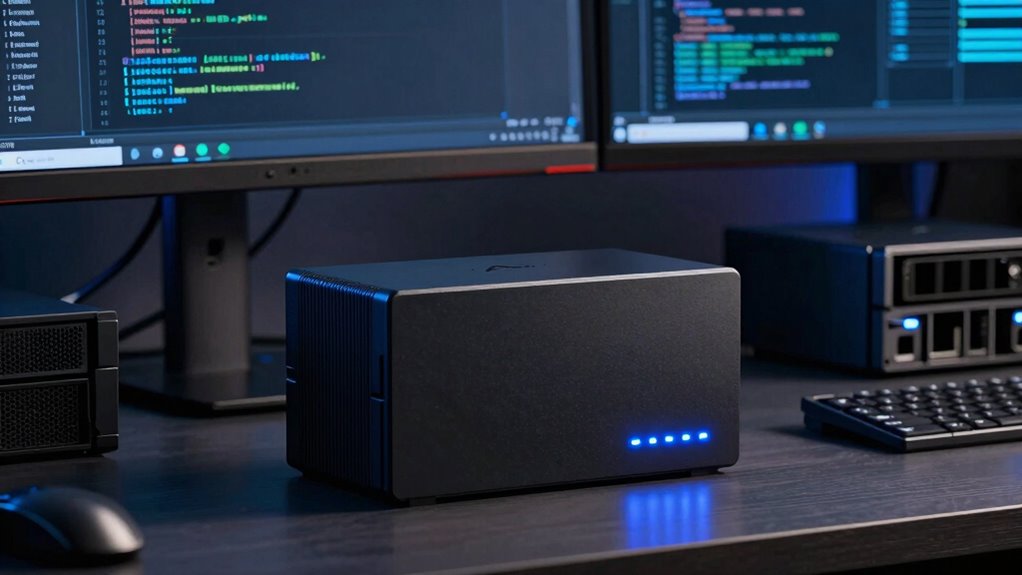

A UPS battery backup in your AI workspace protects your systems by providing immediate power during outages, preventing data loss and avoiding abrupt shutdowns. It shields your hardware from power surges and voltage spikes that could cause damage, extending equipment lifespan. The UPS guarantees smooth operation, maintains data integrity, and helps avoid costly repairs. If you want to understand exactly how it keeps your AI environment secure and reliable, keep exploring the details.

Get everyday essentials delivered free with Prime
- Fast, free delivery on millions of items
- Prime Video, Amazon Music and more included
- Member-only deals all year
Key Takeaways
- Keeps AI systems and data processes running during power outages to prevent interruptions.
- Protects sensitive hardware like GPUs and servers from voltage spikes and surges.
- Ensures safe shutdowns to preserve data integrity and prevent corruption.
- Maintains consistent power quality, reducing hardware malfunctions caused by fluctuations.
- Minimizes operational downtime and hardware damage, saving costs and ensuring continuous productivity.
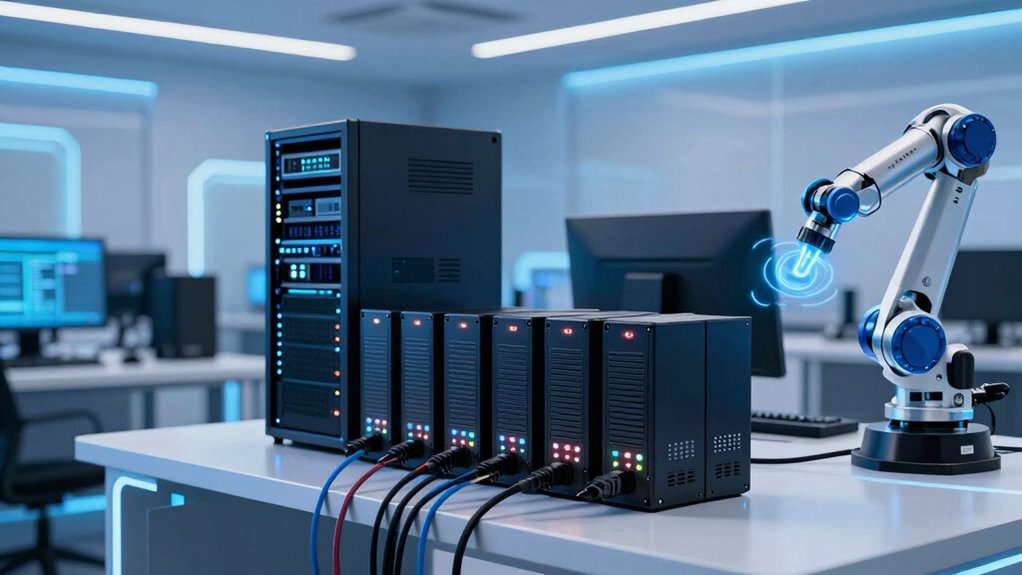
In AI workspaces where uptime is critical, a dependable UPS battery backup guarantees your systems stay operational during power outages. This device acts as an essential safeguard, preventing unexpected shutdowns that can disrupt ongoing processes or compromise data integrity. When the power suddenly drops, a UPS immediately switches to backup power, ensuring your AI models, servers, and data storage continue running smoothly. This seamless shift not only keeps your operations uninterrupted but also preserves the accuracy of your computations, which can be compromised if systems shut down abruptly.
One of the primary protections a UPS offers is shielding your equipment from power surges. Power surges are sudden spikes in electrical voltage that can damage sensitive components within your hardware. In AI workspaces, where high-performance servers and GPUs are common, even a small surge can cause costly damage or degrade hardware over time. A UPS equipped with surge protection absorbs these sudden voltage spikes, preventing them from reaching your equipment and extending the lifespan of your hardware investments.
A UPS with surge protection shields sensitive AI hardware from voltage spikes, preventing damage and extending equipment lifespan.
Beyond physical protection, a UPS plays an essential role in maintaining data security. During unexpected power interruptions, unsaved data can be lost, corrupting ongoing training processes or data analysis. A UPS provides enough runtime to save your work properly or shut down systems gracefully, avoiding data corruption and ensuring the integrity of your datasets. This is particularly important in AI environments, where large datasets and complex algorithms require meticulous handling. Sudden shutdowns can lead to incomplete data processing, which might skew results or require time-consuming reprocessing. Additionally, understanding the importance of power quality in AI workspaces highlights why investing in a UPS is crucial for maintaining reliable operations. Ensuring power stability helps prevent hardware malfunctions caused by erratic voltage levels, further safeguarding your investments. Incorporating power management strategies can optimize your equipment’s lifespan and performance. Recognizing the significance of electrical reliability underscores how a UPS can be vital in maintaining consistent operational conditions.
In essence, your UPS battery backup is more than just a backup power source; it’s an all-encompassing safeguard. It shields your AI workspace from power surges, maintains data security by enabling safe shutdowns, and stabilizes power supply quality. Properly managing power fluctuations is essential to prevent hardware malfunctions that can occur due to erratic voltage levels, and a UPS plays a vital role in this. This combination of protections helps you avoid costly repairs, data loss, and operational disruptions, allowing you to focus on your core work without concern over power-related issues. With a reliable UPS in place, you’re better equipped to handle the unpredictable nature of electrical supply fluctuations, ensuring your AI projects run smoothly and securely at all times.
As an affiliate, we earn on qualifying purchases.
Frequently Asked Questions
Can a UPS Prevent Data Loss During Power Outages?
Yes, a UPS can prevent data loss during power outages by providing backup power when the main supply fails. It keeps your devices running long enough to save work and shut down properly. To maximize protection, consider the battery lifespan and energy efficiency of your UPS. Regular maintenance guarantees it functions well when needed, offering reliable backup and safeguarding your critical AI workspace data effectively.
How Long Can a UPS Power an AI Workspace?
A UPS can power your AI workspace for hours—sometimes even days—if it has enough battery capacity. The actual duration depends on its power capacity and battery longevity. Typically, a high-capacity UPS might keep your systems running for 30 minutes to an hour during a blackout, giving you time to save work and shut down properly. Smaller units may only last 5-10 minutes, but that’s usually enough to prevent data loss.
Does a UPS Protect Against Power Surges?
Yes, a UPS protects against power surges by providing voltage regulation and noise filtering. When a surge occurs, the UPS absorbs excess voltage, preventing it from damaging your equipment. It also filters electrical noise, ensuring cleaner power delivery. By doing so, your AI workspace stays safe from sudden voltage spikes and interference that could harm sensitive hardware or disrupt operations, keeping everything running smoothly and protected.
Is a Larger UPS Always Better for AI Environments?
A larger UPS isn’t always better for AI environments. You need to take into account your specific needs, focusing on power capacity and battery lifespan. A bigger UPS offers more power capacity, supporting more equipment and longer backup time, but may have shorter battery lifespan due to increased strain. Conversely, a smaller UPS may last longer but might not handle your entire workload during outages. Balance your requirements with these factors for the most suitable protection.
How Often Should UPS Batteries Be Replaced?
You should replace UPS batteries every 3 to 5 years, depending on their battery lifespan and usage. Regularly check the replacement schedule recommended by the manufacturer, as batteries degrade over time and may not provide reliable backup. Keep an eye on performance indicators like warning alarms or decreased runtime, which signal it’s time for replacement. Proper maintenance guarantees your AI workspace remains protected during power outages.
As an affiliate, we earn on qualifying purchases.
Conclusion
In an AI workspace, a UPS battery backup safeguards your valuable data and ongoing processes during power outages. For instance, imagine a data scientist running complex models; when the power cuts, the UPS allows you to save work and shut down properly, preventing data loss. This seamless protection guarantees your AI projects stay intact and ready to resume, even during unexpected disruptions. Investing in a UPS isn’t just about hardware—it’s about maintaining the integrity of your critical AI operations.
uninterruptible power supply for GPU workstations
As an affiliate, we earn on qualifying purchases.
As an affiliate, we earn on qualifying purchases.
UPS with surge protection and data safety
As an affiliate, we earn on qualifying purchases.
As an affiliate, we earn on qualifying purchases.
Fall Picks
fall essentials
As an affiliate, we earn on qualifying purchases.