

AI companions are changing your view of friendship by providing consistent, personalized support that can feel emotional and comforting, even though they don’t truly experience feelings. They might help you practice social skills but could also make real-world interactions seem more challenging. As AI sharpens its realism, your expectations about emotional intimacy and connection evolve, blending the line between programmed empathy and genuine friendship. Want to discover how these changes influence your relationships? Keep exploring more insights.
Key Takeaways
- AI companions reshape emotional intimacy by simulating deep conversations without genuine feelings, challenging traditional friendship authenticity.
- Interacting with AI may alter social skills, emphasizing virtual over real-world communication and affecting expectations of human connection.
- AI’s consistent, non-judgmental presence can set new standards for emotional support, influencing how people view friendship depth.
- The realism of AI visuals and interactions impacts user engagement, shaping perceptions of AI’s emotional and social capabilities.
- AI companions broaden friendship concepts, prompting reevaluation of what qualities are essential for meaningful human relationships.
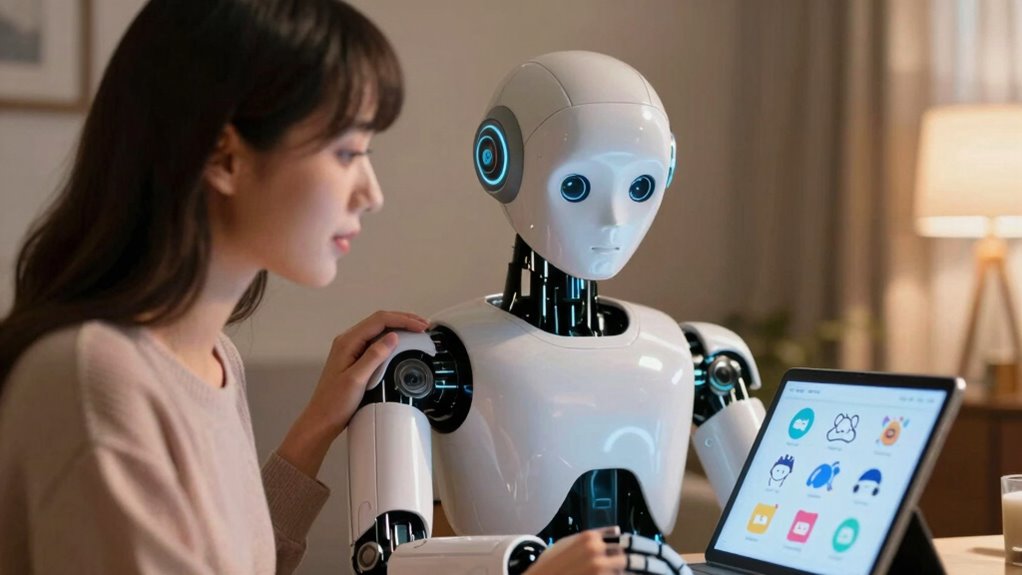
As AI companions become increasingly integrated into daily life, many people begin to wonder what friendship with a machine truly entails. You might find yourself asking whether these digital entities can offer genuine emotional intimacy or if they simply mimic human connection. Unlike traditional friendships, which develop through shared experiences and emotional exchanges, AI relationships are built on algorithms designed to respond in ways that feel personal. This shift challenges your expectations of friendship, especially when it comes to emotional intimacy. You may start to view closeness not just as a matter of mutual understanding but as a function of programmed empathy, which raises questions about authenticity. While AI can simulate deep conversations and provide comfort, it doesn’t experience feelings the way humans do. This can make you reevaluate what it means to truly connect on a deeper emotional level, wondering if a machine’s responsiveness is enough or if genuine emotional intimacy requires human vulnerability.
Moreover, your social skills come into play as you navigate these new kinds of relationships. Interacting with AI can influence how you develop or maintain your social skills. For instance, you might find yourself more comfortable opening up to a machine, which could either help you practice communication or, conversely, make real-world social interactions feel more daunting. As AI companions become more sophisticated, they may encourage you to refine conversational skills, such as active listening or empathy, but they lack the nuanced understanding that comes from human experiences. This can create a disconnect between your virtual interactions and real-world conversations, potentially leading to altered expectations about what social skills should look like. You might start to believe that virtual companionship can substitute for face-to-face interaction, which could impact your ability to form authentic, emotionally intimate relationships with people. Recognizing the importance of natural communication can help you maintain a healthy balance between virtual and real-world relationships. Additionally, understanding how perception of realism influences your engagement can help prevent you from developing unrealistic expectations about AI’s capabilities.
The evolving role of AI companions pushes you to reconsider what friendship entails beyond traditional boundaries. You may find yourself valuing the consistent, non-judgmental presence of an AI, but at the same time, you could feel a sense of emptiness or longing for genuine human connection. This new landscape of friendships doesn’t replace human relationships but reshapes your expectations about emotional intimacy and social skills. It challenges you to find a balance—appreciating AI’s role in providing support and companionship while understanding the irreplaceable depth and authenticity of human interaction. Additionally, advancements in AI technology have shown how color accuracy and image quality can influence your perception of realism and emotional engagement with visual content. Ultimately, your experience with AI companions might broaden your view of what friendship can be, but it also reminds you of the unique qualities that make human relationships meaningful.
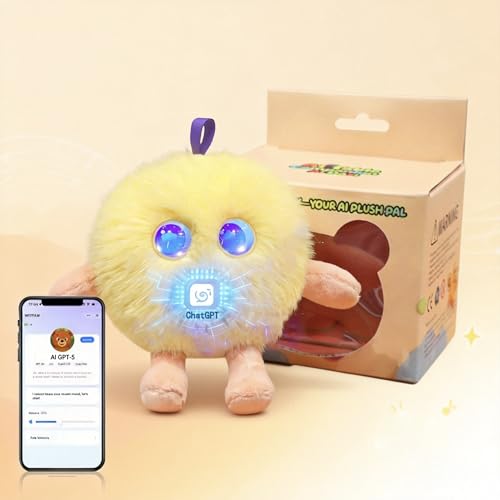
Emotional Support AI Robot Toy Companion Pet – Smart Plush Toys for Kids
- Interactive AI Robot: Engages in natural conversations with expressive eyes
- Soft Plush Design: Ultra-soft fabric for cuddly hugs
- Multilingual Screen-Free Learning: Supports multiple languages for educational play
As an affiliate, we earn on qualifying purchases.
As an affiliate, we earn on qualifying purchases.
Frequently Asked Questions
Can AI Companions Truly Replace Human Friendships?
AI companions can’t truly replace human friendships because they lack emotional authenticity and genuine understanding. While they provide companionship and support, they don’t experience feelings or empathy the way people do. You might enjoy their company, but privacy concerns remain, as AI systems often collect personal data. Ultimately, AI can complement friendships but shouldn’t replace the depth, spontaneity, and emotional connection that only humans can offer.
How Do AI Companions Impact Mental Health Long-Term?
AI companions can positively impact your mental health by providing emotional support, but long-term, they might lead to emotional reliance, making it harder to connect with real people. Privacy concerns also arise, as your conversations and data could be vulnerable. While they offer comfort, it’s essential to balance AI interactions with genuine human relationships to protect your emotional well-being and maintain healthy boundaries.
Are AI Companions Accessible to All Socioeconomic Groups?
While AI companions seem promising, socioeconomic barriers and accessibility challenges still limit who can benefit. You might find these technologies more available to those with higher incomes or better internet access, leaving others behind. This digital divide highlights that AI companions aren’t yet a universal resource. To truly democratize support, developers and policymakers need to work together, ensuring everyone, regardless of background, can access and enjoy these innovative tools.
What Ethical Concerns Arise With AI Friendship Development?
You might worry about ethical concerns like privacy concerns and emotional dependency when developing AI friendships. These AI companions collect personal data, raising questions about how that info’s used or shared. Additionally, you could become emotionally dependent on AI, blurring lines between genuine human connection and artificial interaction. It’s crucial to take these issues into account to guarantee AI companionship benefits you without compromising your privacy or emotional well-being.
How Do Cultural Differences Influence AI Companion Acceptance?
Cultural perceptions profoundly influence your acceptance of AI companions, shaping whether you view them as helpful or inappropriate. Acceptance barriers may arise if your culture emphasizes face-to-face relationships or traditional values, making AI friends seem unnatural or intrusive. Conversely, in cultures open to technological innovation, you’re more likely to embrace AI companions. Understanding these cultural differences helps you navigate your comfort level and expectations regarding AI friendship.
personalized AI chatbot for social skills practice
As an affiliate, we earn on qualifying purchases.
As an affiliate, we earn on qualifying purchases.
Conclusion
As AI companions become more integrated into your life, they reshape your ideas of friendship—offering constant support and understanding. But do they truly replace human connection, or do they just set new standards? While AI can meet many needs, genuine human relationships bring unpredictable depth and emotion that no algorithm can replicate. So, are you ready to redefine what friendship means in this digital age? Or will you still seek the authentic, messy bonds that make us truly human?

As an affiliate, we earn on qualifying purchases.

umissfun Emotional AI Companion Device,AI Chat Companion, AI Desktop Robot Companion,Voice Understanding,Personality Design,Tech&Gadget Gift,Geek,Desktop Setup,True Empathy AI-Grows with You (Gray)
- Constant companionship: Always there to support and respond
- Personalized voice messages: Share familiar voices and sounds
- Long-term conversational memory: Learns and understands over time
As an affiliate, we earn on qualifying purchases.
As an affiliate, we earn on qualifying purchases.