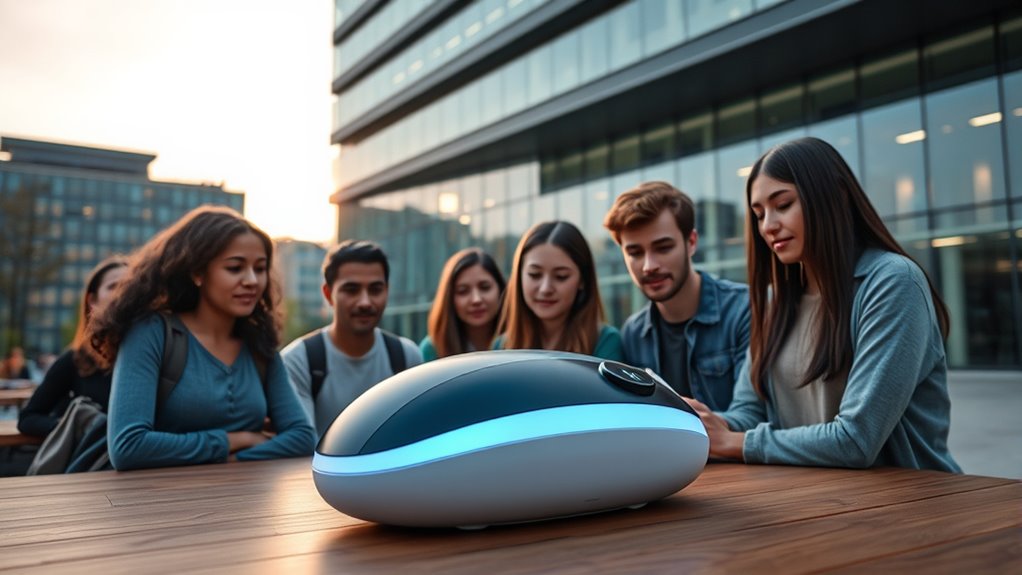

AI companions can provide students with quick, stigma-free support for mental health issues like stress and anxiety, offering emotional outlets and personalized coping tips. However, you need to be cautious about privacy and the risk of becoming overly dependent on these tools. Ensuring proper data protection and encouraging connections with human support are essential. Want to learn how to balance these benefits and risks effectively? Keep going for helpful insights.

Get everyday essentials delivered free with Prime
- Fast, free delivery on millions of items
- Prime Video, Amazon Music and more included
- Member-only deals all year
Key Takeaways
- AI companions can offer accessible, stigma-free support but require transparent privacy policies to ensure student trust and data security.
- Over-reliance on AI may lead to emotional dependency, potentially weakening real-world relationships and resilience.
- Integrating AI as a supplement to human support emphasizes the importance of encouraging connections with professionals and peers.
- Clear communication about AI capabilities and limitations helps manage expectations and promotes healthy boundaries.
- Ongoing monitoring and updates are essential to prevent over-dependence, protect privacy, and optimize mental health benefits.

Have you ever wondered how artificial intelligence could transform student mental health support? As AI companions become more integrated into educational settings, they promise innovative ways to provide immediate, accessible help for students facing stress, anxiety, or depression. These digital allies can offer a non-judgmental space for students to express their feelings, track their moods, and even suggest coping strategies. However, with these benefits come significant challenges. Privacy concerns quickly surface because students share personal, sensitive information with these AI tools. It’s essential to understand how data is collected, stored, and protected. If privacy isn’t adequately safeguarded, students might hesitate to open up fully, defeating the purpose of these digital supports. Additionally, there’s the risk of emotional dependency. When students rely heavily on AI companions for emotional reassurance, they might start to view these tools as their primary source of comfort, potentially weakening real-life relationships and coping mechanisms. This dependency can create an unhealthy cycle, where students turn to AI for every emotional need, which might hinder their ability to develop resilience and face real-world challenges independently. Moreover, integrating Pimple Patch technology into mental health tools is an emerging area that could offer discreet support options for students dealing with physical symptoms of stress. Balancing the advantages of AI companions with these risks requires careful consideration. Developers and educators must prioritize transparency about data use and create strict privacy policies. Clear communication about how student information is handled can build trust and encourage honest engagement. Furthermore, AI should be positioned as a supplement—not a replacement—for human support. Encouraging students to maintain connections with friends, family, and mental health professionals ensures they don’t become overly reliant on digital interactions. It’s also important to design AI systems that promote healthy boundaries, guiding students to seek help from humans when necessary and to recognize the limits of what AI can provide. The goal is to harness AI’s potential without compromising students’ privacy or emotional well-being. When implemented thoughtfully, AI companions can serve as accessible, stigma-free entry points for students to address their mental health. But, it’s equally essential to monitor their use and continually refine these tools to prevent over-dependence and protect privacy. By doing so, we can create a supportive environment where technology enhances mental health care while respecting individual boundaries and rights. Ultimately, embracing AI in student mental health support means walking a fine line—leveraging its benefits without letting privacy concerns or emotional dependency undermine the very well-being we aim to protect.
AI mental health companion for students
As an affiliate, we earn on qualifying purchases.
As an affiliate, we earn on qualifying purchases.
Frequently Asked Questions
How Do AI Companions Adapt to Individual Student Needs?
AI companions adapt to your needs through personalization strategies that analyze your interactions, preferences, and emotional cues. They respond with emotional responsiveness, recognizing when you’re stressed or happy, and adjusting their support accordingly. By learning from your behavior over time, they create a tailored experience, offering encouragement or guidance when needed. This continuous adaptation helps guarantee the AI companion effectively supports your mental health while respecting your unique emotional landscape.
What Privacy Measures Protect Student Data With AI Support?
A stitch in time saves nine, so your privacy is protected with robust measures. You should guarantee AI support uses data encryption to secure your information and strict access controls to limit who can view sensitive data. These measures help keep your personal details safe, ensuring your trust is maintained while you benefit from personalized support. Always stay informed about privacy policies, so you’re confident your data stays protected.
Can AI Replace Human Mental Health Professionals Entirely?
AI can’t fully replace human mental health professionals because of ethical concerns and emotional authenticity. While AI can offer support and guidance, it lacks genuine empathy and understanding, which are essential for effective therapy. You need human professionals to interpret emotions, build trust, and handle complex issues ethically. AI should serve as a supplement, not a substitute, ensuring you receive compassionate and authentic care when needed.
How Effective Are AI Companions in Reducing Student Anxiety?
AI companions can provide some emotional support, helping reduce student anxiety by offering immediate interaction and guidance. However, their effectiveness is constrained by current technology, which can’t fully grasp complex emotions or offer personalized empathy like a human. You might find relief with AI, but for deep anxiety or mental health issues, it’s crucial to seek professional help, as AI isn’t a complete substitute for human understanding.
What Are the Potential Long-Term Impacts of AI on Student Mental Health?
Long-term, AI could increase your tech dependency, making it harder to develop real-world social skills. You might rely heavily on AI companions for support, which could lead to social isolation and diminish your ability to handle emotional challenges independently. While AI offers helpful tools, overuse might negatively impact your mental health by reducing face-to-face interactions and weakening your resilience over time. Balance is key to safeguarding your well-being.
As an affiliate, we earn on qualifying purchases.
Conclusion
As you navigate the digital landscape, remember that AI companions can be like guiding stars in your darkest nights—offering support and understanding. But beware, they’re just stars, not the entire sky. Balance your reliance, and don’t forget to seek the warmth of real connections. Like a sunrise breaking through clouds, true mental health blooms when technology and human touch work together, illuminating your path forward with hope and resilience.
As an affiliate, we earn on qualifying purchases.
privacy-focused mental health chatbot
As an affiliate, we earn on qualifying purchases.
As an affiliate, we earn on qualifying purchases.
Halloween Picks
halloween
As an affiliate, we earn on qualifying purchases.